

For quick, temporary relief, look for a topical anesthetic like pramoxine. For lasting relief, you need barrier-repair ingredients like colloidal oatmeal and ceramides that heal the skin causing the itch in the first place. The smartest move is to use a fast-acting active to break the itch-scratch cycle right now, then follow up with a barrier-repair lotion to keep the itch from coming back.
TL;DR:
- Pramoxine provides rapid relief by numbing itch signals but does not address underlying inflammation or dryness.
- Colloidal oatmeal reduces itch and inflammation through multiple actions, making it effective for chronic conditions like eczema.
- Barrier-repair ingredients like ceramides, cholesterol, and fatty acids are essential for rebuilding skin’s protective layer and preventing future itch.
- Applying moisturizers immediately after bathing and patch-testing new products can optimize soothing effects and minimize skin reactions.
- Use a combination of fast-acting active and barrier-repair lotions tailored to the cause of the itch for the best long-term results.
Table of Contents
- Medicated Anti-Itch Actives: What Works Fast and Why
- Colloidal Oatmeal and Calming Botanicals: The Evidence Behind the Hype
- Barrier-Repair Ingredients: Why Ceramides and Lipids Fix Itch Long-Term
- Matching Ingredients to the Cause of Your Itch
- How to Apply Itch-Relief Lotion the Right Way
- How Jeffi’s Ingredient Choices Match What the Research Says
- What I’d Try First If My Skin Wouldn’t Stop Itching
- Find the Right Jeffi Lotion for Your Itch
- Sources
- FAQ
Medicated Anti-Itch Actives: What Works Fast and Why
When your skin feels like it’s on fire from a mosquito bite or a patch of hives, you want relief in minutes, not weeks. That’s the job of medicated anti-itch actives, and they work through very different mechanisms depending on what’s in the bottle.
Pramoxine hydrochloride (1%) is the workhorse here. It’s an FDA-recognized OTC topical anesthetic that numbs the nerve endings responsible for sending itch signals to your brain, and product labels typically allow application 3 to 4 times a day for adults and kids over 2. It doesn’t fix inflammation or dry skin. It just quiets the itch signal so you stop scratching, which matters more than people realize, since scratching itself damages skin and prolongs irritation.
Short courses of topical hydrocortisone work differently. As a mild steroid, hydrocortisone reduces the inflammation driving the itch rather than just numbing it, which makes it a better fit for inflamed rashes and allergic reactions than for a simple bug bite. Save it for a few days at a time, not ongoing use.
Then there are the classic cooling agents:
- Calamine dries oozing skin and provides mild, temporary relief for poison ivy and similar reactions.
- Camphor and menthol create a cooling sensation that distracts from itch, though both can irritate broken or highly sensitive skin.
- Diphenhydramine creams are common but carry a higher risk of allergic contact dermatitis with repeated use.
If a rash spreads, a fever develops, or the itch doesn’t budge after a few days of consistent care, that’s your cue to see a doctor rather than reach for a stronger over-the-counter product.
Colloidal Oatmeal and Calming Botanicals: The Evidence Behind the Hype
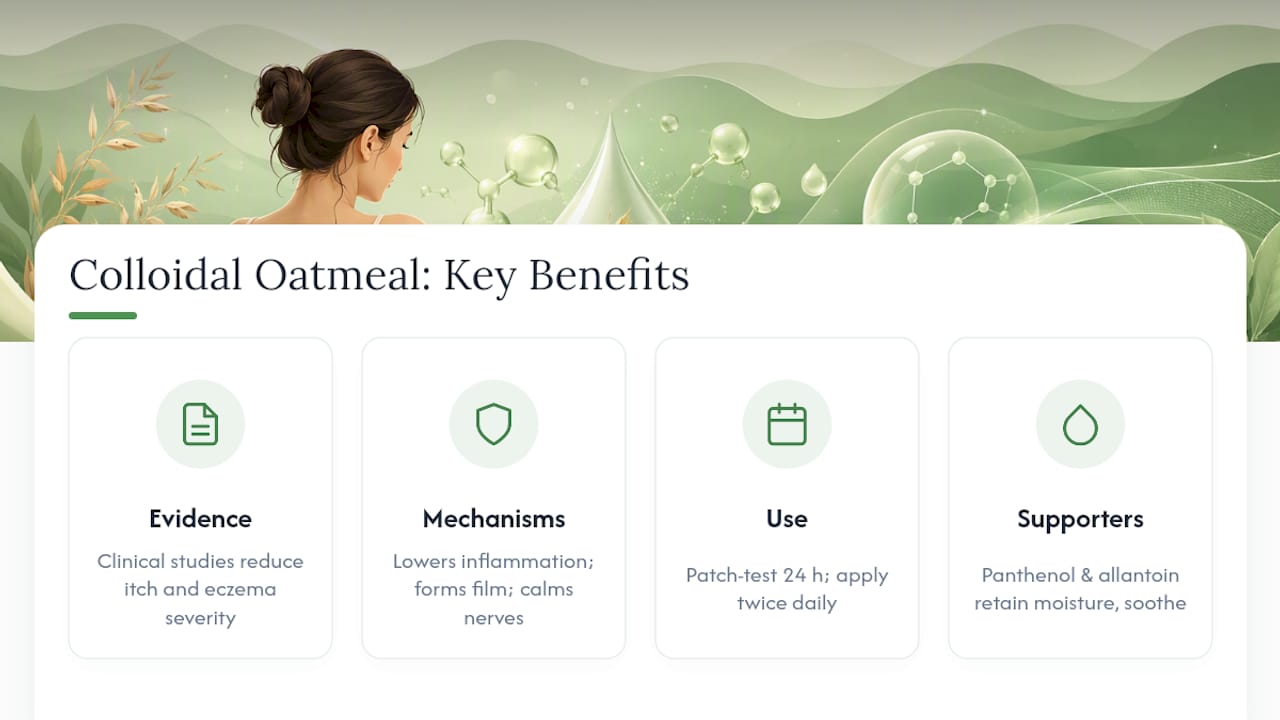
Colloidal oatmeal isn’t a folk remedy that happened to catch on. It contains avenanthramides, plant compounds that interrupt the same inflammatory pathways involved in histamine-driven itch, and clinical research shows colloidal oatmeal formulations meaningfully reduce itch severity and improve eczema symptoms.
Colloidal oatmeal soothes skin through several actions at once: it lowers inflammation, forms a protective film that limits moisture loss, and calms the nerve activity behind persistent itch. That’s a broader mechanism than a numbing agent offers, and it explains why oatmeal-based lotions tend to help with chronic conditions like eczema rather than just masking a single flare-up.
Clinicians generally recommend applying colloidal oatmeal lotion twice a day, and the Cleveland Clinic advises patch testing first if your skin is highly reactive, even though reactions are uncommon. Apply a small amount to your inner forearm, wait 24 hours, and check for redness before using it more broadly.
Panthenol (provitamin B5) and allantoin are worth watching for on ingredient lists too. Neither has the research depth of colloidal oatmeal, but both help retain moisture and calm surface irritation, making them solid supporting players in a soothing lotion rather than headline ingredients on their own.
Barrier-Repair Ingredients: Why Ceramides and Lipids Fix Itch Long-Term
Dry, itchy skin usually means your skin’s barrier, the outermost layer that locks in moisture and locks out irritants, has broken down. That’s where physiological lipids come in: ceramides, cholesterol, and fatty acids are the exact materials your skin uses to hold that barrier together, and applying them topically helps rebuild what’s missing.
A 2025 study in the British Journal of Dermatology found that a multivesicular emulsion combining physiological lipids with glycerin significantly reduced water loss through the skin and increased key ceramide levels over 28 days, outperforming a standard oil-in-water glycerin lotion. In plain terms: not every “moisturizing” lotion delivers the same repair, and formulations built around actual skin lipids tend to work faster.
Two other categories matter just as much:
- Humectants like glycerin and hyaluronic acid pull water into the skin and hold it there.
- Occlusives like petrolatum and dimethicone seal that moisture in and block outside irritants.
The best lotions for dry, itchy skin layer all three: humectants to draw water in, physiological lipids to rebuild the barrier, and occlusives to keep it from evaporating right back out. Skip any one piece and the itch tends to return within days.
Matching Ingredients to the Cause of Your Itch
Not every itch needs the same fix, and picking the wrong texture or active can waste time or worsen irritation. Here’s how to match the cause to the ingredient.
- Insect bites or mild contact dermatitis. Start with pramoxine for immediate relief, or a short course of hydrocortisone if the area is visibly inflamed. Follow with a light moisturizer once the swelling settles.
- Poison ivy, oak, or sumac. Calamine and colloidal oatmeal help manage mild reactions, but widespread blistering, facial involvement, or swelling calls for medical care, not more lotion.
- Eczema-prone skin. Prioritize ceramide-rich creams and colloidal oatmeal formulations, and avoid added fragrance, which is one of the most common eczema triggers.
- Elderly or thinning skin. Richer, occlusive-heavy creams with petrolatum work best since older skin produces less natural oil. Watch for medication interactions if the person takes blood thinners or other systemic drugs.
- Oily skin that still itches. Lightweight lotions built around humectants and niacinamide add hydration without clogging pores or feeling heavy.
Natural remedies for itchy skin work best when you treat the underlying cause, not just the symptom sitting on the surface.
How to Apply Itch-Relief Lotion the Right Way
Getting the ingredients right only matters if you apply them correctly. Pramoxine products are labeled for use up to 3 to 4 times daily, and most are approved for children starting at age 2, so always check the label for your specific product.
- Apply moisturizer to slightly damp skin right after a shower to lock in extra water.
- Use a nickel to quarter-sized amount for a hand or forearm, and expect to reapply barrier-repair lotion twice daily for consistent results.
- Skip ingredients like alcohol denat. and added fragrance if your skin reacts easily, and patch-test anything new.
- See a doctor if you notice a spreading rash, fever, oozing, or itch that won’t ease after several days of consistent care.
Pro Tip: Keep your anti-itch active in one spot (like your medicine cabinet) and your daily moisturizer somewhere visible, like your nightstand. Pairing a “quick fix” step with a “daily habit” step is the easiest way to actually follow through on both.
How Jeffi’s Ingredient Choices Match What the Research Says
Some bug bite relief lotions are built around the principle dermatology research supports: fast symptom control paired with skin-friendly ingredients. That’s the short-term active half of the equation for a fresh bite.
For the barrier-repair half, Jeffi’s hand & body lotion targets the dryness that comes from frequent hand washing, and internal tracking on that lotion for frequent hand washing showed visible improvement in cracked, dry hands within about a month of consistent use. For bite aftercare specifically, Jeffi’s guide on how to stop scratching bug bites walks through gentle, practical steps that pair naturally with any anesthetic active.
What I’d Try First If My Skin Wouldn’t Stop Itching
If the itch just started, reach for a fast-acting active like pramoxine. If it’s been dragging on for weeks, that’s a barrier problem, and colloidal oatmeal or ceramide-based moisturizers deserve the real commitment. Patch-test anything new, then give barrier-repair lotion 2 to 4 weeks before judging whether it’s working. Skin repair is rarely instant, and that’s normal.
— Jeffi
Find the Right Jeffi Lotion for Your Itch
Some product lineups are built around the ingredient logic this article just walked through: fast relief when you need it, real barrier repair when you don’t. No mystery chemicals, no guessing which bottle on the shelf actually matches your skin.

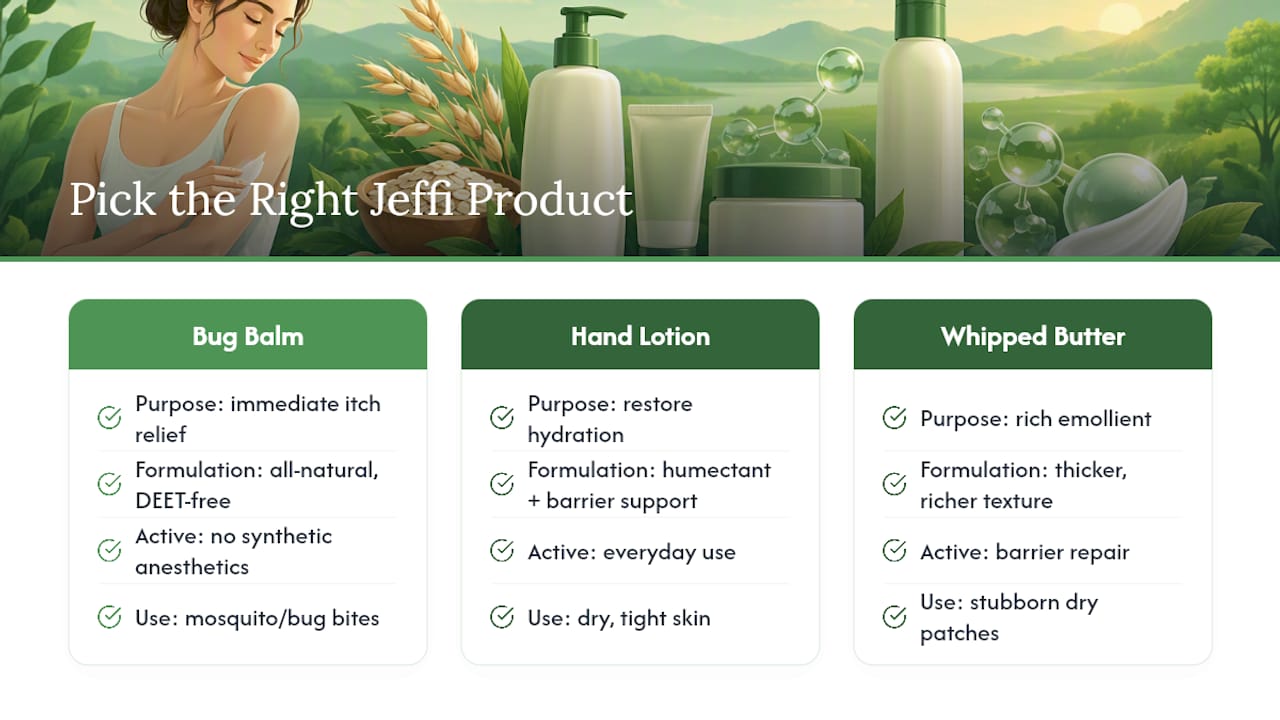
If a mosquito bite or bug bite is the culprit, the Bug Bite Relief Balm is formulated for that exact moment, all-natural and DEET-free, made to calm the itch without synthetic anesthetics you can’t pronounce. If your hands or body feel dry and tight from routine washing or weather, the Hand & Body Lotion delivers the humectant and barrier-supporting approach this article covers. For stubborn dry patches that need something richer, browse the Whipped Body Butters collection.
Pick the product that matches your itch, and check the current lineup on Jeffi’s site to get relief started today.
This article is general information, not a substitute for advice from a qualified doctor. Consult a qualified healthcare professional about your own circumstances before acting on anything here.
Sources
- DailyMed — Pramoxine hydrochloride OTC product info
- PubMed — Colloidal oatmeal: mechanisms and clinical efficacy (2010)
- British Journal of Dermatology — Topical supplementation with physiological lipids rebalances the stratum corneum (2025)
- Cleveland Clinic — Colloidal oatmeal: uses, safety, and guidance (2025-01-23)
FAQ
What Is the Best Lotion for Extremely Itchy Skin?
For sudden, intense itching, a lotion with 1% pramoxine offers the fastest relief since it numbs the itch signal directly, per DailyMed’s product guidance. For itch that keeps returning, a ceramide-rich or colloidal oatmeal moisturizer addresses the dry, damaged barrier actually causing it.
What Is a Good Lotion for Itching in General?
A good anti-itch lotion pairs an active ingredient, like pramoxine or hydrocortisone, with a moisturizing base built on humectants and occlusives. Colloidal oatmeal lotions work well for general itching too, since research shows they reduce inflammation and itch severity without the numbing side effects of anesthetics.
What Vitamin Deficiency Causes Itchy Skin?
Low vitamin D and vitamin B12 levels are sometimes linked to dry, itchy skin, though nutritional deficiency is just one possible cause among many, including dehydration, eczema, and allergic reactions. A doctor can test for deficiencies if itch persists despite consistent moisturizing.
What’s a Good Lotion for Itchy Skin in Elderly People?
Elderly skin typically needs richer, occlusive-heavy formulas with petrolatum or dimethicone, since aging skin produces less natural oil and loses moisture faster. Jeffi’s Hand & Body Lotion fits this need well, and caregivers should also watch for medication interactions with blood thinners or other systemic drugs.
How Often Should I Apply Anti-Itch Lotion?
Pramoxine-based products are labeled for up to 3 to 4 applications daily, while barrier-repair moisturizers with colloidal oatmeal or ceramides work best applied twice daily for consistent results over several weeks.