

Chigger bite relief starts with a hot, soapy shower and a scrub with a washcloth, followed by a cold compress, 1% hydrocortisone or calamine, and an oral antihistamine if the itching is severe. This is symptomatic care, since the mite is usually long gone by the time bites start itching. According to the Cleveland Clinic, itching often improves within 24 to 48 hours, though full healing can take up to two weeks.
TL;DR:
- Most chigger bites resolve within one to two weeks, with itchiness peaking after 24 to 48 hours and gradually fading.
- Immediate hygiene measures such as hot showers, laundering clothes, cold compresses, and topical treatments significantly reduce discomfort.
- Signs of secondary infection include spreading redness, swelling, pus, or fever, indicating the need for medical evaluation.
- Common myths like suffocating mites with nail polish or petroleum jelly are ineffective because larvae detach naturally, usually within 48 hours.
- Preventative steps such as showering promptly, treating clothing with permethrin, and using DEET are the most effective ways to avoid bites.
Table of Contents
- What Chigger Bites Are and How Long They Last
- Spotting Normal Symptoms vs. Signs of Infection
- Stop the Itch Now: First-Aid Steps That Work
- At-Home Treatments That Actually Have Evidence Behind Them
- Chigger Bite Myths That Waste Your Time
- When to See a Doctor
- Preventing the Next Round of Bites
- Jeffi’s Approach to Bug Bite Aftercare
- Our Take: Skip the Shortcuts, Trust the Timeline
- A Gentler Way to Soothe Bites While You Heal
- Sources
- FAQ
What Chigger Bites Are and How Long They Last
Chiggers aren’t insects biting you. They’re the larval stage of trombiculid mites, and they don’t actually bite at all. They inject digestive enzymes into skin cells and feed on the liquefied tissue, and your immune system reacts to those enzymes with the redness and itching you feel afterward.
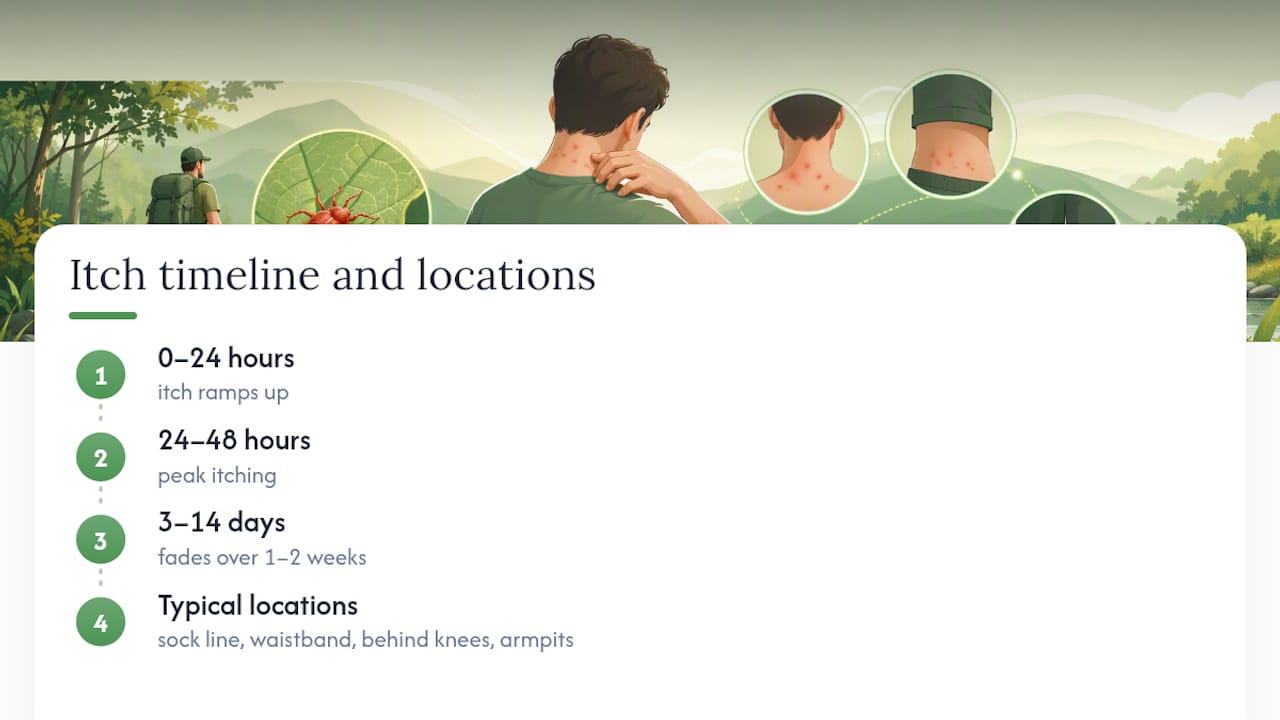
That reaction has a predictable rhythm. Itching typically ramps up over the first day, peaks somewhere between 24 and 48 hours, and then fades gradually over one to two weeks, per the Cleveland Clinic. You’ll usually spot bites in tight clusters, often where clothing presses against skin: sock lines, waistbands, behind the knees, and armpits. The larvae gravitate toward warm, thin skin and constricted areas, which is why chigger bites so often show up in neat little rows instead of random scattered spots like mosquito bites do.
Spotting Normal Symptoms vs. Signs of Infection
A typical chigger bite looks like a small, firm, red bump, sometimes with a tiny blister at the center, arranged in a cluster rather than as a lone welt. The itching is often intense, occasionally intense enough to disrupt sleep, but it stays localized to the bite sites.
Watch for a shift outside that pattern. Increasing redness that spreads beyond the original bumps, warmth to the touch, swelling that worsens instead of easing, pus or oozing, or a fever are all signs of a secondary infection rather than a normal bite reaction. Scratching is usually the culprit, since broken skin gives bacteria an easy way in. A single bite that turns into a firm, tender node weeks later, or a bite that simply won’t calm down after two weeks of home care, is also worth a second look. Most cases never get there. But knowing the difference between “annoying” and “needs a doctor” saves you from waiting too long.
Stop the Itch Now: First-Aid Steps That Work
If you just came in from the yard or a hike and you’re already itching, move through these steps in order.
- Shower right away. Hot water and a washcloth create the friction needed to dislodge any larvae still on your skin, per Healthline.
- Launder your clothes in hot water. This kills off any mites hiding in fabric before they find a new spot to feed, according to WebMD.
- Apply a cold compress. A few minutes at a time numbs the area and calms swelling before it builds.
- Reach for a topical anti-itch treatment. Hydrocortisone 1% or calamine lotion, applied to each bite, cuts down the urge to scratch.
- Take an oral antihistamine if the itching is severe or keeping you up at night.
- Trim your nails and cover bites loosely if you tend to scratch in your sleep, which lowers your risk of breaking skin and inviting infection.
Do these in the first hour or two after exposure, and you’ll head off most of the misery before it peaks.
At-Home Treatments That Actually Have Evidence Behind Them
Not every home remedy floating around online holds up, but several do, and they’re worth keeping in your medicine cabinet.
- Topical hydrocortisone, calamine, or menthol/pramoxine creams calm itching directly at the bite site; reapply per the label, and stop if skin gets more irritated rather than less.
- Oral antihistamines like diphenhydramine or loratadine work well for widespread itching, though diphenhydramine causes drowsiness, so dose it with that in mind, especially for kids or older adults.
- Colloidal oatmeal baths soothe inflamed skin and help repair the outer skin barrier, a remedy with a long track record for itch relief, per Healthline.
- Fragrance-free emollients lock in moisture after a bath and reduce the dry, tight feeling that makes you want to scratch more.
- Cold compresses remain one of the simplest tools you have; short sessions of icing, a few minutes at a time, blunt both itch and swelling.
Pro Tip: Essential oils like tea tree or lavender can complement a soothing routine, but they aren’t FDA-regulated treatments, and undiluted oils can trigger skin sensitivity in some people, especially on already-irritated skin.
According to the Cleveland Clinic, most people see real improvement within 24 to 48 hours of starting this kind of symptomatic care.
Chigger Bite Myths That Waste Your Time
Nail polish and petroleum jelly are two of the most persistent chigger myths out there, both built on the idea that you need to “suffocate” the mite. It doesn’t hold up, because larvae typically detach within 48 hours on their own, according to StatPearls. By the time you notice the itch, there’s usually nothing left to smother.
Ivermectin and similar antiparasitic drugs aren’t indicated for chigger bites either. Chiggers aren’t burrowing parasites like scabies mites, so that category of medication doesn’t apply here. And piling on harsh rubbing alcohol or undiluted essential oils in the name of “killing it faster” tends to backfire, irritating skin that’s already inflamed and slowing down healing instead of speeding it up.
When to See a Doctor
Most chigger bites resolve on their own with basic care, but a few red flags mean it’s time for a clinician visit. Watch for spreading redness, warmth, swelling that keeps getting worse, pus, or a fever, all signs pointing toward secondary infection rather than a normal bite reaction. No improvement after two weeks of consistent home treatment is another cue to get checked, per WebMD.
A doctor may prescribe a stronger topical steroid than what’s available over the counter, and antibiotics if infection has set in. In rare, stubborn cases, a short oral steroid course or an intralesional steroid injection can calm things down. Bring a quick timeline: when the bites appeared, what you’ve tried at home, and how symptoms have changed.
Preventing the Next Round of Bites
The best chigger bite relief is the round you never have to deal with. Prevention starts the moment you get home from wherever you picked them up.
- Shower immediately after any time in tall grass, brush, or wooded trails.
- Launder clothes and gear in hot water the same day, since larvae can linger on fabric.
- Tuck pants into socks and cinch cuffs at the wrist and ankle to block mites from reaching skin, a low-tech trick that genuinely works.
- Treat clothing and gear with permethrin, which stays effective through multiple washes and is a solid layer of protection for boots, socks, and pant legs.
- Apply DEET to exposed skin, still considered the most consistently effective repellent for keeping chiggers off in the first place, per StatPearls. Follow label concentration guidance for kids, and avoid applying it to hands or near the eyes and mouth.
A chemical-free approach to clothing choices can add another layer of protection if you’d rather minimize what touches your skin directly.
Pro Tip: Pack a small aftercare kit before any hike: a travel tube of hydrocortisone, a compact cold pack, and a fragrance-free moisturizer for post-hike skin care. Fifteen minutes of prep beats two weeks of itching.
Jeffi’s Approach to Bug Bite Aftercare
Jeffi’s own guidance on stopping the urge to scratch leans on the same principle clinicians emphasize: interrupt the itch cycle fast, then support your skin barrier while it heals. That means pairing basic symptom control with gentle, fragrance-free moisturizing, not skipping straight to whatever’s in the medicine cabinet.
Our Take: Skip the Shortcuts, Trust the Timeline
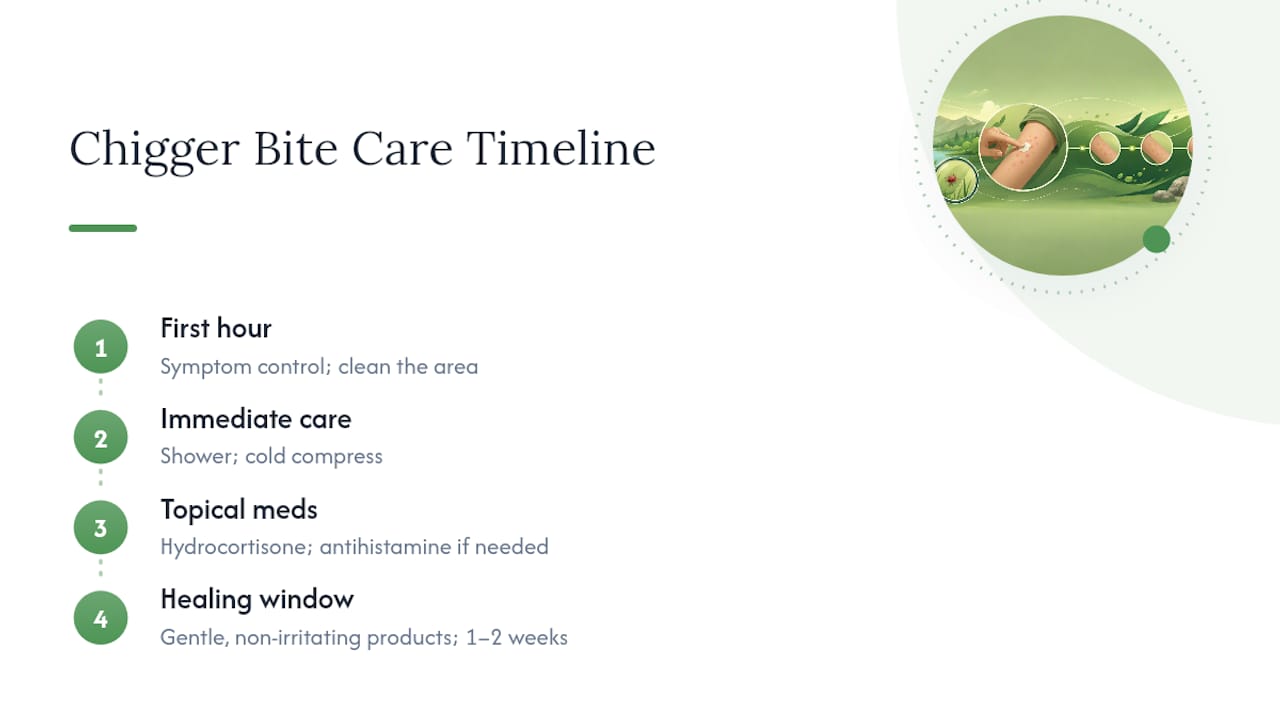
Here’s what the research actually supports: chigger bite relief isn’t about finding one magic remedy. It’s about layering a few boring, reliable steps, shower, cold compress, hydrocortisone, antihistamine if needed, and giving your skin the one to two weeks it needs to fully calm down.
Where conventional advice falls short is in how much energy people spend hunting for a way to “kill” a mite that’s already gone. That energy is better spent on aftercare: keeping skin barrier support in the routine so bites heal cleanly instead of turning into scratched-up, infection-prone sores.
Priority one is always symptom control and hygiene in that first hour after exposure. Priority two is patience. Priority three, and this is where a lot of guides miss the mark, is picking gentle, non-irritating products for the healing window instead of loading up on harsh alcohol-based treatments that fight your skin instead of helping it. That’s the gap Jeffi’s products are built to fill.
— Jeffi
A Gentler Way to Soothe Bites While You Heal
Once you’ve handled the shower, the antihistamine, and the cold compress, your skin still needs support to get through the itchy in-between days. Jeffi makes its Bug Bite Relief Balm, roll-on, and lotion without DEET or synthetic fragrance, built to soothe irritated skin and help lock in moisture while a bite heals naturally. These aren’t medical cures. They’re a natural aftercare layer that fits alongside the hydrocortisone and antihistamine steps covered above, for people who’d rather keep harsh chemicals off their skin during that healing stretch.
Jeffi’s Bug Bite Relief collection covers all three formats, so you can pick what fits your routine, a quick roll-on for the trail or a richer balm for overnight. Check the collection and pick the one that matches how you like to apply relief.
Sources
This guide leans on established clinical and public-health sources rather than guesswork.
- Chigger Bites: What they Look Like, Treatment & Prevention — Cleveland Clinic
- Chigger Bites — WebMD
- Chigger Bites and Trombiculiasis — StatPearls (NCBI Bookshelf)
- Home Remedies for Chigger Bites — Healthline
This article is general information, not a substitute for advice from a qualified doctor. Consult a qualified healthcare professional about your own circumstances before acting on anything here.
FAQ
What is the fastest way to heal chigger bites?
Shower and scrub promptly to remove any lingering larvae, then apply a cold compress and hydrocortisone or calamine. Most people see noticeable itch improvement within 24 to 48 hours, per the Cleveland Clinic.
Will chiggers stay in your bed?
Chiggers don’t typically infest bedding or homes the way bed bugs do, since they live in vegetation and grassy or wooded areas, not indoors. Washing the clothes you wore during exposure in hot water is enough to remove any that hitched a ride inside.
Does Vicks VapoRub help chigger bites?
There’s no clinical backing for VapoRub as a chigger bite treatment, and menthol products marketed for itch relief are a better-supported option. Stick to hydrocortisone, calamine, or menthol/pramoxine creams formulated for anti-itch use instead.
Will Dawn dish soap get rid of chiggers?
A hot shower with soap and a washcloth helps physically dislodge larvae still on your skin, but the soap brand itself isn’t what matters, the scrubbing action is. Any mild soap works fine for this step.
How long do chigger bites typically last?
Itching usually peaks within the first 24 to 48 hours and fades gradually, with most bites fully resolving within one to two weeks. Bites that worsen or persist past that window are worth a doctor’s visit.