

The moment you’re off the trail, cool down and drink water, gently wipe away sweat, dirt, and sunscreen, moisturize your face and any friction spots, and reapply SPF if you’re heading back out. Handle chafing, blisters, or bites right away, before they turn a good hike into a bad week. That’s the whole game, and everything below just shows you how to do it well.
TL;DR:
- Use cold water or compresses to reduce redness and inflammation quickly, as heat increases skin blood flow and aggravates irritation.
- Carry and apply fragrance-free wipes or micellar water for cleansing during water scarcity, and choose multi-purpose products like castile soap for convenience.
- Rehydrate skin immediately after cleansing with humectants such as glycerin or hyaluronic acid, avoiding heavy occlusive balms unless skin is cracked or very dry.
- Reapply broad-spectrum SPF frequently, especially at high altitudes or after sweating, and treat sunburns with cooling methods, aloe gel, and increased water intake.
- Delay exfoliation until at least 24 to 48 hours after long hikes, opting for gentle chemical exfoliants on healed skin and avoiding scrubs on sunburned or irritated areas.
Table of Contents
- How to Cool Down and Clean Off Safely After a Hike
- Which Cleansing Option Fits Your Trail Setup?
- What Actually Reduces Redness and Inflammation Fast?
- How to Rehydrate Skin and Restore the Barrier After a Hike
- Reapplying Sunscreen and Treating Sunburned Skin
- Treating Chafing, Blisters, and Insect Bites After a Hike
- Foot-Specific Recovery: Dry, Inspect, and Protect
- The 5-Minute, Anywhere Post-Hike Routine
- Jeffi’s Approach to Trail-Appropriate Skin Care
- Post-Hike Exfoliation Timing and Recommendations
- Preventing and Managing Post-Hike Fungal Infections
- Nutrition Tips to Support Skin Recovery After Hiking
- Importance of Rest and Avoiding Further Skin Irritation Post-Hike
- A Field-Tested Take on Minimalist Recovery
- Pack Light, Recover Right With Jeffi
- Sources
How to Cool Down and Clean Off Safely After a Hike
Skip the hot shower. Heat pulls more blood to the skin’s surface, which can make flushed, sun-stressed skin look and feel worse. A cool shower or a damp cool compress does the opposite: it calms redness fast and takes the sting out of windburn or mild sunburn, which is why the Leave No Trace Center for Outdoor Ethics points to cooling as a first move before anything else.
If you’re washing outdoors instead of at a trailhead spigot, follow the same rule backcountry rangers drill into every new backpacker: carry water away from the source, use biodegradable soap sparingly, and dump wash water well away from any lake or stream, exactly as the National Park Service’s Leave No Trace guidance spells out. No shower nearby? Fragrance-free wipes, micellar water, or a damp bandana handle the job just fine.
Work through these zones in order, since they trap the most sweat, dirt, and sunscreen residue:
- Face and neck: where sunscreen and salt build up fastest
- Shoulders and pack straps: pressure points that chafe under weight
- Groin and inner thighs: prone to sweat-driven irritation
- Feet: the area most likely to blister if left damp
Which Cleansing Option Fits Your Trail Setup?
Not every cleanser belongs in every pack. Fragrance-free wipes work best for a fast face-and-neck pass when you’re rationing water, while micellar water is gentler for sensitive or sunburned skin since it lifts grime without rinsing. Reusable microfiber pads paired with micellar water also cut down on wipe waste, a swap Outside Online has documented among backcountry travelers trying to lighten their trash load.
Castile soap earns its spot in a lot of packs because it pulls triple duty on hair, body, and even dishes, though it can leave sensitive skin feeling tight if overused. Solid cleanser bars pack lighter than liquid soap and store well in a mesh bag, but let them air-dry between uses so they don’t turn into a bacteria magnet.
A few habits matter more than the product itself:
- Don’t over-scrub sunburned or windburned skin. Friction makes irritation worse.
- Blot rather than rub when skin already feels raw or tight.
- Stick to fragrance-free formulas. Experienced hikers lean this way partly because scented products draw more attention from wildlife.
What Actually Reduces Redness and Inflammation Fast?
A cool compress or a quick dip in a cold stream (away from where you’ll wash, per Leave No Trace) does more for heat-stressed skin than any product you’re carrying. It brings surface temperature down and visibly calms redness within minutes, which lines up with why cooling is the top recommendation from the Leave No Trace Center for Outdoor Ethics.
Once skin has cooled, aloe gel or a lightweight gel moisturizer adds a second layer of relief. Both hydrate without feeling heavy on already-sensitive skin, an approach echoed in field advice on soothing skin after sun or swim exposure. A thin layer of over-the-counter hydrocortisone can help with short-term itching or mild inflammation, but if redness spreads, blisters, or doesn’t ease within a couple of days, that’s a signal to check with a clinician rather than keep treating it yourself.
Pro Tip: On multi-day trips, tuck a small tube of aloe gel into the bottom of a cooler or shaded stuff sack. A few degrees cooler makes it feel dramatically better on hot, tired skin.
How to Rehydrate Skin and Restore the Barrier After a Hike
Apply moisturizer while skin is still slightly damp from cleansing, not after it’s air-dried, following practical guidance on clothing choices and heat exposure to support skin recovery. Damp skin absorbs product more evenly, and that timing window is when hydrating ingredients do the most work.
Reach for a humectant, glycerin or hyaluronic acid, when you need fast rehydration without heaviness, since those ingredients pull moisture into the skin rather than just sitting on top of it. Save occlusive balms, the thicker, greasier options, for spots that are genuinely dry or cracked, like heels or knuckles, because they lock moisture in but can feel too heavy everywhere else.
Focus application on:
- Face and ears: the most exposed skin all day
- Neck and shoulders: often forgotten during sunscreen application
- Any friction zones: waistband, bra line, sock cuffs
If you’re back at camp or home for the night, a ceramide-rich night cream gives the skin barrier hours to rebuild while you sleep, which matters more after a long day of sun and sweat than most people realize.
Reapplying Sunscreen and Treating Sunburned Skin
Broad-spectrum SPF isn’t optional gear, it’s the one product that actually prevents long-term damage, according to the Skin Cancer Foundation. A sunscreen stick makes reapplication painless for noses, ears, and part lines, the spots people forget most often. Remember that elevation intensifies UV exposure, so a summit break deserves a fresh coat even if you applied at the trailhead.
For skin that’s already caught too much sun:
- Cool compresses and aloe gel bring down heat and calm redness.
- Drink extra water. Sunburned skin loses moisture faster.
- Skip exfoliants and retinoids until the burn fully heals.
- Watch for blistering, fever, or chills. Those warrant medical attention, not home care.
Treating Chafing, Blisters, and Insect Bites After a Hike
- Clean the area first. Gently wash chafed or bitten skin, then pat it dry rather than rubbing.
- Protect chafing with a barrier. A thin layer of occlusive balm cuts friction and shields skin until you can clean it properly, a fix backcountry guides on protecting skin during hiking trips recommend for exactly this reason.
- Assess blisters before draining. Small, unbroken blisters usually heal faster left intact and covered. Larger, painful ones may need a sterile drain and a proper dressing.
- Dress it and move on. Moleskin or a hydrocolloid pad protects the spot without adding heavy padding.
- Treat itching with low-sting options. Calamine or a mild anti-itch cream beats anything with alcohol on broken skin.
- Skip the scented lotion in bear country. Fragrance-free is safer, since strongly scented products can draw wildlife attention around camp.
Foot-Specific Recovery: Dry, Inspect, and Protect
Feet take the most abuse on a trail, and they’re the easiest area to neglect once boots come off. Dry between the toes completely, since lingering moisture is what invites blisters and fungal irritation. Run your fingers over heels, arches, and toe edges to catch hot spots before they become open blisters.
- Cover hot spots immediately with moleskin or an adhesive blister pad.
- Apply a thin antifriction balm to areas prone to repeat rubbing.
- Switch to breathable, moisture-wicking socks for camp or the drive home.
- Rotate footwear when possible. Repeated pressure on the same spot is what turns a hot spot into a real blister.
The 5-Minute, Anywhere Post-Hike Routine
No shower, no problem. This sequence works from a trailhead parking lot or a backcountry campsite alike.
- Drink water first. Internal hydration supports skin recovery just as much as anything you put on it.
- Cool down. A compress, splash of cold water, or a few minutes in the shade to blot sweat and heat.
- Wipe or cleanse. A fragrance-free wipe or micellar water pass over face, neck, and any grimy zones.
- Moisturize key areas. Face, ears, neck, and friction spots while skin is still slightly damp.
- Reapply sunscreen if you’re heading back into sun.
Pack this in stick SPF, single-use or reusable wipes, and a small balm tube so the whole kit fits in a jacket pocket. And when you’re done, pack out every wipe. Leave No Trace applies to your skin-care trash just as much as your snack wrappers.
Jeffi’s Approach to Trail-Appropriate Skin Care
The brand builds its lotions, whipped body butters, and bug bite relief balms around exactly this kind of minimalist logic. Products are formulated without synthetic fragrance, which matters both for sensitive, sun-stressed skin and for keeping scent profiles low in bear country. Compact formats travel well in a hip belt pocket or first-aid kit, so reapplying moisturizer or treating a bite doesn’t mean carrying a full-size bottle. That balance, real ingredients without the pack weight, is the same trade-off experienced hikers make every time they repackage a full-size product into something smaller.
Post-Hike Exfoliation Timing and Recommendations
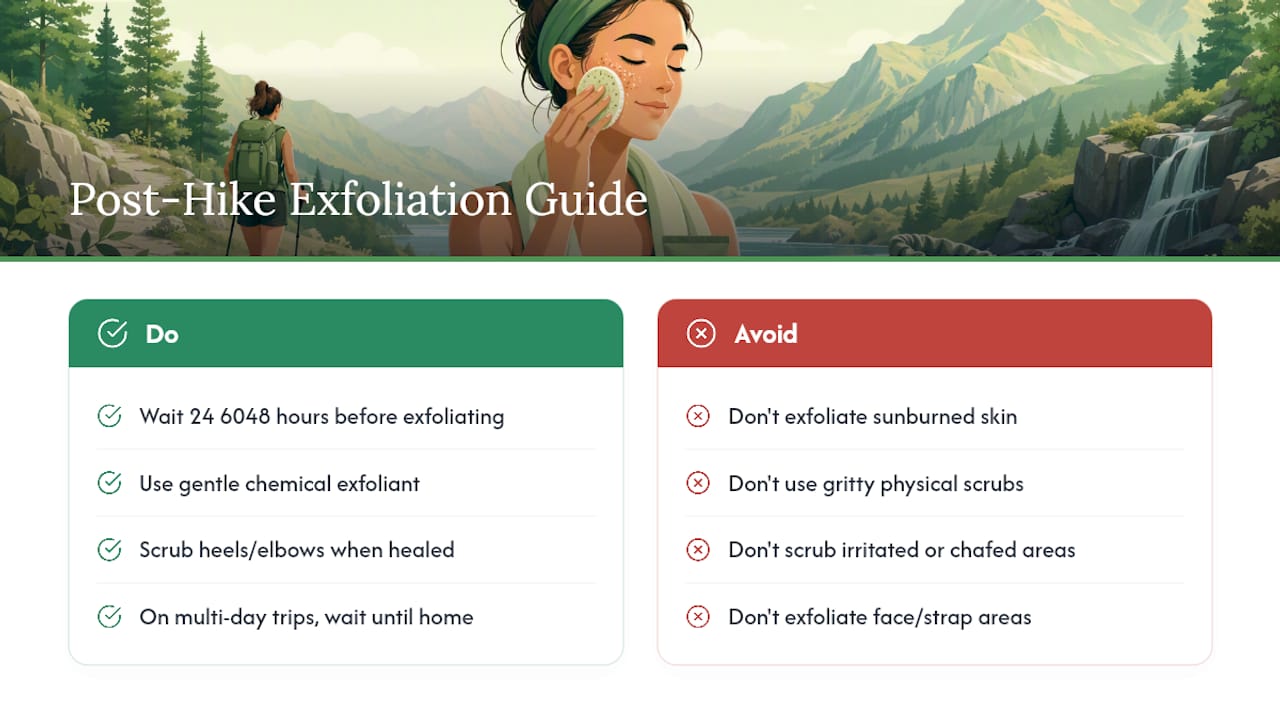
Exfoliating right after a hike is almost always the wrong move. Skin that’s sunburned, windburned, or already irritated from sweat and friction doesn’t need extra abrasion, it needs calm. Scrubbing compromised skin can worsen redness and even break skin that’s already thin from sun exposure.
Wait at least 24 to 48 hours after a hike before exfoliating, and only if your skin shows no signs of sunburn, chafing, or open irritation. If you do exfoliate, choose a gentle chemical option, a mild lactic or salicylic acid formula, over a gritty physical scrub, since physical exfoliants apply more mechanical stress to skin that may still be recovering.
Feet and elbows are the exception. Rough, calloused skin on heels can handle a scrub once truly healed, usually a few days post-hike, to smooth away dead skin before it cracks. Everywhere else, especially the face, neck, and any area that spent the day under a pack strap, benefits more from a rest period than a scrub. If you’re on a multi-day trip, skip exfoliation entirely until you’re home and can assess your skin without pack straps or sun exposure complicating the picture.
Preventing and Managing Post-Hike Fungal Infections
Damp socks, sweaty gear, and warm skin folds are exactly the environment fungal infections thrive in. Athlete’s foot, jock itch, and body ringworm all show up more often in hikers because trail conditions check every box a fungus needs: moisture, warmth, and prolonged contact with the same fabric.
Prevention starts with drying thoroughly. Towel off between toes, in the groin, and under any skin folds before dressing, and change out of sweaty base layers as soon as you can rather than lounging in them at camp. Breathable, moisture-wicking socks and underwear cut down on the trapped humidity that lets fungus take hold in the first place.
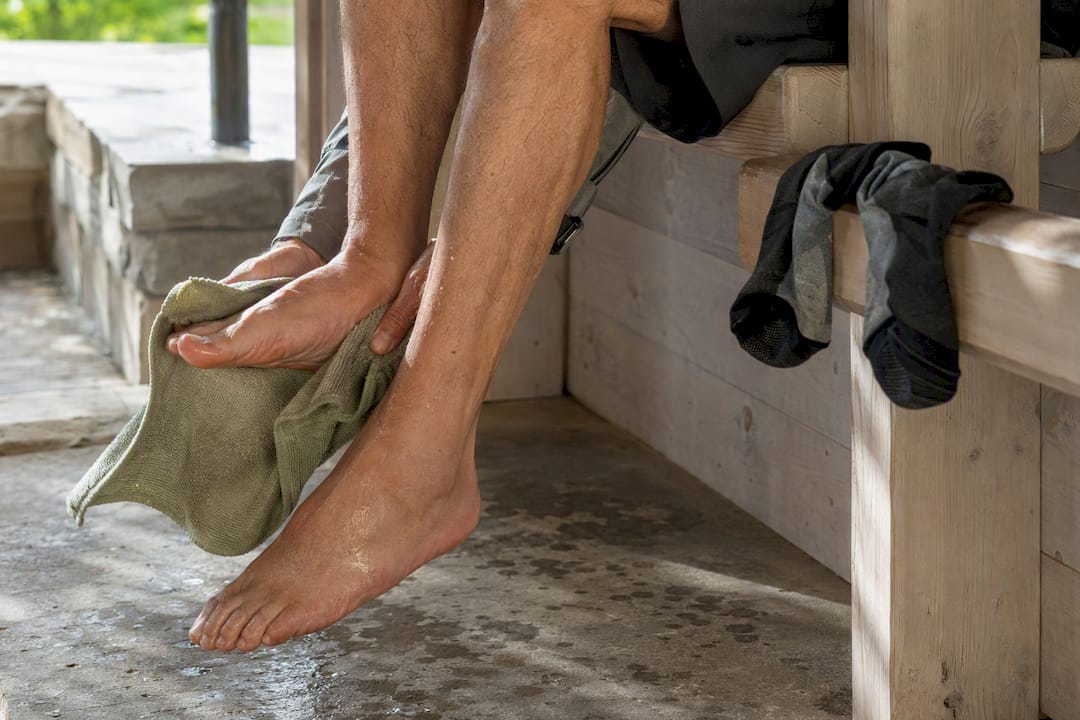
If you notice redness, scaling, or persistent itching in a skin fold or between toes, an over-the-counter antifungal cream applied consistently for the full course, usually one to two weeks, clears most mild cases. Skip sharing towels, socks, or footwear with other hikers, since fungal infections spread easily through shared fabric. If symptoms worsen, spread rapidly, or don’t improve after two weeks of consistent treatment, see a clinician rather than continuing to self-treat. Rotating footwear and letting boots fully dry between hikes matters here too. A boot that never fully dries out becomes a long-term fungal reservoir, not just a one-hike problem.
Nutrition Tips to Support Skin Recovery After Hiking
What you eat after a hike shapes how fast your skin bounces back, and internal hydration comes first. Drinking water immediately after a hike helps restore fluid balance systemically, which shows up in skin that looks less dull and feels less tight within hours. Pairing water with water-rich foods, cucumber, watermelon, oranges, gives you both fluid and electrolytes in one bite, which matters more after a sweaty, high-exertion day than plain water alone.
Protein matters too, since skin repair relies on the same amino acids your muscles need to recover. A post-hike meal with a solid protein source, eggs, Greek yogurt, or a trail-friendly jerky, supports the same repair processes that heal sunburn and minor abrasions.
Foods rich in vitamin C (citrus, bell peppers) and vitamin E (nuts, seeds) support the skin’s natural repair process, while omega-3s from fish or walnuts help calm inflammation from sun exposure. None of this replaces topical care, but a dehydrated, nutrient-depleted body heals skin more slowly no matter what cream you apply.
Importance of Rest and Avoiding Further Skin Irritation Post-Hike
Skin needs downtime just like tired legs do. Continuing to expose sunburned, chafed, or blistered skin to more friction, heat, or sun the next day only extends recovery time and raises the odds of a secondary problem, like an infected blister or worsening sunburn.
Give irritated skin a full rest day when possible. That means skipping the next hike, staying out of direct sun during peak hours, and avoiding tight gear that presses on already-sore areas. Sleep matters here too. Skin repair processes ramp up overnight, so a solid night’s rest does more for healing than any single product applied at bedtime.
Resist the urge to pick at peeling sunburned skin or pop blisters that don’t need draining. Both slow healing and open the door to infection. If a spot still looks angry, swollen, or painful after two or three days of rest and basic care, that’s the point to loosen up your itinerary rather than push through it.
A Field-Tested Take on Minimalist Recovery
The best post-hike routine is usually the one you’ll actually do at 6 p.m. with tired legs and a headlamp, not the ten-step version you’d do at home. A single-night reset, cool rinse, wipe down, moisturize, treat any hot spots, covers 90 percent of what skin needs after a long day outside.
Every ounce in a pack is a trade-off, and skin care is no exception. Most hikers land on two or three multi-use products instead of a full shelf of specialty items, and that’s the right call. Adjust the routine to your own skin. Sensitive skin might need gentler cleansers; drier climates might call for heavier moisturizer. There’s no single correct kit, just the one that keeps you comfortable enough to hike again tomorrow.
— Jeffi
Pack Light, Recover Right With Jeffi
This brand offers an alternative to a bathroom cabinet full of single-use products, built specifically for the trail-ready minimalist routine outlined above. Its bug bite relief balms and all-natural lotions are formulated fragrance-free, so they double as barrier repair for chafed skin and calming relief for insect bites without adding a scent that draws wildlife.

For the moisturizing step, a travel-friendly hand and body lotion handles face, neck, and friction zones in one bottle small enough for a hip pocket. If you’re prone to dry heels or cracked knuckles after long miles, the whipped body butters give you the occlusive, overnight repair your barrier needs without carrying a separate heavy cream. Buying tip: stick to fragrance-free, travel-size formats that pull double duty, one balm for bites and chafing, one lotion for everything else. Browse the full lineup at Jeffi and build a kit that fits in the pocket you’ve already got room in.
Sources
- National Park Service — Leave No Trace principles
- Leave No Trace Center for Outdoor Ethics — Why the seven principles matter
- Skin Cancer Foundation — Sunscreen
- Self — How hikers do skin-care on long backpacking trips