

The best fix for hands worn down by constant washing is a fragrance-free lotion that pairs a barrier ingredient like dimethicone or petrolatum with restorative humectants such as ceramides, urea, or glycerin, applied right after every wash and again as a richer treatment at night. Stick with it consistently, and most people see real improvement in dry, cracked skin within about one month.
TL;DR:
- Consistent use of a fragrance-free lotion with barrier ingredients like dimethicone or petrolatum significantly improves dry and cracked hands within about one month.
- Applying lotion while hands are still slightly damp after washing enhances hydration, especially when targeting high-exposure skin areas or cracks with thicker ointments overnight.
- Products should prioritize barrier protectors, humectants such as glycerin or urea, and emollients like shea butter or ceramides, while avoiding added fragrance and high alcohol content.
- Reapplication after each wash, especially during high-exposure activities, is essential for maintaining skin barrier integrity and preventing irritation or eczema.
- Natural, non-GMO formulas designed with this logic can perform as well as clinical options for routine dryness, emphasizing the importance of regular use over strength or formulation complexity.
Table of Contents
- What Makes a Good Frequent Hand Washing Lotion?
- How Often Should You Apply Hand Lotion After Washing?
- How Do You Choose the Right Hand Lotion for Your Skin?
- Does Hand Lotion Really Reduce Dryness From Washing?
- Jeffi’s Approach to Formulating for Frequent Washers
- Try Jeffi’s Hand and Body Lotion for Everyday Dryness
- Sources
- FAQ
What Makes a Good Frequent Hand Washing Lotion?
Not every lotion holds up against water and soap dozens of times a day. The ones that do share a specific formula logic: they protect the skin’s outer layer, pull in moisture, and seal it there before the next wash strips it all away again.
Barrier ingredients come first. Dimethicone and petrolatum sit on top of the skin and slow water loss, which is exactly what frequently washed hands need. Every time you lather up, you strip away a thin layer of natural oil along with the germs. Do that many times a day, as is common for nurses, teachers, and parents of toddlers, and your skin barrier never gets a chance to rebuild. A barrier ingredient acts like a raincoat you put back on right after each shower.
Humectants do the opposite job, and you need both. Glycerin, hyaluronic acid, and urea draw water into the skin’s surface layer. Glycerin is the workhorse. Hyaluronic acid holds many times its weight in water. Urea does double duty: at lower concentrations (around 5-10%) it hydrates, but at higher concentrations (10-40%) it also breaks down dead, thickened skin, which is why dermatologists often recommend it specifically for cracked, callused hands rather than mild dryness.
Emollients round out the formula. Shea butter and squalane soften rough texture and fill in the gaps between skin cells, and dermatologists tend to judge a product by what these ingredients actually do rather than by brand name or price.
Here’s what to scan for on a label:
- Dimethicone or petrolatum for barrier protection against water loss
- Glycerin, hyaluronic acid, or urea for hydration and, at higher urea concentrations, gentle exfoliation of rough patches
- Shea butter, squalane, or ceramides for softening and rebuilding the skin’s lipid layer
- No added fragrance and no high-percentage drying alcohols, which are common triggers for irritation on skin that’s already compromised
Fragrance is the most avoidable irritant in this whole category. It adds nothing to how well a lotion works, and on skin already inflamed from repeated washing, it’s frequently the reason a “moisturizing” lotion ends up making things itchier. The American Academy of Dermatology specifically recommends fragrance-free formulas for anyone washing their hands often.
Some products branded as “shielding” or “barrier” lotions take this a step further, claiming to form a longer-lasting film that survives multiple washes without needing reapplication every time. Manufacturers of these shielding formulas typically recommend reapplying every 4 to 12 hours rather than after each individual wash, which suits people who wash dozens of times per shift and can’t stop to moisturize every time.
Pro Tip: If you’re choosing between two lotions with similar ingredient lists, check the order on the label. Ingredients are listed by concentration, so a barrier ingredient near the top of the list generally means more protection per pump than one buried near the bottom.
How Often Should You Apply Hand Lotion After Washing?
Timing matters almost as much as ingredients. Apply lotion while your hands are still slightly damp, not bone dry, since a little residual water gets locked in by the barrier ingredients and boosts how hydrating the product feels.
Follow this basic routine:
- Pat hands dry with a clean towel, leaving them slightly damp rather than fully dry.
- Apply a pea sized amount of lotion, working it into the backs of the hands, between fingers, and around cuticles, which dry out fastest.
- Reapply after every wash when you realistically can, or at minimum after any high-exposure wash (cleaning chemicals, hot water, extended scrubbing) and always before bed.
- Layer a lighter lotion during the day so it absorbs fast and doesn’t leave hands greasy for typing, driving, or handling paperwork.
- Switch to a thicker, more occlusive cream at night, since you have hours of uninterrupted time for a rich product to actually sink in and repair the skin barrier without washing it off.
That day and night split isn’t just a preference. Consumer testers consistently report that pairing a lightweight daytime formula with a richer overnight one cuts down how often they need to reapply, since the nighttime layer does more of the heavy repair work while they sleep.
For cracked areas specifically, spot treat with a thicker balm or ointment right over the crack, and consider covering it with a bandage overnight to lock in moisture and protect it from reopening. If a crack bleeds, doesn’t improve after a week or two of consistent care, or looks infected (increasing redness, warmth, or pus), see a dermatologist rather than continuing to self-treat.
Pro Tip: Keep a small tube of lotion at every sink you use regularly, your kitchen, your bathroom, your desk, your car. The habit only sticks if the product is within arm’s reach the second you turn off the water.
How Do You Choose the Right Hand Lotion for Your Skin?
Label language can be genuinely confusing, and manufacturers know it. Here’s what the terms actually mean.
“Fragrance-free” means no fragrance ingredients were added at all. “Unscented” can mean a masking fragrance was used to cover up the smell of other ingredients, so it isn’t the same thing and can still trigger irritation. “Hypoallergenic” isn’t a regulated term in the US, meaning any brand can put it on a label without proving it. “Dermatologist-tested” typically just means a dermatologist observed a test; it doesn’t guarantee the product is right for your skin type.
Texture matters more than most people expect, because the product you’ll actually use consistently beats the “best” product you abandon after three days because it feels greasy or takes too long to rub in.
- Creams absorb reasonably fast and work well for daytime use on moderately dry hands.
- Ointments are thicker, more occlusive, and better suited to overnight repair or severely cracked skin.
- Balms sit between the two, often solid or semi-solid until warmed by body heat, good for targeted spot treatment.
- Shielding lotions trade a slightly different feel for longer wear time, which makes sense if you wash your hands more than 15 times a day and can’t reapply constantly.
If you’re not sure what will work, buy travel or sample sizes before committing to a full tube. Keeping two products on hand (a fast-absorbing day formula and a heavier night one) solves the greasy-hands-at-work problem without forcing you to compromise on nighttime repair.
Watch for red flags that a product is doing more harm than good: increased redness after application, a stinging or burning sensation, new small bumps, or dryness that gets worse instead of better after a week of regular use. Any of those suggest an ingredient in that formula doesn’t agree with your skin, and it’s worth switching rather than pushing through. For a deeper look at what’s actually happening under the skin when cracks form, this explanation of cracked skin causes covers the mechanics in more detail.
Does Hand Lotion Really Reduce Dryness From Washing?
Yes, and the evidence isn’t just anecdotal. A clinical review by Kampf and colleagues found that regular hand cream use measurably attenuates the dryness and roughness caused by frequent hand washing, comparing skin condition with and without consistent moisturizer use over time.
That single finding matters because it separates hand lotion from wishful thinking. Frequent washing physically damages the skin barrier by stripping lipids and disrupting the outermost layer of cells. A moisturizer applied consistently interrupts that cycle rather than just masking dryness temporarily.
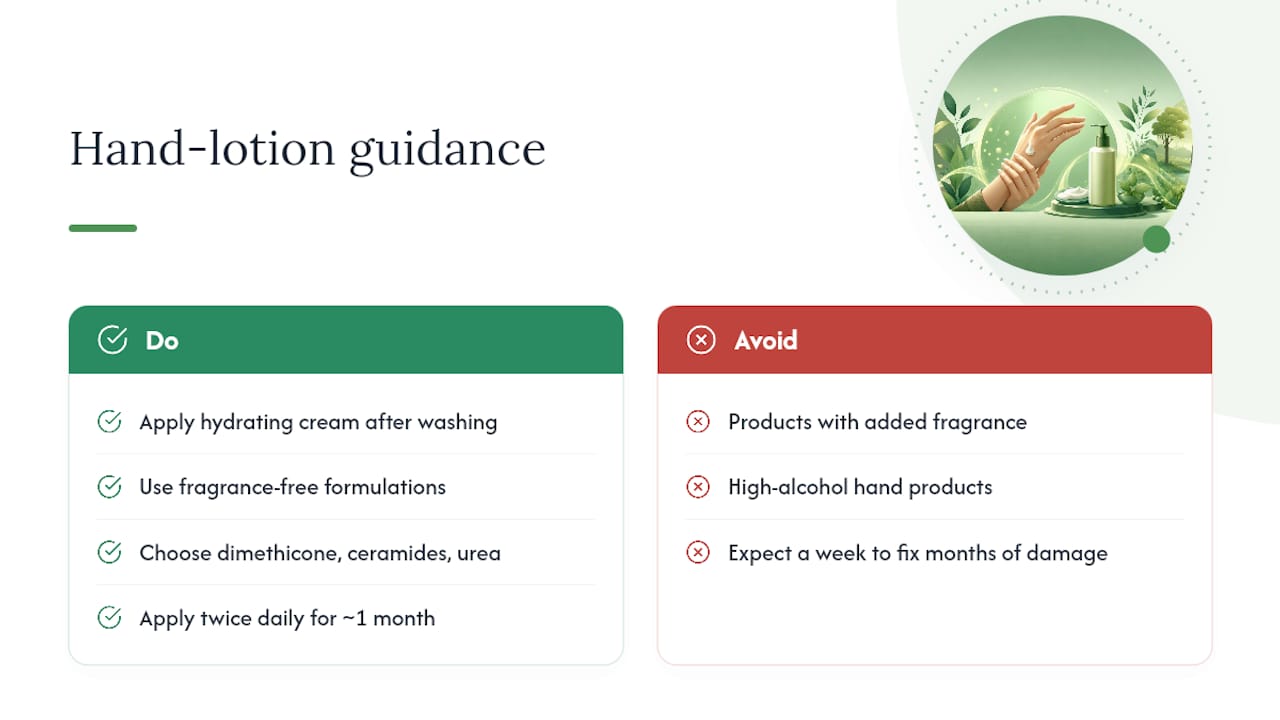
The Mayo Clinic backs this up with specific ingredient guidance, pointing to dimethicone, ceramides, and urea as effective actives for dry, cracked skin, and noting that consistent use typically shows meaningful improvement within about one month. That timeline is worth setting expectations around. A week of lotion won’t undo months of repeated washing, but a month of consistent twice-daily application usually will show visible change.
The AAD’s handwashing skin care guidance reinforces the same core message from a different angle: apply a hydrating, fragrance-free hand cream right after washing to help the skin barrier recover, and avoid products with added fragrance or high alcohol content that can worsen irritation on already-compromised skin.
Can frequent hand washing actually cause eczema, not just dryness? It can. Repeated water and soap exposure without adequate moisturizing can trigger or worsen irritant contact dermatitis, which looks and feels a lot like eczema, especially in healthcare workers, hairstylists, and parents of young children. The fix is the same either way: consistent barrier repair through the right lotion, applied at the right times, backed by evidence rather than guesswork.
Jeffi’s Approach to Formulating for Frequent Washers
We built our hand and body lotion line around one question: can a natural, Non-GMO Project verified formula actually deliver the barrier protection and hydration that frequently washed hands need, without leaning on synthetic fragrance or harsh fillers to get there? Our priority list stays consistent across every batch: barrier support first, gentle humectants second, and nothing added that doesn’t earn its place in the formula.
There’s a real difference between a natural-leaning lotion and a purely clinical one loaded with lab-derived actives at high concentrations. Clinical formulas can move faster on severe, cracked skin. A well-built natural formula, used consistently, holds up just as well for everyday dryness from routine washing, and it does it without the ingredient list you need a chemistry degree to parse. Neither approach is wrong. The right one depends on how damaged your skin already is and what you’re comfortable putting on it daily.
What we keep hearing from families who use our products is that consistency beats intensity. A gentler lotion applied every time you wash beats a stronger one applied twice a week.
— Jeffi
Try Jeffi’s Hand and Body Lotion for Everyday Dryness
Jeffi’s Confidence Hand & Body Lotion is built around the same barrier-plus-humectant logic covered throughout this guide: gentle, natural moisturizing ingredients formulated to protect skin that’s washed over and over without leaving a greasy film behind.

Use it as your daytime layer, a quick pump after each wash, worked into the backs of your hands and between your fingers where dryness shows up first. At night, reach for something richer from our whipped body butters line to give your skin hours of uninterrupted repair time while you sleep. If a rough patch or crack needs extra attention, apply a small amount directly to the spot before bed and let it work overnight.
These lotions are made without added fragrance in the core skincare line, so you’re not trading one irritant for another while trying to fix dry, overworked hands. Head to the Jeffi product page to check the full ingredient list and see which size fits your daily routine.
Sources
- Regular use of a hand cream can attenuate skin dryness and roughness caused by frequent hand washing
- Dry skin: Diagnosis and treatment — Mayo Clinic
- Dry skin relief from handwashing — American Academy of Dermatology (AAD)
- The 11 Best Hand Creams of 2026, Tested and Approved — Byrdie
FAQ
What Is the Best Lotion for Hands Washed Often?
The most effective option combines a barrier ingredient like dimethicone or petrolatum with a humectant such as glycerin or urea, applied fragrance-free right after washing and again at bedtime.
What Deficiency Causes Extremely Dry Hands?
Extremely dry hands usually come from a damaged skin barrier rather than a nutritional deficiency, though low humidity, harsh soap, and stripped natural oils from frequent washing are the most common direct causes.
What Hand Cream Works Best for Daily Use?
For daily use, dermatologists point to formulas with dimethicone, ceramides, or urea as the most effective, since consistent application over about a month shows measurable improvement in dryness and cracking.
Can Washing Your Hands Too Much Cause Eczema?
Yes, repeated water and soap exposure without adequate moisturizing can trigger irritant contact dermatitis, which closely resembles eczema and responds to the same fragrance-free, barrier-focused lotion routine.