

Yes, apply a lightweight hand lotion right after washing, while your hands are still slightly damp. A clinical trial backs this up: regular post-wash lotion use prevents the dryness and roughness that come from frequent handwashing. Some all-natural lotions are designed to fit into this sinkside habit.
TL;DR:
- Applying a lightweight lotion immediately after washing hands while they are still damp significantly reduces dryness and skin roughness caused by frequent handwashing.
- Using lukewarm water and gentle soap minimizes oil removal, while dry hands after washing allow lotions to better trap water and restore moisture.
- Lotion ingredients like glycerin, ceramides, and hyaluronic acid effectively draw in and rebuild skin barrier lipids, unlike fragrances or alcohol which can worsen irritation.
- A fast-absorbing, fragrance-free lotion applied after each wash is optimal for maintaining skin health during high-frequency handwashing, especially in professional settings.
- Pairing a light sinkside lotion with a richer overnight product offers comprehensive care for deeply cracked or severely dry skin.
Table of Contents
- Why Moisturizing After Washing Helps Your Skin Barrier
- When and How to Apply Hand Lotion After Washing
- What to Look for in a Post-Wash Hand Lotion
- Lotion vs Cream vs Ointment: Choosing the Right Formula
- Our Take on Building a Sinkside Habit That Sticks
- A Sinkside Lotion Built for Frequent Hand Washing
- Sources
- FAQ
Why Moisturizing After Washing Helps Your Skin Barrier
Every time you wash your hands, you strip away more than germs. Soap and water pull natural oils off your skin, and those oils are what keep your skin barrier intact. The Cleveland Clinic notes that washing for the recommended 20 seconds is good hygiene, but it also removes moisture your skin needs to stay flexible and crack-free.
This is where the science gets genuinely reassuring instead of vague. A clinical study published in Contact Dermatitis tracked what happened when people applied hand cream immediately after each wash, day after day. The result: regular use measurably reduced the dryness and roughness that frequent washing usually causes.
A hand cream applied consistently after washing can attenuate the skin dryness and roughness that comes with repeated hand hygiene, according to the trial’s findings.
That is not a marketing claim. It is a controlled observation, and it matters most for people who wash their hands ten, twenty, or thirty times a day, restaurant workers, nurses, parents of toddlers, anyone mid cold-and-flu season.
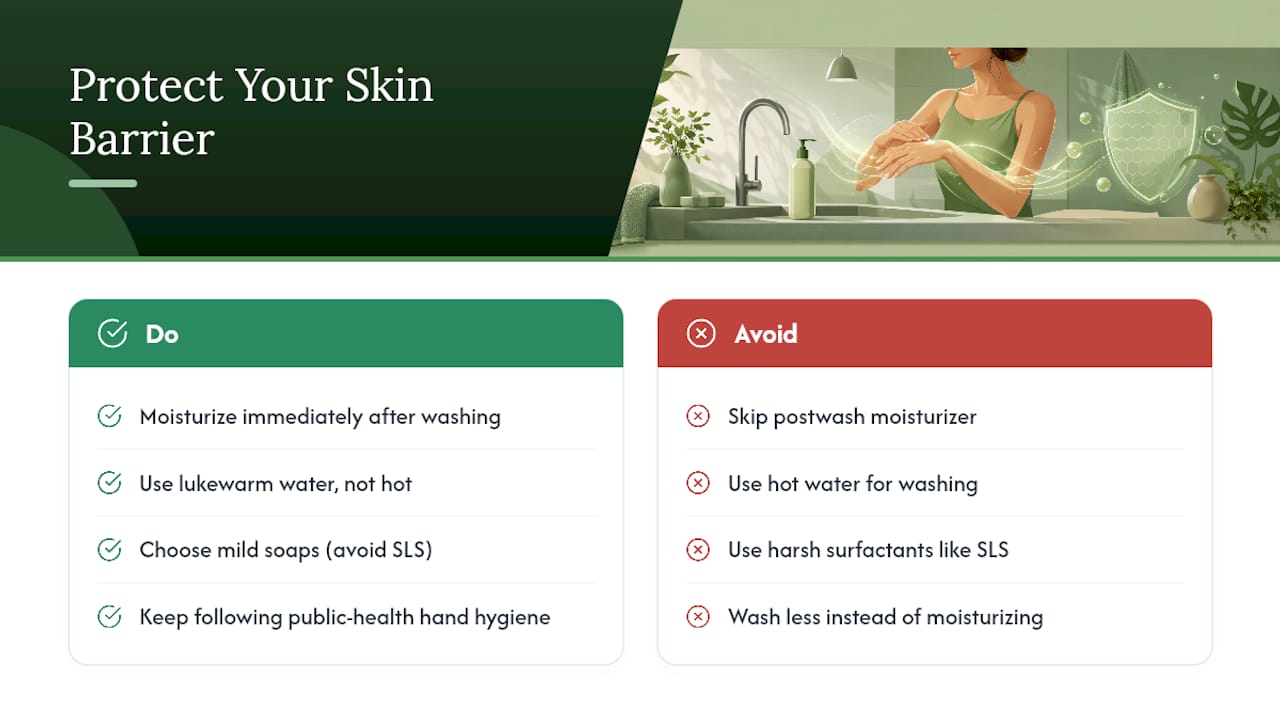
Two everyday habits make the damage worse. The first is harsh surfactants like sodium lauryl sulfate, common in many soaps, which cut through oil efficiently but do not distinguish between dirt and your skin’s own lipid layer. The second is water temperature. Mayo Clinic guidance recommends lukewarm water over hot, since hot water accelerates moisture loss and irritation on already-stressed skin.
None of this means you should wash less. Hand hygiene guidance from public health authorities like the CDC still comes first, and moisturizing works alongside that habit, not instead of it. Think of lotion as the second half of the routine, not an optional add-on. Skip it consistently and the skin barrier stays compromised, which opens the door to cracking, stinging, and sometimes secondary irritation from soap residue that a healthy barrier would normally shrug off.
When and How to Apply Hand Lotion After Washing
Timing changes how well lotion actually works. Dermatology guidance from Mayo Clinic points to one specific detail most people miss: apply moisturizer while your hands are still slightly damp, not bone dry. Damp skin holds a thin layer of water, and a lotion applied on top traps that water in rather than letting it evaporate into the air.
Here is the routine worth repeating after every wash:
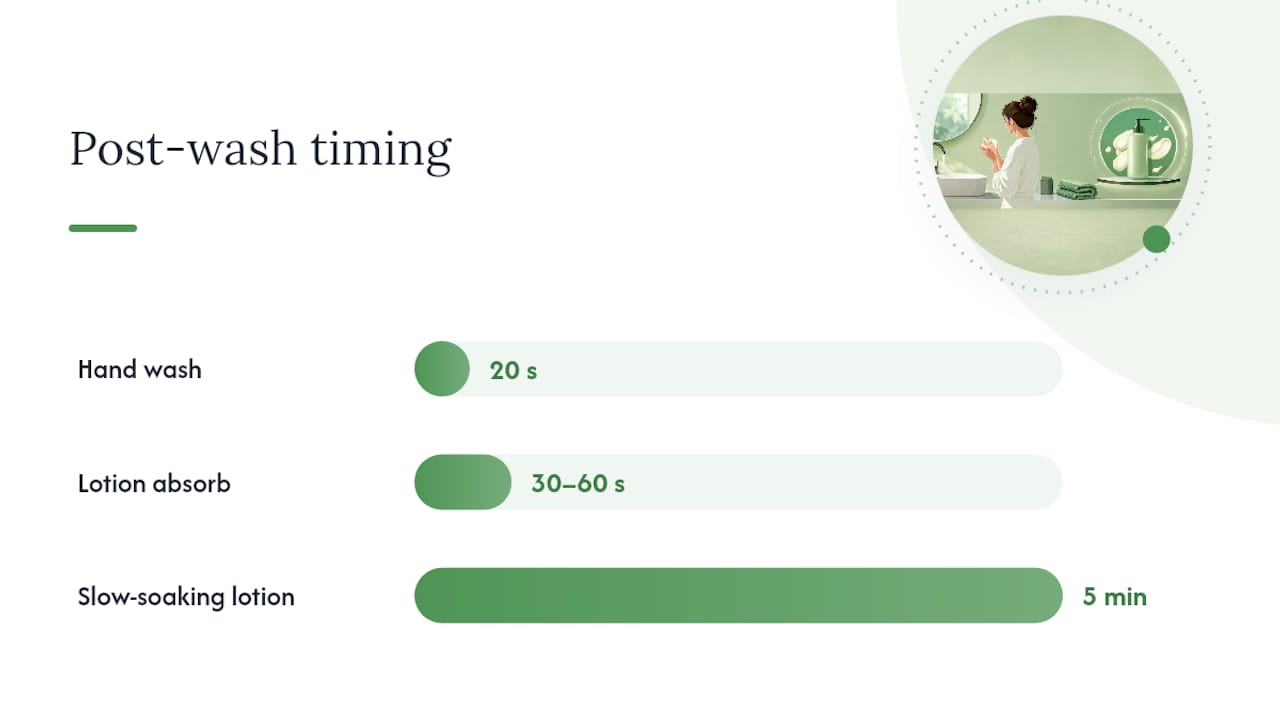
- Wash with a mild soap for about 20 seconds using lukewarm water.
- Rinse thoroughly, then pat your hands dry with a towel, leaving them slightly damp rather than fully dry.
- Dispense a dime-sized amount of lotion into your palm, roughly the size of a coin, more if your hands are especially dry.
- Rub it into the backs of your hands first, then work it between each finger and around the cuticles, where dryness and cracking usually start.
- Give it 30 to 60 seconds before handling paper, fabric, or anything you do not want left greasy. Lightweight, fast-absorbing lotions clear this stage quicker than heavy creams.
If you are back at a keyboard, gripping tools, or handling food within a minute, that speed matters. A lotion that sits on the surface for five minutes before soaking in is not practical for a kitchen shift or a hospital floor. Look for one that disappears into skin without stalling your next task.
How often should you reapply? Match it to your wash count. If you wash six or seven times a day, moisturize after each one. If you are washing every twenty minutes on a job site or in a clinical setting, that is a heavier burden on your skin barrier, and it helps to pair a light sinkside lotion with a richer overnight cream to repair what accumulates during the day.
Pro Tip: If you wash your hands constantly for work, keep a small lotion at every sink you use, not just at home. The habit falls apart fast when the product is one room away.
One caution: if a lotion stings or burns on application, stop using it and check the ingredient list. Stinging usually points to fragrance, alcohol, or an essential oil your skin does not tolerate well. And if cracking is severe, deep fissures, bleeding, or persistent pain, that is beyond what any over-the-counter lotion should handle alone. See a dermatologist rather than layering on more product and hoping.
What to Look for in a Post-Wash Hand Lotion
Not every lotion earns a spot by your sink. Some ingredients actively repair the barrier washing damages; others just sit on top of the problem, or make it worse.
Ingredients worth seeking out:
- Glycerin, a humectant that pulls water into the outer skin layer and keeps it there.
- Ceramides, lipids that rebuild the skin’s natural barrier, the same barrier soap strips away.
- Hyaluronic acid, another humectant known for holding many times its weight in water against the skin.
- Petrolatum or dimethicone, occlusive ingredients that seal in moisture after the humectants have done their work.
- Squalane, a lightweight oil that mimics skin’s own lipids without feeling heavy.
Reviewer teams at America’s Test Kitchen landed on the same shortlist after putting hand lotions through repeated kitchen-level abuse: ceramides and glycerin came out as the ingredients that actually made a measurable difference.
Ingredients to approach with caution:
- Added fragrance, one of the most common triggers for irritation on hands that are already compromised.
- High concentrations of alcohol, which can dry skin further despite a light, non-greasy feel.
- Certain essential oils, like citrus oils, which can irritate sensitive or cracked skin even in small amounts.
Texture matters as much as the ingredient list. A lightweight lotion absorbs fast and leaves no residue, which is exactly what you want standing at a sink between tasks. Heavier creams and balms take longer to sink in but deliver more sustained occlusion, better suited for nighttime repair when you are not about to touch a keyboard or a doorknob.
When you are scanning labels, two phrases carry real weight: “fragrance-free” and “dermatologist-tested.” Fragrance-free means no added scent compounds, not just an unscented base masked with a fragrance neutralizer, worth checking if you have reactive skin. “Dermatologist-tested” is a softer claim; it means the product was evaluated for tolerance, not that it is medical-grade or guaranteed reaction-free. Read it as a mild reassurance, not a guarantee.
Lotion vs Cream vs Ointment: Choosing the Right Formula
The three formulations differ mainly in how much oil versus water they contain, and that ratio decides both how fast they absorb and how long they protect.
- Lotion is mostly water with a smaller amount of oil, which is why it spreads easily and absorbs quickly. It is the right call for sinkside use because you can apply it and get back to work in under a minute.
- Cream carries a higher oil content, absorbs more slowly, and holds moisture longer. Reach for it during the day when your hands need repair but you are not rushing back to a task.
- Ointment is oil-based with barely any water, the heaviest and most occlusive of the three. Save it for overnight or for cracked, damaged patches that need serious sealing while you sleep.
A practical swap looks like this: lotion after every sink wash, cream during the workday if your hands feel tight, ointment at night on any spots that have actually cracked. Pairing a light sinkside product with a richer nighttime routine covers both ends of the damage cycle instead of leaving one side unaddressed.
Our Take on Building a Sinkside Habit That Sticks
Most advice about hand lotion treats it as an afterthought, something you reach for once your hands already hurt. That is backwards. The clinical evidence is specific: lotion works best as prevention applied after every wash, not as a rescue treatment applied once a day when things get bad. Waiting for visible cracking means you are already behind.
The habit that actually holds up is the boring one. Keep a lightweight lotion at the sink, use it every time, and pair it with a richer product at night if your hands take a beating during the day. Jeffi’s own hand and body lotion is built around that exact rhythm, formulated for people who wash constantly and designed to show visible improvement in about a month of consistent use.
What gets overlooked most is timing, not product choice. Apply lotion to damp skin, not dry skin, and you get more out of a mediocre formula than you would from a great one applied to already-dried-out hands. Get the timing right first. Then worry about ingredients.
— Jeffi
A Sinkside Lotion Built for Frequent Hand Washing
This approach starts from the checklist this article just walked through: non-GMO certified, all-natural, and formulated without harsh fragrance loads that irritate hands already stressed by frequent washing.

The Hand & Body Lotion is light enough for sinkside use, absorbing quickly so you are not left with greasy palms mid-task, and it is built to hold up under the kind of repeat washing that wears down ordinary drugstore lotions. For nights when your hands need more intensive repair, Jeffi’s whipped body butters deliver the heavier, longer-lasting occlusion this article recommends for overnight use. You can check the full ingredient breakdown on Jeffi’s ingredients and benefits page before you commit to anything.
A simple way to test it: keep the lotion at your sink and use it after every wash for four weeks, then compare how your skin feels and looks at the end of that stretch against where you started. If outdoor activity is part of your routine too, browse Jeffi’s bug bite relief collection while you are there, since dry, cracked skin and bug bites tend to show up in the same season. Order the Hand & Body Lotion today and give your hands a routine that actually works with how often you wash them.
Sources
- What can I do about dry hands from overwashing? | Cleveland Clinic
- Regular use of a hand cream can attenuate skin dryness and roughness caused by frequent hand washing
- Taking care of your skin with increased hand-washing | Mayo Clinic News Network
- The lotions that save our hands after days in the kitchen | America’s Test Kitchen
FAQ
Should You Use Lotion After Washing Your Hands?
Yes. Washing removes natural oils that protect your skin, and applying lotion right after replenishes that moisture before it evaporates. A clinical trial found that consistent post-wash application prevents the dryness and roughness that build up from frequent washing.
What Is the Best Hand Lotion to Use After Washing?
Look for a lightweight, fragrance-free formula with glycerin, ceramides, or hyaluronic acid, ingredients that both draw in moisture and rebuild the skin barrier. Jeffi’s Hand & Body Lotion is formulated around that same profile for people who wash their hands throughout the day.
How Long Does It Take for Hand Lotion to Absorb?
A lightweight lotion typically absorbs within 30 to 60 seconds when applied to slightly damp skin. Heavier creams and ointments take longer, which is why they work better at night than at a sink between tasks.
Can You Overmoisturize Your Hands?
It is uncommon, but layering on very heavy, occlusive products constantly during the day can occasionally leave skin feeling greasy or slow to breathe between washes. For daytime use, a light lotion applied after each wash is generally the better balance, saving richer creams or ointments for nighttime repair.