

Yes: in winter, body butter belongs as the final occlusive layer, applied right after your shower while skin is still slightly damp. It works best when you warm a small amount in your palms first, then press it into elbows, knees, heels, and hands before the moisture on your skin has a chance to evaporate. If your skin is very dry or eczema-prone, reach for a richer, traditional butter. If you want something that soaks in faster for daytime wear, a whipped formula does the job.
TL;DR:
- Applying body butter on damp skin immediately after showering improves absorption and strengthens skin barrier in dry winter conditions.
- Traditional thick butters are ideal overnight or on very dry areas, while whipped formulas suit daytime use for faster absorption.
- Using a simple routine of exfoliating weekly, then applying serum, lotion, and finally butter enhances moisture retention, especially with proper layering.
- Store body butter in a stable, room-temperature environment to prevent separation and maintain effectiveness throughout the season.
- For eczema or psoriasis, choose gentle, ceramide-rich formulas and apply twice daily to support barrier repair and reduce flare-ups.
Table of Contents
- How Does a Winter Body Butter Routine Work, Step by Step?
- How Do I Choose the Right Body Butter for Winter?
- Common Body Butter Mistakes and How to Fix Them
- Application Hacks That Make Winter Body Butter Work Harder
- Winter Body Butter Storage Tips to Maintain Effectiveness
- Customizing Your Routine for Eczema and Psoriasis
- Body Butter vs. Other Winter Moisturizers: What’s Actually Different?
- Combining Body Butter With Humidifiers and Sunscreen
- Why We Think the Layering Order Matters More Than the Brand
- Where to Find Jeffi’s Whipped Body Butters
- Sources
- FAQ
How Does a Winter Body Butter Routine Work, Step by Step?
Cold air holds less moisture than warm air, and indoor heating strips even more of it from your skin overnight. That’s the core reason a regular lotion often feels like it’s not doing enough once temperatures drop. Body butter, being waterless and concentrated in emollients, creates a protective seal that lotions can’t match once humidity drops. Here’s how to build the routine around it.
- Exfoliate once a week, not more. A gentle scrub, sugar-based or otherwise, clears away the dead skin that blocks absorption. Overdoing this strips the barrier you’re trying to protect, so once weekly is the sweet spot for most people.
- Pat dry, but don’t fully dry off. Leave your skin slightly damp. This isn’t a minor detail. Dermatologists specifically recommend applying body butter to damp skin right after showering because that residual water gets trapped underneath the butter instead of evaporating into the air.
- Apply a serum if you’re using actives. Vitamin C, niacinamide, or similar treatments go on first, while skin is still damp, so they can penetrate before anything heavier sits on top.
- Layer lotion or oil next, if you use one. This step is optional for people with moderate dryness, but useful for very dry skin that needs an extra hydration boost before the seal goes on.
- Finish with body butter. Estheticians describe the full sequence as exfoliate, serum, lotion, oil, then butter, treating each layer as a flexible framework you adjust based on how dry your skin actually is that day, not a rigid formula everyone follows exactly.
Warm a coin-sized amount between your palms until it softens, then work it in with small circular motions. Spend extra time on elbows, knees, heels, and hands, since these areas have fewer oil glands and dry out faster than the rest of your body.
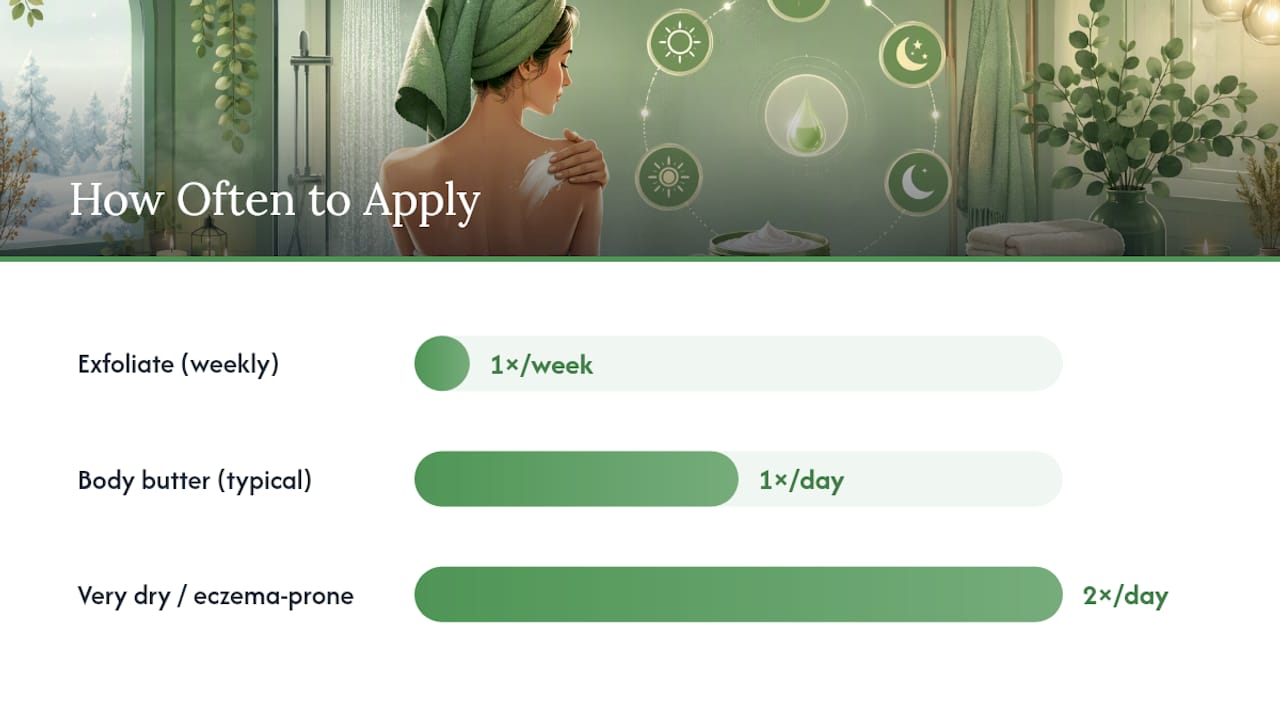
Most people do well applying body butter once daily, right after showering. If you have very dry skin or eczema-prone patches, twice daily, morning and night, keeps the barrier from cracking between applications. Some people add a heavier, unscented butter as a nighttime intensive treatment on top of their normal routine, letting it work uninterrupted for hours while they sleep.
Pro Tip: Keep your body butter jar in the bathroom, not a cold closet. Applying it while it’s slightly warm from ambient humidity makes it spread more evenly and absorb faster than a cold, hardened scoop.
How Do I Choose the Right Body Butter for Winter?
Not every body butter behaves the same way, and the ingredient list tells you more than the marketing copy does. Shea butter and cocoa butter are the workhorses here, rich in fatty acids that soften rough patches and support the skin’s outer layer. Ceramides rebuild that barrier directly, since they’re the same lipids your skin naturally uses to hold cells together. Glycerin pulls moisture in from the air, while squalane and jojoba oil mimic your skin’s own sebum closely enough to absorb without feeling waxy.
Texture matters just as much as ingredients. Traditional thick butters sit heavier on skin and work best overnight or on the driest areas, like heels and elbows, where you want maximum occlusion for hours. Whipped or lighter butters trade some of that heaviness for faster absorption, which makes them the better daytime pick if you’re getting dressed right after applying. Editors who test these products regularly weigh absorption speed, leftover residue, and how long the hydration actually holds as the real markers of quality, not just scent or packaging.
One frequently cited figure: some formulas report hydration claims lasting up to 48 hours in editor and brand testing, though results vary by formula and by how dry the air in your home actually is.
A quick way to match formula to skin type:
- If you have body acne or clog easily, look for oil-free or “non-comedogenic” labeled butters and avoid heavy coconut oil bases on the torso and back.
- If you have sensitive or reactive skin, look for fragrance-free or lightly scented formulas with a short ingredient list.
- If you have very dry, flaking skin, look for a traditional thick butter with shea or cocoa butter high on the ingredient list.
- If you want daily, no-fuss hydration, look for a whipped texture that absorbs within a few minutes.
Common Body Butter Mistakes and How to Fix Them
Most complaints about body butter feeling greasy or heavy trace back to one problem: applying it to skin that’s completely dry instead of damp. Dry skin has nothing left to trap the product against, so it just sits on the surface. The fix is simple. Apply within a few minutes of stepping out of the shower, before you towel off completely.
Over-exfoliating is the second big mistake. Scrubbing daily, or using a harsh physical scrub multiple times a week, damages the very barrier your body butter is trying to repair. Cut back to once a week and let your skin recover between sessions.
Other frequent issues and quick fixes:
- Residue that won’t absorb: use less product per application and warm it in your hands longer before applying.
- Applying butter before lighter products: always apply body butter last, after any serum or lotion, since it’s meant to seal, not penetrate.
- Switching formulas too often: give a new product at least two weeks before judging whether it’s working.
If irritation, cracking, or flaking persists beyond a couple of weeks despite consistent use, that’s a signal to see a dermatologist rather than keep swapping products on your own.
Pro Tip: If a butter feels too heavy in winter but fine in summer, it’s not the product’s fault. Lower humidity means less ambient moisture to lock in, so switch to smaller amounts applied more often rather than abandoning the formula entirely.
Application Hacks That Make Winter Body Butter Work Harder
A few small habits stretch the benefits of your routine well beyond the basic apply-after-shower step.
- Wear cotton gloves and socks over freshly applied butter at night. This creates gentle occlusion that boosts overnight absorption on hands and feet, the two areas that dry out and crack fastest in winter.
- Layer oil under butter in very dry climates. Apply a lightweight facial or body oil first, then seal it with butter on top. This combination outperforms either product used alone when indoor heating runs constantly.
- Downsize your travel jar. A small, tightly sealed container prevents melting in heated cars or luggage, and keeps butter from hardening if you’re headed somewhere colder.
- Store butter away from direct heat vents or sunny windowsills. Both cause separation and change the texture over time.
- Layer scent carefully. If your body butter is lightly fragranced, skip a heavily scented lotion underneath it, and apply perfume to pulse points rather than all over. This basic principle of fragrance layering keeps scents from clashing or overwhelming sensitive skin.
For hands specifically, pairing a nightly butter application with basic dry climate hand and nail care habits, like avoiding hot water soaks and keeping cuticles conditioned, prevents the cracked, painful skin that shows up around nail beds every winter.
Winter Body Butter Storage Tips to Maintain Effectiveness
Body butter is sensitive to temperature swings in ways lotion usually isn’t, since its whole structure depends on solid fats staying solid. Leave a jar on a sunny windowsill or near a heating vent and it separates, turning oily on top and grainy underneath. That doesn’t ruin the product entirely, but it does change how it applies and how long it holds up on skin.
Keep your jar somewhere with a stable, moderate temperature. A bathroom cabinet away from direct heat works better than a shelf near a radiator. If you notice separation, a quick stir usually brings it back to a workable texture, though repeated melting and resolidifying does gradually shorten shelf life.
Cold is less of a problem than heat, but extreme cold, like leaving a jar in a car overnight in freezing weather, can make thick butters harden to the point where they’re difficult to scoop and slow to warm up in your hands. If that happens, let the jar sit at room temperature for a few minutes before use rather than microwaving it, which can overheat and separate the oils.
Always use clean, dry hands or a small spatula when scooping from a jar. Introducing water or bacteria from wet fingers shortens shelf life and can affect texture, especially with all-natural formulas that skip synthetic preservatives. Check the product label for a period-after-opening symbol, and treat that timeline as your real expiration window once the seal is broken.
Customizing Your Routine for Eczema and Psoriasis
Standard winter dryness and a genuine skin condition call for different playbooks, even though the products overlap. If you have eczema, look for body butters with a short, simple ingredient list, free of fragrance, essential oils, and alcohol, all of which can trigger flare-ups on already compromised skin. Ceramide-rich formulas are worth prioritizing here, since barrier repair, not just surface softening, is the real goal for compromised skin, and eczema-prone skin has a barrier that’s already struggling to hold moisture in.
Psoriasis skin behaves differently. Thick plaques benefit from richer, more occlusive butters applied generously, sometimes under a bandage or wrap overnight for stubborn patches, though that’s a conversation to have with a dermatologist rather than something to self-prescribe. Avoid picking or over-exfoliating psoriasis plaques, since mechanical irritation is a common flare trigger.
For both conditions, twice-daily application tends to work better than once, particularly during flare periods when the skin barrier needs constant reinforcement rather than a single daily dose. Patch-test any new formula on a small area of unaffected skin for a few days before applying it broadly, since a reaction on already-inflamed skin is harder to identify and calm down. If a formula that worked fine in October suddenly causes stinging or redness in January, that’s usually the barrier telling you it needs something gentler, not a sign to push through with the same product.
Body Butter vs. Other Winter Moisturizers: What’s Actually Different?
Lotions, creams, and body butters all moisturize, but they’re not interchangeable, and winter is when the differences matter most. Lotions are mostly water, which means they absorb quickly and feel light, but that same water content evaporates fast in dry winter air, leaving skin under-protected within an hour or two. Creams sit in the middle, with a thicker, more balanced ratio of oil to water that lasts longer than lotion but still needs more frequent reapplication than butter in genuinely cold, dry conditions.
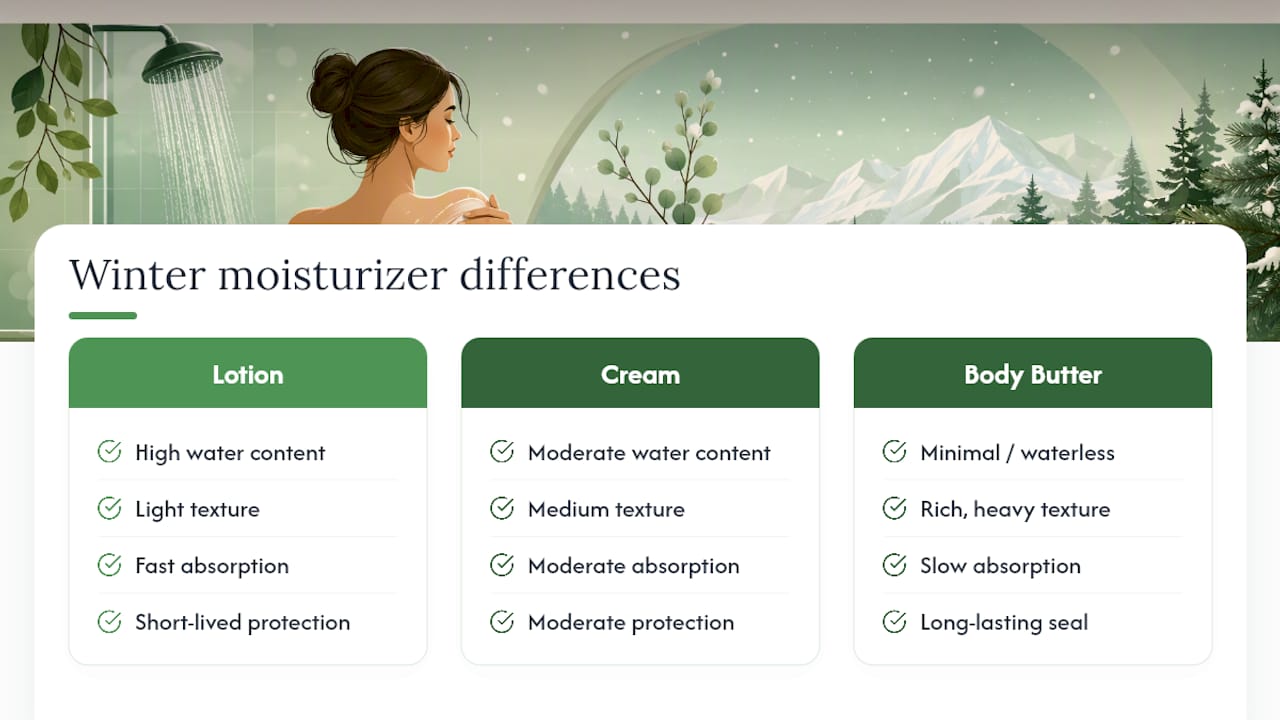
Body butter skips water almost entirely. It’s built from solid plant fats like shea and cocoa butter, which is exactly why it feels heavier straight out of the jar and why it needs to be warmed before application. That waterless, oil-based structure is what allows it to sit on the skin’s surface and slow moisture loss for hours rather than minutes, which is the entire point of using it as a winter swap rather than a year-round default.
The trade-off is texture and speed. Butter takes longer to absorb and can feel greasy if overapplied or used on dry, rather than damp, skin. That’s not a flaw so much as a design choice: it’s meant to seal, not sink in fast. If you love the light feel of lotion but need more protection, a whipped body butter often bridges that gap, giving you faster absorption than a traditional thick butter while still outperforming a water-based lotion once temperatures and humidity drop.
Combining Body Butter With Humidifiers and Sunscreen
Body butter handles the outside of your skin, but the air around you affects how well any moisturizer performs. Running a humidifier in your bedroom, especially with forced-air heating, keeps ambient humidity from dropping so low that your skin loses moisture faster than any butter can replace it. Pairing a humidifier at night with a body butter application right before bed tends to outperform either habit alone, since one addresses the air and the other addresses the skin’s surface directly.
Sunscreen is easy to forget in winter, but UV exposure doesn’t disappear just because it’s cold. If you’re applying sunscreen to your hands, neck, or any exposed skin during the day, apply it as your final step, after any lotion or lighter daytime moisturizer, since sunscreen needs direct contact with skin to work properly. Save your richer body butter applications for nighttime or for areas that stay covered by clothing, where a heavier, occlusive layer won’t interfere with sun protection.
If you use both a humidifier and a heavier nighttime butter, you may find you need less product overall, since the air itself is doing part of the work your skin previously relied on butter alone to do. Adjust the amount you use based on how your skin feels each morning, rather than applying the same amount regardless of the conditions in your home.
Why We Think the Layering Order Matters More Than the Brand
Most winter skincare advice focuses on which product to buy. That’s the wrong starting point. The actual research on how body butter works points to something more basic: barrier repair depends far more on when and how you apply a product than on which specific brand sits in your bathroom cabinet.
Skip the damp-skin step, and even the richest, most expensive butter on the market performs like a mediocre lotion. Get the timing right, apply generously to skin that’s still slightly wet from the shower, and a straightforward, all-natural formula does real work. That’s a genuinely underrated point in most product roundups, which tend to obsess over ingredient lists while glossing over application technique entirely.
We built Jeffi’s whipped body butters around that same principle. Our formulas are Non-GMO Project verified certified and made with all-natural ingredients, designed to fit into the exfoliate, serum, lotion, oil, butter sequence without adding heaviness or clogging pores. Our whipped body butter line leans into the faster-absorbing texture this article recommends for daily wear, while our natural fragrance options let you layer scent without overwhelming sensitive skin. Good ingredients matter, but they only deliver results when the routine around them is sound.
— Jeffi
Where to Find Jeffi’s Whipped Body Butters
If everything in this routine sounds right but you’re still deciding which jar to actually buy, Jeffi’s whipped body butters are built specifically for the daily-wear, faster-absorption use case this article walks through. They’re lighter than a traditional thick butter, so they layer easily over lotion or oil without leaving a heavy film, and they still deliver the occlusive seal your skin needs once the air turns cold and dry.
- Starter pick: a single whipped body butter in an unscented or lightly scented option, ideal for sensitive skin or anyone testing the whipped texture for the first time.
- Use case: daily post-shower application on damp skin, especially for hands, elbows, and heels.
- For gifting or trying a few scents at once, check our bundles, which group multiple products together at a better value than buying each separately.
Every formula is Non-GMO Project verified certified and made with all-natural ingredients, so you’re layering something clean into a routine that’s already doing the heavy lifting through technique. Head to Jeffi to browse the full lineup and find the texture that fits your skin this winter.
Sources
- 8 Best Body Butters to Moisturize, Nourish, and Soothe Dry Skin | Allure
- The Right Way to Layer Your Body Care This Winter | Vogue
- Best body butters to moisturize, nourish, and soothe dry skin | Byrdie
- The winter swap that makes the biggest difference for your skin | Poosh
- The Right Way to Layer Your Body Care This Winter (InStyle product testing notes)
FAQ
What Is the Best Skin Care Routine for Winter?
The most effective winter routine follows a simple order: gentle weekly exfoliation, then serum on damp skin, then lotion or oil, then body butter as the final sealing layer applied right after showering.
What Are Common Body Butter Mistakes?
The two biggest mistakes are applying butter to fully dry skin, which causes greasiness, and over-exfoliating, which damages the barrier the butter is meant to repair.
Are You Supposed to Use Body Butter Every Day?
Most people benefit from once-daily application, typically after showering, while those with very dry or eczema-prone skin often need it twice daily for better relief.
Should I Apply Body Butter Before or After Lotion?
Body butter always goes last in the routine, applied after lotion or oil, since its job is to seal in the hydration those lighter products provide rather than to absorb quickly itself.