

Bug bite scar prevention comes down to one sequence: cool the bite fast, calm the itch, keep it covered, and shield it from sun once it heals. Most dark marks left behind by mosquitoes and chiggers aren’t true scars. They’re post-inflammatory hyperpigmentation, and it responds well to gentle, consistent care in the first 48 hours plus a few weeks of sun protection afterward.
TL;DR:
- Applying a cold compress within the first few hours significantly reduces inflammation and the likelihood of hyperpigmentation from bug bites.
- Gentle daily occlusion with petroleum jelly or a balm helps maintain moisture, prevent irritation, and reduce the risk of dark marks developing over time.
- Using calming ingredients like niacinamide or azelaic acid consistently, combined with sun protection, accelerates the fade of post-inflammatory hyperpigmentation.
- Avoid scratching, picking, or exposing healing bites to sunlight, as these actions deepen inflammation and prolong discoloration.
- Seek medical advice if a bite shows signs of infection after two or three days or if dark marks persist beyond three months despite home care.
Table of Contents
- What Causes Bug Bite Scar Prevention to Fail at Home?
- How Daily Care Habits Lower Your Scarring Risk
- Which Ingredients Actually Fade Bug Bite Marks?
- Why Sun Protection Matters More Than You’d Think
- When Should You See a Dermatologist for Bite Scars?
- Our Take on the Bug-Bite-to-Clear-Skin Pipeline
- Where Jeffi Fits Into Your Bug Bite Recovery Routine
- Sources
- FAQ
What Causes Bug Bite Scar Prevention to Fail at Home?
The biggest reason bug bite scars happen isn’t the bite itself. It’s what you do to your skin afterward. Inflammation is the real driver behind those stubborn dark or reddish marks, a process dermatologists call post-inflammatory hyperpigmentation, or PIH. When you scratch, pick, or leave a bite exposed to sun while it’s healing, you extend and deepen that inflammatory response, and the mark darkens and lingers for months.
The good news is PIH usually isn’t permanent. It fades with time and the right care, unlike true scarring, which involves deeper tissue damage. That distinction shapes everything in this guide.
The first-aid sequence that actually reduces inflammation
Here’s the order that matters most, and why each step earns its place:
- Cold compress the bite for a short period. Cold reduces swelling and itch almost immediately, which cuts down on the urge to scratch before it even starts. This early window is the single most effective place to intervene, since blunting inflammation right away does more than any treatment applied days later, according to The Cut’s dermatologist-sourced guide to bug bite scars.
- Cleanse gently with mild soap and water. Skip anything abrasive. You’re removing debris, not scrubbing.
- Apply a short course of over-the-counter hydrocortisone (1%). Use it once or twice daily for no more than a week. It calms the inflammatory response that drives both itch and later discoloration.
- Cover the spot with a sterile bandage or hydrocolloid patch. Occlusion isn’t just protective. Covering a hydrocortisone-treated bite actually improves how well the product absorbs, and it makes the bite physically harder to pick at.
Bandages and hydrocolloid patches solve two problems at once. They block your fingernails and they block sun exposure, which makes them one of the lowest-effort, highest-payoff moves you can make in the first day or two.
If you struggle to keep your hands off a bite, try trimming your nails short, wearing a bandage overnight, or keeping your hands occupied with something else when the itch flares. Jeffi’s guide on breaking the scratch cycle walks through more of these tactics in detail.
Pro Tip: Before trying any new hydrocortisone cream, lotion, or fading product on a fresh bite, dab a small amount on unaffected skin first. Watch for redness or irritation over a day or two. Healing skin is more reactive than you’d expect, and a bad reaction can cause more discoloration than the bite itself.
How Daily Care Habits Lower Your Scarring Risk
Once the first 48 hours pass, the job shifts from calming inflammation to keeping the healing site moist, protected, and undisturbed. Dry, exposed skin heals slower and is more prone to irritation, which reopens the door to more pigment change.
Occlusion is the underrated hero here. A thin layer of petroleum jelly, a balm, or a natural ointment locks in moisture and creates a physical barrier against bacteria and friction. Dermatology-adjacent forums are full of people swearing by petroleum-based products and bandages specifically to stop unconscious picking, a pattern that shows up again and again in community discussions about bug bite scarring.
A simple daily routine looks like this:
- Cleanse the area gently once or twice a day, morning and night.
- Apply a thin layer of a soothing balm or ointment while skin is still slightly damp.
- Cover with a fresh bandage if the bite is in a spot prone to friction (waistbands, sock lines, elbow creases).
- Change the bandage daily, or sooner if it gets wet or dirty.
- Reserve topical antibiotic ointment for bites that show actual infection signs, like spreading redness, warmth, or pus. Using antibiotic ointment on every bite as a habit can dry out skin or trigger contact irritation, which works against you.
- Keep hands busy or bites covered during the hours you’re most likely to scratch without thinking, usually right before bed.
The families who ask about backyard bite prevention the most tend to already have a routine for the outdoor part. What they’re often missing is the aftercare piece, and Jeffi’s family-focused prevention checklist covers both halves of that equation.
Which Ingredients Actually Fade Bug Bite Marks?
Fading an existing mark is a different task than preventing one, and it calls for patience. PIH from bug bites typically takes weeks to a few months to fade on its own. Treatment speeds that timeline, but only when you avoid re-irritating the skin in the process.
A handful of ingredients have real backing for fading discoloration safely, as detailed in the guide to fade post-inflammatory hyperpigmentation with a three step routine:
- Niacinamide calms inflammation while gently interrupting the pigment-transfer process. It’s well tolerated by most skin types, including sensitive skin.
- Azelaic acid targets excess pigment production and doubles as a mild anti-inflammatory. Good for people who find hydroquinone too harsh.
- Tranexamic acid interrupts the signaling pathway that triggers melanin overproduction after inflammation. Increasingly common in serums marketed for post-blemish marks.
- Glycolic or lactic acid (used sparingly) speeds surface cell turnover, helping pigmented cells shed faster. Skip these while the bite is still raw or scabbed.
- Retinoids boost cell turnover over the longer term but can irritate healing skin if introduced too soon. Wait until the bite has fully closed.
- Hydroquinone is a stronger prescription-strength option, but it needs careful, localized application. Applying it beyond the exact spot risks lightening the surrounding skin unevenly, and it’s generally avoided during pregnancy.
Dermatologists interviewed by The Cut make a point worth repeating: consistency across several gentle, well-tolerated actives beats reaching for the single strongest product on the shelf. Layering niacinamide with sunscreen and patience often outperforms an aggressive one-ingredient approach that risks flaring the skin back into inflammation.
Before adding any new active to a healing bite, patch test it on a small, unaffected area for seven to ten days, a timeline echoed by The Infinite Bath’s guide to patch testing sensitive skin. Start with the lowest concentration available and increase frequency only once your skin tolerates it without redness or stinging.
Why Sun Protection Matters More Than You’d Think
Sun exposure is the single biggest reason fading marks turn into fading marks that stick around for months. UV light stimulates the same pigment-producing cells responsible for the dark spot in the first place, and hitting a healing bite with unprotected sun can undo weeks of otherwise good care. Left unprotected, discoloration from insect bites can take significantly longer to fade, according to The Cut.
The fix is straightforward:
- Apply broad-spectrum sunscreen with SPF 30 to 50 over any healing or fading bite mark, every single day it’s exposed.
- Reapply roughly every two hours if you’re outdoors, swimming, or sweating.
- When possible, cover the area with clothing or a bandage instead of relying on sunscreen alone. Lightweight, protective clothing does double duty, blocking both new bites and UV rays on marks that are already healing.
- Avoid long, hot baths, saunas, or aggressive exfoliation on the area until it’s fully healed. Heat and friction reignite inflammation right when you’re trying to let it settle.
None of this requires a complicated regimen. It just requires remembering that a fading bite mark behaves like any other spot of active pigment change: cover it, protect it, and don’t provoke it.
When Should You See a Dermatologist for Bite Scars?
Most bug bites heal fine with home care, but a few warning signs mean it’s time to get professional eyes on the situation rather than waiting it out.
- Watch for infection signs. Spreading redness, warmth, swelling that worsens after two or three days, pus, or fever are signals to seek medical care promptly rather than continuing home treatment. Jeffi’s guide to spotting infection early walks through what to look for before it escalates.
- Give it three months before escalating for cosmetic reasons. If a dark mark hasn’t budged with consistent home care and sun protection after that window, or if it’s getting darker instead of lighter, a dermatologist can offer prescription-strength options or in-office procedures that go beyond what’s available over the counter.
- Come prepared. Bring a timeline of when the bite happened, photos tracking how it’s changed, and a list of what you’ve already tried. Board-certified dermatologists, the clinicians trained specifically to diagnose and treat skin conditions according to the American Academy of Dermatology, can then tailor a plan instead of starting from scratch.
Realistic improvement with clinical treatment still takes weeks, not days. Even prescription options work by supporting your skin’s own fading process, not bypassing it.
Our Take on the Bug-Bite-to-Clear-Skin Pipeline
Most advice on bug bite scars treats prevention and fading as separate problems. They’re not. Every step that calms inflammation early, cold compress, hydrocortisone, occlusion, is also a step that limits how much pigment your skin produces later. Treat the bite well in the first 48 hours and you’ve already done most of the work a fading serum would otherwise need weeks to accomplish.
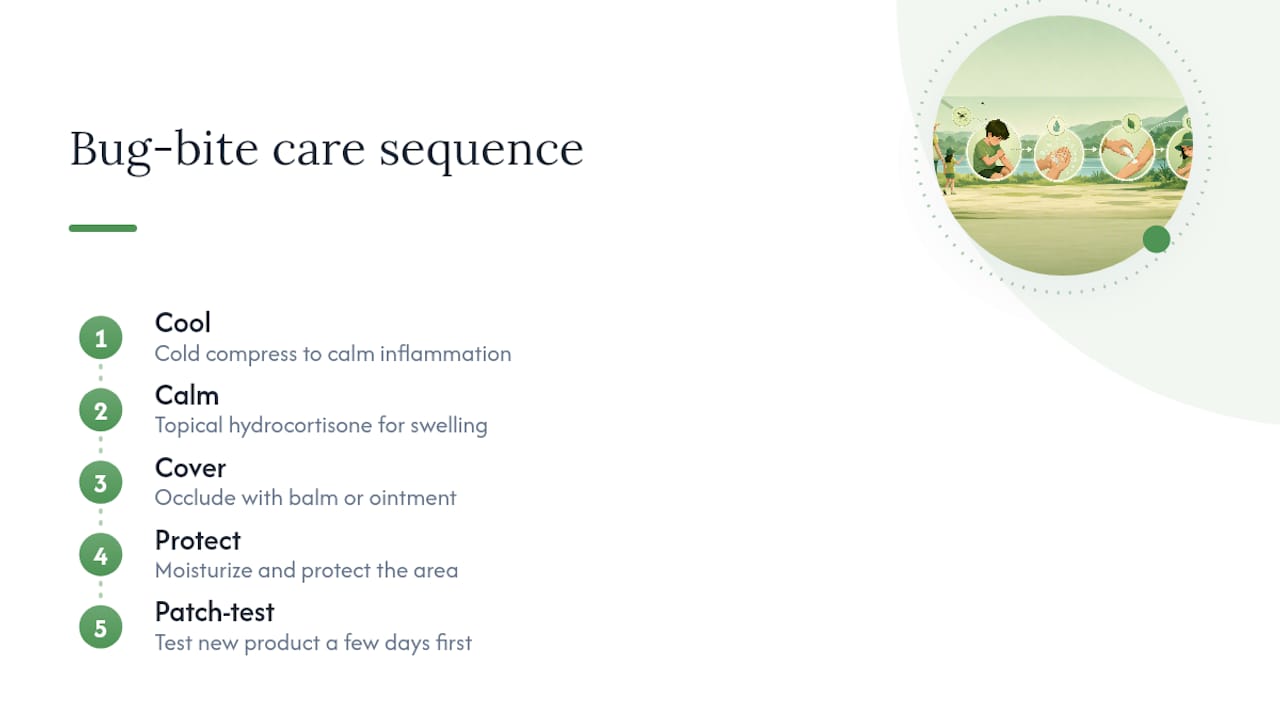
That’s the thinking behind Non-GMO certified, all-natural balms and ointments. They’re built to soothe and to occlude at the same time, which fits directly into the moisturize-and-protect stage of this routine rather than sitting apart from it. Jeffi’s own prevention checklists reflect the same sequence outlined here: cool, calm, cover, protect.
One habit worth keeping regardless of which product you reach for: patch test first, especially on kids or anyone with reactive skin, and give any new step a few days before judging whether it’s working.
— Jeffi
Where Jeffi Fits Into Your Bug Bite Recovery Routine
If you’re standing in the backyard right now with a fresh bite, reaching for something that soothes and protects in one motion beats juggling three separate products. That’s the gap a Bug Bite Relief line aims to close, with all-natural, DEET-free formulas designed to work with your skin’s own healing process instead of masking symptoms with harsh synthetics.

For a bite you just noticed, the Bug Bite Relief Roll-On is the fastest way to apply relief without digging through a bag for cotton swabs. Once you’re home and settling into the occlusion-and-moisture stage, the Bug Bite Relief Balm works well under a bandage to keep the area soothed and covered overnight. For bites that need a heavier barrier, the Bug Bite Relief Ointment offers thicker coverage, and if you’re not sure which format fits your situation, the full Bug Bite Relief collection lets you compare all three side by side.
As with any new topical, patch test first, and remember none of these replace medical care if you notice signs of infection. Browse the collection and pick the format that matches where you are in the healing process.
Sources
For deeper reading beyond this guide, The Cut’s reporting on bug bite scars covers dermatologist-sourced fading advice, the American Academy of Dermatology explains when to seek a board-certified specialist, and Healthline’s guide to mosquito bite scarring offers additional consumer-facing prevention steps.
This article is general information, not a substitute for advice from a qualified doctor. Consult a qualified healthcare professional about your own circumstances before acting on anything here.
FAQ
Why Do I Scar So Easily From Bug Bites?
Some skin simply produces more pigment in response to inflammation, which makes post-inflammatory hyperpigmentation more visible and longer-lasting on those complexions. Scratching, sun exposure, and picking at a bite all intensify that inflammatory response, so the marks you see are usually more about aftercare habits than a flaw in your skin.
Do Bug Bite Scars Ever Go Away?
Most dark marks from bug bites are PIH, not true scars, and they fade on their own over weeks to a few months. Sun protection and gentle brightening ingredients like niacinamide or azelaic acid speed that process, according to The Cut, while sun exposure without protection can stretch it out considerably longer.
Which Bug Bites Leave a Scar?
Bites that get scratched, picked, or infected are far more likely to leave lasting marks than bites left alone and treated promptly. Chigger and flea bites tend to itch more intensely than mosquito bites, which raises the risk of scratch-related scarring specifically because the urge to pick is stronger.
How Do I Keep Chigger Bites From Scarring?
Treat chigger bites the same way you’d treat any itchy bite: cold compress right away, a short course of hydrocortisone, and a bandage or hydrocolloid patch to physically block scratching. Chiggers often bite in clusters around waistbands and sock lines, so covering those areas with light clothing helps prevent both new bites and picking at existing ones.
What’s the Fastest Way to Fade an Existing Mark?
Consistency matters more than potency. Applying niacinamide or azelaic acid daily, paired with daily broad-spectrum sunscreen over the spot, produces steadier results than an aggressive single ingredient that risks irritating already-inflamed skin.