

Spreading redness, warmth that grows around the bite, worsening pain, pus or yellow drainage, red streaks, swollen lymph nodes, and a fever at or above 100°F (37.7°C) are the clearest signs of a potentially infected mosquito bite. Most bites are just itchy, not infected, and a big, warm welt can also be Skeeter syndrome, an allergic reaction that mimics infection. If you notice fever, spreading redness beyond the bite, or streaks running outward, get medical care.
TL;DR:
- Redness that keeps expanding past the initial bite and develops into streaks suggests a bacterial infection requiring medical attention.
- A fever above 100°F along with spreading redness or red streaks indicates systemic infection or severe allergic reaction, necessitating urgent care.
- Skeeter syndrome causes rapid, localized swelling within hours that typically resolves within 10 days and responds to antihistamines, unlike bacterial infections.
- Regular wound care with soap, water, and antibiotic ointment is sufficient for irritated bites without signs of spreading infection or systemic symptoms.
- Preventing infection relies on avoiding scratching, using effective repellents, and keeping bites clean, with topicals providing short-term itch relief but not treating infections.
Table of Contents
- Signs of an Infected Mosquito Bite to Watch For
- Infection or Skeeter Syndrome? How to Tell the Difference
- When to Seek Medical Care for a Mosquito Bite
- First-Line Treatment for a Possibly Infected Bite
- Preventing Mosquito Bite Infections Before They Start
- How Topical Skin Care Fits Into Bite Recovery
- A Calmer Way to Think About Bite Watching
- Comfort and Skin-Barrier Support From Jeffi
- Sources
- FAQ
Signs of an Infected Mosquito Bite to Watch For
A normal mosquito bite itches, puffs up a little, and calms down within a day or two. An infected one behaves differently. It keeps changing, and usually for the worse.
Watch for these local warning signs at the bite site:
- Redness that keeps expanding outward instead of shrinking
- Skin that feels warm or hot to the touch around the bite
- Pain that gets sharper or throbs, rather than just itching
- Swelling that continues to build instead of leveling off
- Pus or yellow drainage leaking from the bite
- Blisters, an abscess, or a dark, crusted area forming at the site
Pro Tip: A fever above 100°F (37.7°C) is your body’s signal that an infection has moved past the skin and needs a clinician’s attention, not just home care.
Timing matters here. A simple bite reaction shows up and peaks within hours. Bacterial infection, on the other hand, tends to build over days rather than hours, which is exactly why patience and observation matter more than panic on day one.
Infection or Skeeter Syndrome? How to Tell the Difference
Skeeter syndrome throws people off because it looks alarming fast. It is an exaggerated, non-infectious reaction to mosquito saliva proteins, and it can swell an entire hand or forearm within hours of a single bite. It is not dangerous the way a bacterial infection can be, but it looks a lot scarier than a typical welt.
Here is how the two typically differ:
- Onset: Skeeter syndrome swells up fast, often within 8 to 10 hours; infection builds gradually over several days.
- Course: Skeeter syndrome usually peaks early then fades over 3 to 10 days; infection keeps getting worse without treatment.
- Response to antihistamines: allergic swelling often calms down somewhat with antihistamines; infection does not improve with them.
- Fever pattern: infection is more likely to bring a genuine fever alongside swollen lymph nodes; Skeeter syndrome rarely does.
Clinicians lean on history and physical exam to sort this out, since routine testing is usually unnecessary for a typical reaction.
Pro Tip: Grab a washable pen and trace the outer edge of the redness, then jot down the date and time. Recheck it every 6 to 12 hours. If the redness pushes past that line, that is an objective sign of spreading infection, not just your imagination running wild.
When to Seek Medical Care for a Mosquito Bite
Not every red, puffy bite needs a doctor’s visit, but some do, and knowing the difference between “watch it” and “go now” saves a lot of unnecessary worry.
Get emergency care immediately if you notice:
- Difficulty breathing or swallowing
- Swelling of the face, lips, or tongue
- Confusion, a severe headache, or neck stiffness
- A very high fever that will not come down
These are signs of systemic infection or a severe allergic reaction, and they call for the ER, not a wait-and-see approach.
Schedule a prompt visit with your doctor, rather than the ER, if you see:
- Redness that has spread past your pen border
- Red streaks running away from the bite (a sign of lymphangitis)
- Pus, drainage, or an abscess forming
- A fever that persists or keeps climbing, or lymph nodes that stay swollen
Children, older adults, and anyone with a weakened immune system should act sooner rather than later. Their infections can escalate faster and hide behind milder-looking symptoms.
First-Line Treatment for a Possibly Infected Bite
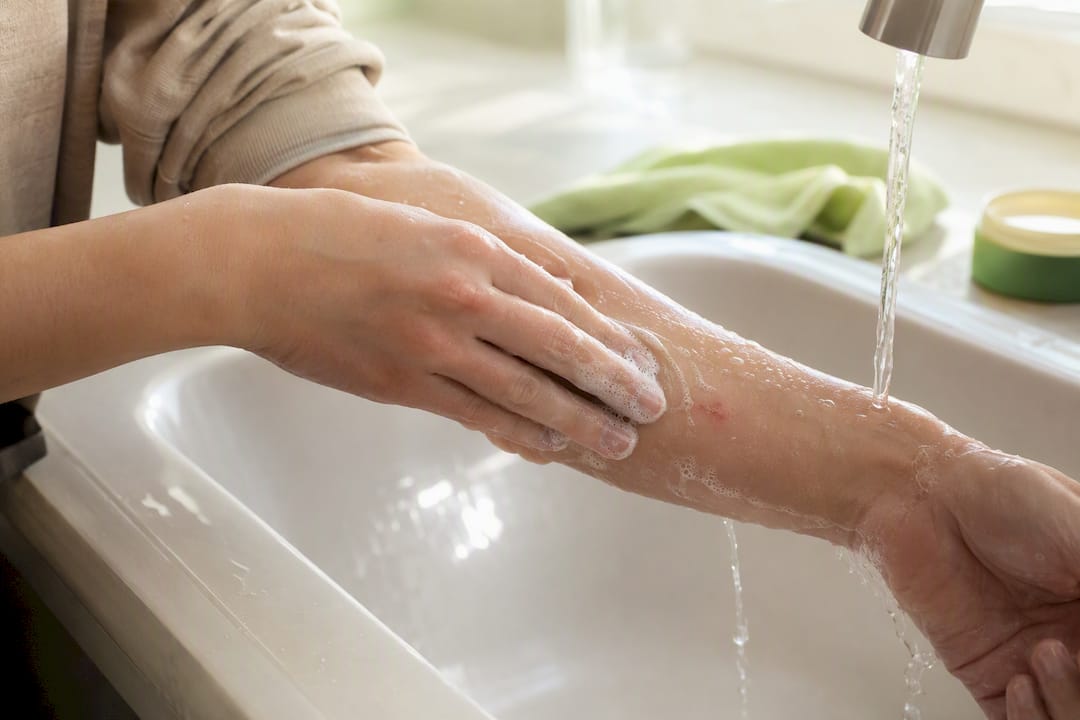
If the bite looks irritated but has not crossed into the red-flag territory above, start with basic wound care. Wash the area with soap and water, resist the urge to scratch, and apply an over-the-counter antibiotic ointment if the skin has broken. A cold compress calms swelling, and hydrocortisone cream, calamine lotion, or an oral antihistamine can take the edge off the itch without masking real warning signs.
When a bite crosses into cellulitis territory, home care stops being enough. Clinicians typically prescribe oral antibiotics once they see spreading redness, worsening pain, or systemic symptoms like fever. The usual culprits are staph or strep bacteria that entered through broken skin, often from scratching.
Diagnosis is almost always clinical: a doctor examines the site and asks about your timeline. Imaging or lab work only comes into play in rare, complicated cases, so do not expect (or push for) a battery of tests for a standard infected bite.
Preventing Mosquito Bite Infections Before They Start
The best defense against an infected bite is never getting bitten in the first place, and the second-best defense is refusing to scratch once you are.
- Use an effective repellent, wear long sleeves outdoors at dawn and dusk, and keep window screens and bed nets in good repair.
- Keep your nails short and clean, since scratching is the most common pathway to breaking skin and letting bacteria in.
- Wash bites with soap and water as soon as you notice them, and reach for a soothing anti-itch product to short-circuit the urge to dig at your skin.
The CDC is blunt about this: do not scratch bites, because scratched skin is what gets infected, not the bite itself.
How Topical Skin Care Fits Into Bite Recovery
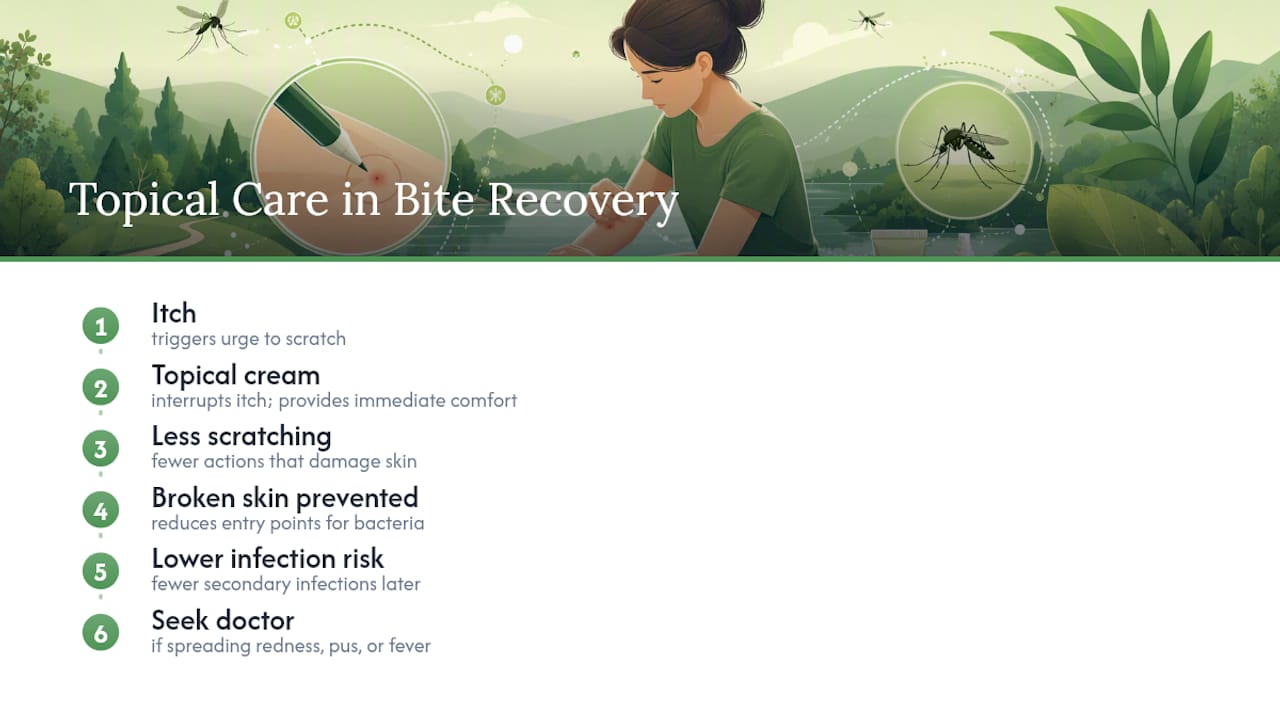
Calming lotions and barrier creams work by interrupting the itch-scratch cycle, not by fighting bacteria. When a bite stops itching so fiercely, you are less likely to break the skin, and that is where most secondary infections start.
That is the entire job of a good topical product: comfort now, fewer broken bites later. It cannot treat an established bacterial infection, and it should never replace a doctor’s evaluation once you see spreading redness, pus, or fever. The lotions and balms mentioned are built around Non-GMO Project verified, all-natural ingredients specifically for this short-term comfort and skin-barrier role, not as a substitute for antibiotics when they are genuinely needed.
A Calmer Way to Think About Bite Watching
Most bites you will ever get are annoying, not dangerous. The practical move is simple: trace a pen border, recheck it in half a day, keep the area clean, and resist scratching. If fever, spreading redness, or red streaks show up, call your doctor. Watch children and anyone immunocompromised a little more closely, since their symptoms can turn serious faster than adults tend to expect.
— Jeffi
Comfort and Skin-Barrier Support From Jeffi
Once you have your pen-border check going and you know what red flags to watch for, the daily annoyance of itchy, bite-prone skin is still worth addressing. Products include DEET-free repellent balms and roll-ons alongside bug bite relief lotions, whipped body butters, and Non-GMO Project verified skin-care products built for exactly that job: keeping you from clawing at your own skin while it heals.

None of this replaces medical treatment. If a bite shows the spreading redness, streaking, or fever we covered above, see a clinician and get antibiotics if they are warranted. But for the itch that tempts you to scratch in the first place, and for the everyday dryness and irritation that comes with a summer full of bites, Jeffi’s bug bite relief and skin-care lineup is built to keep your skin calmer and less likely to break open. Browse the full product line and pick the balm or lotion that fits how you spend your time outdoors.
Sources
This guide draws on clinical guidance from the CDC, Cleveland Clinic, the American Medical Association, and StatPearls on NCBI Bookshelf, covering everything from basic bite signs to public-health prevention advice and clinician diagnostic approaches. Full citations appear throughout the article above.
This article is general information, not a substitute for advice from a qualified doctor. Consult a qualified healthcare professional about your own circumstances before acting on anything here.
- What happens when a mosquito bite gets infected — and what to do | Cleveland Clinic
- What doctors want patients to know about mosquito bites | AMA
- About mosquito bites | CDC
- Mosquito bites - StatPearls - NCBI Bookshelf
FAQ
Can a Mosquito Bite Turn Into Sepsis?
It is rare, but an untreated bacterial infection like cellulitis can progress to a more serious, body-wide infection if it goes unchecked, which is exactly why spreading redness, red streaks, or fever call for prompt medical evaluation rather than a wait-and-see approach.
How Long Do Infected Mosquito Bites Last?
Without treatment, a bacterial infection tends to worsen over days rather than resolve on its own; once a clinician starts antibiotics, most infected bites improve within several days, though your doctor will give you a specific timeline based on severity.
When Should I Start to Worry About a Mosquito Bite?
Start watching closely once you see redness spreading past a pen-border tracing, pain that is worsening rather than just itchy, pus or drainage, red streaks, or a fever above 100°F (37.7°C).
How Do I Treat an Infected Mosquito Bite?
Clean the area with soap and water, avoid scratching, and see a clinician promptly if you notice spreading redness, drainage, or fever, since bacterial infections like cellulitis typically need oral antibiotics rather than home care alone.