

Yes, you can bring bug spray on a plane. Skin-applied repellents (pump sprays, lotions, wipes, sticks, and travel-size aerosols) are allowed in carry-on within TSA’s 3-1-1 limits and in checked bags within FAA weight caps. Aerosol insecticides, room foggers, and household bug killers are banned everywhere on the plane, carry-on or checked.
TL;DR:
- Non-aerosol bug repellent formats like wipes, sticks, and roll-ons are easier to pack and carry through security, as they avoid size limits and valve protection rules.
- In carry-on luggage, liquids including pump sprays and lotions must stay within 3.4 ounces and fit in a single quart-sized bag, regardless of the product being repellent or not.
- Aerosol insecticides and household bug killers are banned in both carry-on and checked bags, but personal skin repellents in containers up to 0.5 kg are permitted in checked luggage within a total of 2 kg per person.
- The product’s label, not the brand or scent, determines if a bug repellent is allowed, with skin-safe products indicating application to skin or clothing instead of environmental spraying.
- Clear labeling and proper packaging can prevent security delays; always verify contents and use compliant formats whenever possible.
Table of Contents
- TSA Bug Spray Rules for Carry-On Bags
- FAA Rules for Bug Spray in Checked Luggage
- Skin Repellent or Insecticide? How to Read the Label
- Packing Smart: A Checklist for Carry-On and Checked Bags
- What Happens When a TSA Officer Says No
- Non-Aerosol Repellents: The Easiest Way Through Security
- The Simplest Way to Avoid Checkpoint Trouble
- Travel-Ready Repellents That Skip the Guesswork
- Sources
- FAQ
TSA Bug Spray Rules for Carry-On Bags
The confusion around TSA bug spray rules almost always comes down to one question: does this count as a liquid? Yes, it does, and that means it falls under the 3-1-1 rule just like your shampoo or sunscreen. Any bug spray, gel, or aerosol repellent you want in your carry-on has to sit in a container of 3.4 ounces (100 ml) or smaller, and every one of those containers has to fit inside a single clear, quart-sized resealable bag.
That’s it. That’s the whole rule. But it trips people up constantly, because the size of the bottle at the store rarely matches what you actually need for a long weekend, let alone a two-week trip.
Here’s how the rule plays out across common repellent formats:
- Pump sprays and travel aerosols: Count fully toward the 3.4 oz limit. A 6 oz bottle of your favorite spray has to stay home or move to your checked bag.
- Lotions and creams: Same 3.4 oz cap applies. If your repellent lotion doubles as a moisturizer, it still counts as a liquid.
- Wipes: Not liquids in the same sense, so they generally skip the 3-1-1 bag entirely. This makes them the easiest carry-on option by a wide margin.
- Solid sticks and balms: Also outside the liquids rule, since there’s no free-flowing liquid to measure.
If you’re flying with a mix of skincare and repellent, all of it has to share space in that one quart bag. Pack a 3.4 oz sunscreen, a 3.4 oz repellent lotion, and a travel toothpaste, and you’re already pushing the limits of what fits.
Pro Tip: Buy a repellent stick or a pack of wipes specifically for the flight and your airport layover, then switch to your full-size product once you’ve checked into your hotel. It skips the liquids bag entirely and survives a spilled backpack far better than a bottle.
One detail catches frequent flyers off guard on multi-leg trips: TSA rules govern U.S. airports, but connecting through another country’s airport means that country’s security rules apply to that leg. A repellent bottle that cleared security in Chicago could still get a second look in a foreign transit hub with stricter limits. When your itinerary crosses borders, pack toward whichever rule on your route is the strictest, not the most lenient.
FAA Rules for Bug Spray in Checked Luggage
Checked bags operate under a different rulebook entirely. TSA handles what goes through the checkpoint; the FAA sets the limits for what can fly in the belly of the aircraft, because that’s where fire and pressure risks get evaluated.
For skin-applied aerosol repellents, the FAA caps are specific: no single container can exceed 0.5 kg (18 ounces / 500 ml), and the total across all your toiletry and medicinal aerosols and liquids combined can’t exceed 2 kg (70 ounces) or 2 liters (68 fluid ounces) per person. That aggregate number matters because it’s not just about your bug spray. It’s your bug spray plus your hairspray plus your cologne plus anything else in the same hazard category, all added together.
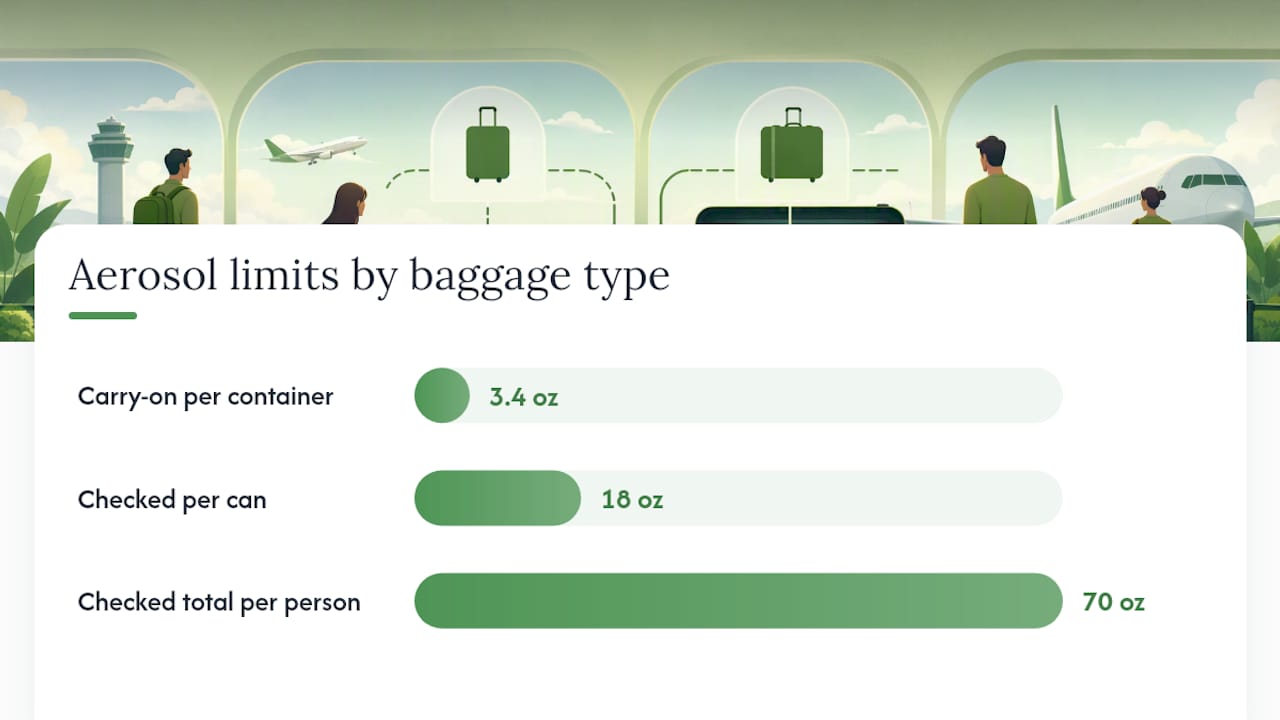
That 2 kg ceiling covers more than most travelers expect. A large aerosol repellent, a full-size hairspray, and a cologne bottle can eat through that allowance faster than the math suggests, especially on a longer trip packed for multiple climates.
Two things the FAA rule does not cover: household insecticides and pest-control foggers. Those stay banned in checked luggage regardless of size, because they’re built to be sprayed into a room or at a target, not applied to skin. The classification isn’t about the can, it’s about what the label says the product is for.
Nozzle protection is where the FAA gets strict. Any aerosol packed in a checked bag needs a cap or another mechanical safeguard that prevents the valve from triggering during handling. FAA PackSafe guidance is explicit that a recessed button alone doesn’t satisfy this requirement. Baggage handling is rough, and an aerosol can that discharges inside a packed suitcase at altitude is a real hazard, not a theoretical one.
A practical checklist for checked aerosols:
- Confirm the cap locks or snaps securely over the nozzle before you close the suitcase.
- Slide the can into a resealable plastic bag or pouch in case pressure changes cause any leakage.
- Nest it in the middle of your clothes, away from the case walls, so it isn’t the first thing crushed if the bag gets tossed around.
- Skip any can that’s dented, rusted, or already leaking. That’s a legitimate reason for a bag search or confiscation, and it’s not worth the risk.
- Add up every aerosol and liquid toiletry you’re packing against that 2 kg total before you zip the bag shut.
This is also why non-aerosol formats keep showing up as the smarter travel choice throughout this guide. A pump lotion or a roll-on doesn’t touch the aerosol weight caps at all, because there’s no propellant and no valve to protect. It simply travels as a standard liquid toiletry.
Skin Repellent or Insecticide? How to Read the Label
This is the distinction that decides everything, and it’s simpler than most travelers assume. According to TSA’s own guidance on bug repellent, the deciding factor isn’t the brand, the scent, or even the active ingredient. It’s what the label says the product is designed to do.
Here’s a two-minute test you can run on any bottle before you pack it:
- Look for skin-and-clothing language. Phrases like “apply to skin,” “apply to exposed skin and clothing,” or “for personal use” signal a permitted repellent. These products list active ingredients such as DEET, picaridin, IR3535, or oil of lemon eucalyptus (OLE/PMD), all standard EPA-registered repellent actives.
- Watch for environmental spray language. Phrases like “spray directly into room,” “treat baseboards and cracks,” “kills on contact,” or the word “fogger” are red flags. These are household insecticides or pest-control products, and they’re banned in both carry-on and checked bags without exception.
- Check the intended target. A product built to repel insects away from your body is a personal-care item. A product built to kill insects in your environment is a pesticide, legally and functionally, even if it’s sold in the same aisle as your sunscreen.
- Note the container type. A small trigger-spray or pump bottle marketed for hikers and campers almost always falls into the permitted category. A large aerosol can with warnings about ventilation and pets typically doesn’t.
- When in doubt, keep the label visible. Snap a photo of the front and back label before you leave home. It costs nothing and settles the question fast if a screener has to make a judgment call.
The reason this matters so much is enforcement, not just semantics. TSA and FAA aren’t tracking chemical formulas at the checkpoint. They’re reading labels and making a quick classification call, and a product that could plausibly double as a fogger will get flagged even if you personally only ever spray it on your ankles.
Packing Smart: A Checklist for Carry-On and Checked Bags
Getting through security without a hiccup usually comes down to preparation, not luck. Here’s how to set yourself up for both scenarios.
For carry-on bags:
- Confirm every liquid repellent is 3.4 oz or smaller and sitting in your quart-sized bag with your other liquids.
- Favor wipes, sticks, or solid balms when you can, since they skip the liquids bag entirely.
- Keep the quart bag near the top of your carry-on so it’s easy to pull out at the bin.
- If you’re bringing a larger backup bottle, move it to your checked bag instead of trying to argue size limits at the checkpoint.
For checked bags:
- Verify the cap or mechanical lock is secure over any aerosol nozzle.
- Seal cans in a plastic pouch or zip bag to contain any leakage from pressure changes.
- Pack aerosols in the center of your suitcase, cushioned by clothing.
- Total your aerosol and liquid toiletry weight against the 2 kg (70 oz) per-person cap before closing the bag.
If a screener does pull your bag aside, staying calm and specific speeds things up. Point to the label, mention that it’s a skin-applied repellent rather than a spray, and offer to show the ingredient list if asked. According to checked-bag packing guidance from PackSafe, most delays at this stage come from unclear labeling rather than an actual prohibited product, so having that information ready resolves the situation faster than arguing about it.
Multi-airline itineraries add one more wrinkle. If your outbound flight is domestic but your return connects through a foreign hub, or if a bag gets gate-checked unexpectedly, the safest move is packing as if the strictest rule on your itinerary applies the whole way through. For readers curious about how similar size and inspection rules apply to other travel items, this guide to packing vitamins and supplements walks through the same “make it easy to inspect” principle that keeps bug spray moving through security without a second look.
What Happens When a TSA Officer Says No
Here’s the part most guides skip: meeting every size limit doesn’t guarantee your bug spray sails through. TSA officers have final authority at every checkpoint, and that discretion is real. A can that’s dented, a label that’s worn off, or a bottle that looks suspicious for any reason can get denied even if it technically fits every rule on paper.
Common reasons a repellent gets flagged:
- The label is missing, faded, or doesn’t clearly state the product’s purpose.
- The can shows signs of damage, leaking, or corrosion.
- The bottle size looks close to the 3.4 oz cutoff and the screener can’t confirm it without extra scrutiny.
- The product resembles a household spray more than a personal repellent, even if it technically isn’t one.
If your item does get questioned, your best move is staying cooperative and specific. Point directly to the label language that shows skin application. If you have the receipt or a product photo on your phone, offer it. If a checked bag is available and boarding hasn’t closed, ask whether you can move the item there instead of losing it entirely. And if the officer still says no, accepting the decision on the spot is the fastest way to keep moving. Arguing rarely changes the outcome and only slows down the line behind you.
For anything you’re unsure about before you even leave for the airport, AskTSA via Twitter/X or the TSA app lets you send a photo and get a real answer in advance. It’s a better use of five minutes than guessing at the checkpoint.
Non-Aerosol Repellents: The Easiest Way Through Security
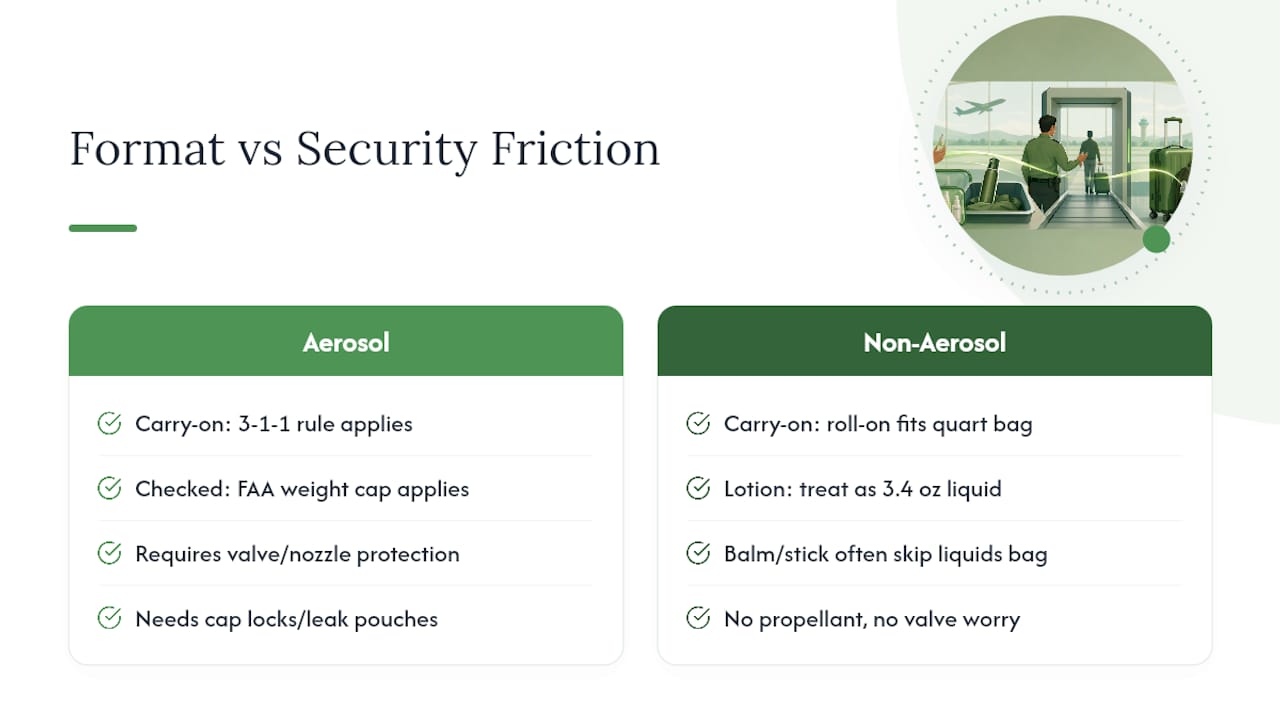
If there’s one lesson buried in all these size caps and label rules, it’s this: aerosols create friction that non-aerosol formats simply don’t. A propellant-based can has to satisfy the 3-1-1 rule in carry-on, the FAA weight cap in checked bags, and the valve-protection requirement everywhere. A balm, roll-on, or lotion skips nearly all of that.
Jeffi’s product line leans into that advantage on purpose. The lineup includes natural, DEET-free mosquito repellent balms, roll-ons, and lotions, along with bug bite relief ointments for when prevention comes a little too late. Every formula carries Non-GMO Project verification, so you’re not trading convenience for ingredients you can’t pronounce.
Practically speaking, these formats travel well because there’s no propellant to size-limit and no nozzle to protect. A roll-on tucks into your carry-on’s quart bag without eating much of your allowance. A balm or stick can often skip the liquids bag entirely. And because nothing is pressurized, you don’t need to worry about cap locks, leak pouches, or aggregate weight math in your checked bag.
A few packing habits make the difference on travel days: keep the product in its original labeled container rather than transferring it to an unmarked jar, since a clear label speeds up any inspection. If you’re bringing a lotion version, treat it like any other liquid toiletry and measure it against the 3.4 oz carry-on cap. For balms and sticks, there’s no cap to worry about at all, just toss it in your bag and go.
The Simplest Way to Avoid Checkpoint Trouble
If you’re only going to remember one piece of advice from this whole guide, make it this: default to non-aerosol formats whenever you can. Wipes and small pump bottles are the least friction-prone choice for carry-on, since they either skip the liquids bag entirely or take up minimal room inside it. For checked bags, a full-size pump lotion beats an aerosol every time, because there’s no valve to protect and no weight cap to calculate against your other toiletries.
Aerosols aren’t off the table, but they come with more homework. If you’re bringing one, it needs a secure cap, and you need to have actually added up your total aerosol and liquid weight against the 2 kg per-person limit before you pack it.
The reasoning here isn’t complicated. Non-aerosol repellents work across every airline and every checkpoint the same way, because they’re not hazmat-adjacent to begin with. That consistency is worth more at 6 a.m. in a security line than a slightly larger bottle ever will be.
— Jeffi
Travel-Ready Repellents That Skip the Guesswork
Packing for a trip is stressful enough without wondering whether your bug spray is going to get pulled at the checkpoint. Non-aerosol formats sidestep the aerosol size caps and valve protection rules altogether, so you can pack once and stop thinking about it.

A few places to start:
- The Jeffi product lineup covers natural, DEET-free repellent balms, roll-ons, and lotions built for carry-on and checked bags alike.
- The Confidence Hand & Body Lotion Pump works as a dual-purpose skincare and repellent option that still respects the 3.4 oz carry-on limit in travel sizing.
- Check the mosquito repellent FAQ page for ingredient details and usage notes before your trip.
A quick label check now saves you a conversation with a screener later.
Sources
- Liquids, Aerosols, and Gels Rule | Transportation Security Administration
- PackSafe — sprays and repellents | Federal Aviation Administration
FAQ
Can I bring bug spray through TSA?
Yes, skin-applied repellents like pump sprays, lotions, wipes, and sticks are allowed through TSA checkpoints as long as any liquid or aerosol version follows the 3-1-1 rule: 3.4 oz or smaller, packed in your quart-sized bag.
What aerosols are not allowed in checked luggage?
Household insecticides, pest-control foggers, and any aerosol product designed to be sprayed into a room or at insects directly are banned in checked luggage, regardless of size, according to TSA guidance.
What size bug spray can I bring on a plane?
In carry-on, containers must be 3.4 oz (100 ml) or smaller. In checked bags, individual containers can go up to 0.5 kg (18 oz), with a combined total of 2 kg (70 oz) across all your aerosol and liquid toiletries per the FAA’s limits.
Does bug spray count as liquid on a plane?
Yes, pump sprays, lotions, and aerosols all count as liquids or gels under TSA rules and must fit inside your 3-1-1 bag in carry-on. Wipes and solid sticks typically don’t count, since there’s no free-flowing liquid involved.
Are natural mosquito repellents effective for travel?
Formulas using ingredients like oil of lemon eucalyptus (OLE/PMD) are EPA-registered actives and count as skin-applied repellents under TSA rules, which makes them straightforward to pack in balm, roll-on, or lotion form without touching aerosol restrictions.