

Spring mosquito protection comes down to four things: an EPA-registered repellent, weekly removal of standing water, protective clothing, and screens or fans on your patio. The CDC and EPA back all four as the core of any prevention plan. Natural options can help on low-risk days, but they wear off fast and won’t replace registered repellents when mosquito activity is high. The rest of this guide breaks down exactly how to apply each step, and which viral “hacks” you can skip entirely.
TL;DR:
- Use an EPA-registered repellent with DEET, picaridin, IR3535, or oil of lemon eucalyptus for effective protection during high mosquito activity.
- Remove standing water weekly from items like gutters and plant saucers to significantly reduce mosquito breeding sites around your property.
- Wear loose, light-colored clothing, and treat outdoor garments with permethrin for additional protection during prolonged outdoor activities.
- Natural repellents like oil of lemon eucalyptus can work for short, low-risk outings but are less reliable than registered products for longer or high-risk exposure.
- Avoid relying on viral hacks such as Irish Spring soap or citronella candles, as there is no scientific evidence supporting their effectiveness in preventing mosquito bites.
Table of Contents
- Your Quick Spring Mosquito Protection Checklist
- Which Repellent Ingredients Actually Work?
- Do Natural Repellents Actually Work?
- How Do You Reduce Mosquitoes Around Your Home?
- What Clothing Actually Reduces Mosquito Bites?
- Do Viral Mosquito Hacks Like Irish Spring Soap Work?
- Jeffi’s Weekly Spring Mosquito Routine
- What This Guide Gets Right That Most Advice Misses
- Where DEET-Free Balms Fit Into Your Routine
- Where to Find Official Mosquito Guidance
- Sources
- FAQ
Your Quick Spring Mosquito Protection Checklist
Before you dig into the science, here’s the short version you can act on today. Run through this list once a week during peak season, and you’ll cut your exposure dramatically.
- Tip and toss standing water weekly. Check plant saucers, buckets, gutters, birdbaths, and old tires. Mosquitoes can breed in very small amounts of water, even as little as a few milliliters.
- Apply an EPA-registered repellent before you head outside, and reapply according to the label.
- Turn on screens, fans, or the AC when you’re relaxing on a porch or patio. Mosquitoes are weak fliers, so a fan alone can knock down bite rates in a seating area.
- Wear loose, light-colored clothing, and tuck pant legs into socks in tall grass.
- Treat outdoor work clothes with permethrin if you’ll be gardening, hiking, or camping for extended stretches.
- Use a bed net if you’re sleeping outdoors or in a space without reliable screens.
- Save natural repellents for short, low-risk outings, and switch to EPA-registered products anywhere mosquito-borne disease is a concern.
Pro Tip: Set a recurring Sunday reminder to check your yard for standing water. It takes five minutes and it’s the single most effective habit on this list.
Which Repellent Ingredients Actually Work?
Not all repellents are created equal, and the label matters more than the marketing. The CDC recommends four active ingredients as safe and effective when used as directed, including for pregnant and breastfeeding people: DEET, picaridin, IR3535, and oil of lemon eucalyptus (also listed as PMD).
- DEET (20 to 30 percent) offers reliable, long-lasting protection and remains the most studied repellent ingredient available.
- Picaridin (20 percent) performs comparably to DEET without the greasy feel or the plastic-softening side effects some people notice.
- IR3535 works well for shorter outings and is common in family-oriented formulations.
- Oil of lemon eucalyptus (PMD) is the one plant-derived ingredient the CDC specifically recognizes for multi-hour protection in properly formulated products.
Higher DEET concentrations extend how long protection lasts. They don’t make the repellent stronger per application, just longer-lasting before you need to reapply.
The application order matters just as much as the ingredient. Apply sunscreen first, let it absorb, then apply repellent on top. Spray repellent only on exposed skin, never under clothing, and avoid your eyes and mouth. Reapply after heavy sweating, swimming, or toweling off, and always follow the label’s timing rather than guessing.
Do Natural Repellents Actually Work?
They can, but the evidence is uneven and duration is the sticking point. A review of plant-based insect repellents found that PMD, the lemon eucalyptus derivative, has real clinical backing and can deliver several hours of protection in the right formulation. That puts it in a different category from most other essential oils.
Citronella, geraniol, and similar botanicals tend to perform fine in lab settings but fade quickly outdoors because the active compounds evaporate within an hour or two. Manufacturers have started fighting this with fixatives like vanillin and with microencapsulation techniques that slow release, which is why some commercial plant-based sprays outlast a homemade citronella candle by a wide margin.
Here’s where natural options make sense:
- Short trips to the mailbox or a quick evening walk
- Areas with low mosquito-borne disease risk
- People with sensitive skin who react to synthetic ingredients
And where they don’t: anywhere disease risk is a real concern, or any outing longer than an hour or two. In those cases, an EPA-registered repellent is still the safer bet.
How Do You Reduce Mosquitoes Around Your Home?
Every mosquito problem starts as a breeding problem. Female mosquitoes need standing water to lay eggs, and eliminating it is more effective long-term than any spray you can buy.
Walk your property weekly and check the usual suspects: clogged gutters, kiddie pools, tarps that pool rainwater, plant saucers, and unused birdbaths. Scrub containers rather than just dumping them, since eggs can cling to the sides. Keep pools properly chlorinated and covered when not in use, and trim dense shrubbery where adult mosquitoes rest during the day.
- Clean gutters at least once each spring month
- Store or drain kiddie pools and wading pools after each use
- Turn over or discard anything that collects rainwater
- Use screens and fans on porches and patios to keep bite counts down
- Consider a licensed mosquito control service for chronic yard problems, or a larvicide product for water features you can’t drain (fountains, rain barrels, ornamental ponds)
Larvicides containing Bti (a naturally occurring bacterium) are worth knowing about for water sources you genuinely can’t empty, since they kill larvae without harming pets or beneficial insects.
What Clothing Actually Reduces Mosquito Bites?
Mosquitoes locate targets partly by sight and body heat, and clothing choices change how easy a target you are. Loose-fitting, light-colored fabric makes it harder for mosquitoes to land and bite through the material, unlike tight or dark clothing.
- Choose loose, breathable, light-colored layers for evening outdoor activity.
- Treat clothing with permethrin, either factory-treated gear or a DIY spray you apply and let dry before wearing. Never apply permethrin directly to skin.
- Pack long socks or treated socks for hiking, gardening, or yard work in tall grass.
- Add a hat and light gloves for extended outdoor labor during peak mosquito hours.
- Bring netting for high-exposure trips, like camping near standing water or hiking through wetlands.
Permethrin-treated clothing typically holds up through multiple washes, which makes it a solid investment for anyone doing regular yard work or camping through the season.
Do Viral Mosquito Hacks Like Irish Spring Soap Work?
Most of them don’t, and a few are outright useless. Here’s the honest verdict on the hacks that keep resurfacing every spring.
- Irish Spring or other bar soap hung in the yard: anecdotal at best, with no CDC or EPA backing. Skip it and use a registered repellent instead.
- Yellow “bug” lights: these attract fewer insects than standard white bulbs, but they don’t repel mosquitoes and shouldn’t replace a real prevention plan.
- Vaporized scent hacks (dryer sheets, essential oil diffusers on a porch): the scent dissipates fast outdoors, and there’s no controlled testing behind most of these claims. They mostly just make you feel protected while you’re still getting bitten.
- Homemade vanilla or vinegar sprays: popular online, but the CDC is explicit that effectiveness for many non-registered “natural” repellents is unknown.
Pro Tip: If a mosquito hack requires no reapplication, no measurement, and sounds too easy, that’s usually the tell. Real protection needs upkeep.
Jeffi’s Weekly Spring Mosquito Routine
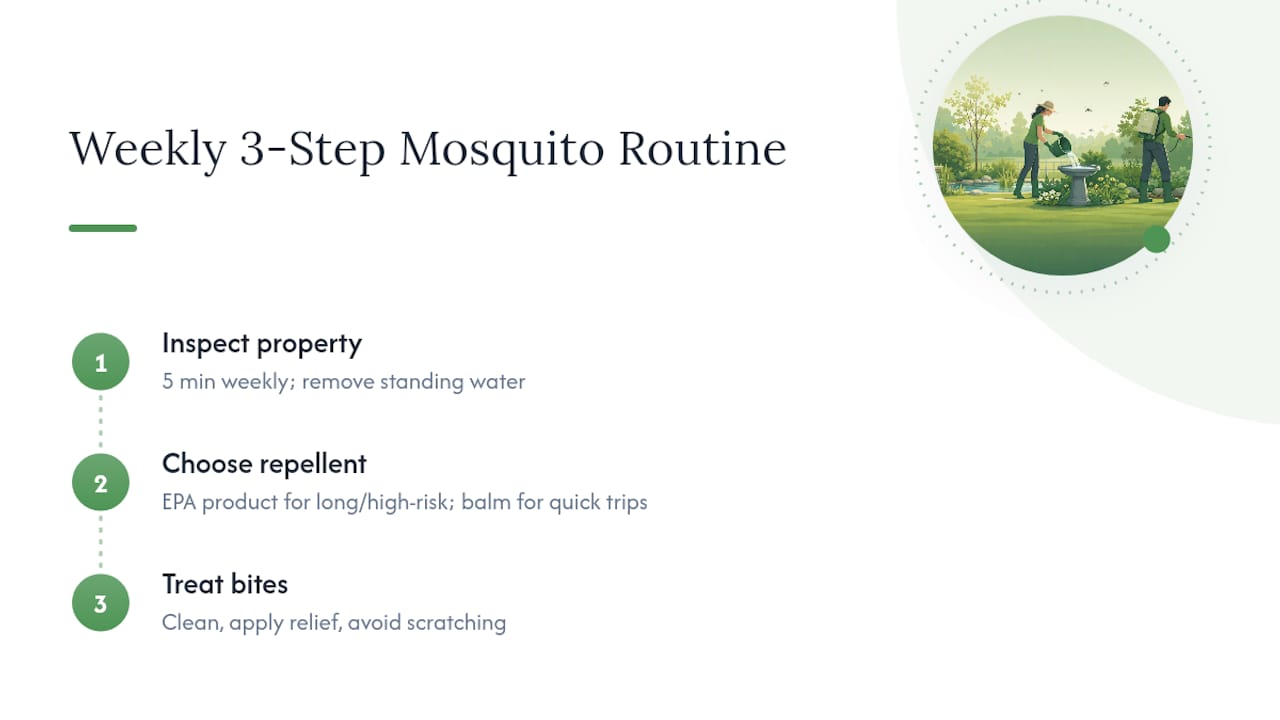
A simple three-step routine, run weekly, keeps most yards under control without turning prevention into a chore.
Step one: walk the property for standing water and screen check. Five minutes, once a week, catches most breeding sites before they become a problem.
Step two: decide your repellent for the day. Longer outdoor stretches or higher-risk areas call for an EPA-registered product; a quick errand outside might only need a natural balm.
Step three: care for any bites that slip through. Clean the area, apply a soothing bug bite relief product, and avoid scratching, which is how minor bites turn into skin irritation.
For more on pairing skin care with prevention, Jeffi’s guide on seasonal mosquito prevention and skin care walks through the full routine, and the morning gardening protection routine is worth a look if you’re outside early and often this spring.
What This Guide Gets Right That Most Advice Misses
Most spring mosquito content either oversells natural remedies or dismisses them entirely, and both extremes miss the point. The honest answer is that natural repellents and DEET-free balms have a real place, just not the place viral posts assign them. They’re a smart choice for the mailbox walk, the porch coffee, the ten minutes of weeding. They’re the wrong choice for a wetland hike or a backyard party during peak mosquito season.
The bigger failure in most conventional advice is the fixation on sprays while ignoring source control. Removing standing water is unglamorous, so it gets a bullet point at the bottom of most lists instead of the priority it deserves. A single clogged gutter can outproduce every candle and soap bar on your patio combined.
If you take one thing from this guide, prioritize the boring stuff first: water removal, screens, and a repellent that matches your actual exposure level that day. Everything else, including the viral hacks, is secondary at best.
— Jeffi
Where DEET-Free Balms Fit Into Your Routine
Not every outing calls for a synthetic repellent, and that’s exactly where Jeffi’s DEET-free lineup earns its place. Jeffi’s Mosquito Bee Gone™ balms and roll-ons give you a natural, all-natural option for short yard time, gardening, or sensitive skin that reacts to synthetic sprays, while the Bug Bite Relief line handles the bites that get through anyway.

Reach for a Jeffi balm on the low-risk days: a quick walk, a porch evening, a kid’s backyard game where a heavy repellent feels like overkill. For longer exposure or higher-risk areas, pair it with an EPA-registered product, since that’s still the standard the CDC and EPA recommend for serious protection. When a bite does happen, the Bug Bite Relief Balm is formulated to calm the itch fast without synthetic ingredients, which matters if you’re treating a child or someone with sensitive skin. Browse the full lineup and pick what fits your week.
Where to Find Official Mosquito Guidance
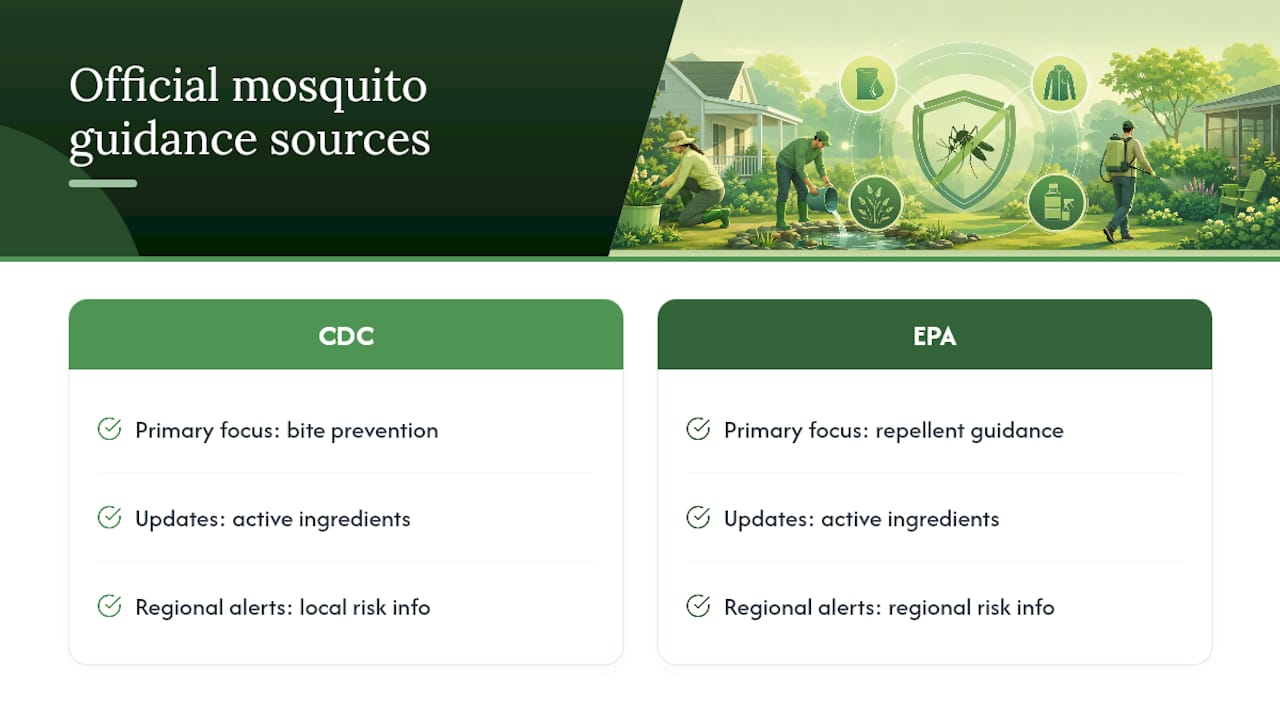
For updates and local mosquito alerts, rely on the CDC’s mosquito bite prevention page and the EPA’s repellent guidance. Both stay current on active ingredients and regional risk.
Sources
- Preventing mosquito bites | Mosquitoes | CDC
- Tips to prevent mosquito bites | US EPA
- Plant-based insect repellents: a review of their efficacy, safety and formulation
- 10 Tips To Prevent Mosquito Bites | Cleveland Clinic
FAQ
Does Irish Spring soap really keep mosquitoes away?
No controlled evidence supports this claim, and neither the CDC nor the EPA recommends it. The idea persists online, but an EPA-registered repellent or a formulated natural balm will do far more.
What smell do mosquitoes hate most?
Mosquitoes tend to avoid the scent of PMD (oil of lemon eucalyptus), which has real clinical support for multi-hour protection in the right formulation. Citronella and geraniol also repel mosquitoes short-term, but they evaporate quickly unless specially formulated.
Does Irish Spring soap keep flies away too?
There’s no solid evidence backing this for flies either. It’s the same anecdotal claim applied to a different insect, and it hasn’t held up to any formal testing.
What soap or product actually keeps mosquitoes away?
No soap is proven to repel mosquitoes reliably. Stick to EPA-registered repellents with DEET, picaridin, IR3535, or PMD for real protection, and consider a DEET-free balm for lighter, short-term coverage.
How much does Jeffi’s bug bite relief cost?
Current pricing for Jeffi’s Bug Bite Relief line is listed directly on the product collection page. Check there for the most up-to-date figures before you order.