

The minimum effective outdoor skincare routine is simple: cleanse if you’re sweaty, layer on an antioxidant, apply SPF 30+ broad-spectrum sunscreen, and add UPF 50 clothing wherever you can. Reapply sunscreen every two hours, sooner if you’re swimming or sweating heavily. Pack a multi-use balm like Jeffi for bites, windburn, and dry patches, because one good product beats five half-used ones in your bag.
TL;DR:
- Reapply SPF every two hours during outdoor activities, especially after swimming or heavy sweating, to prevent breakdown of protection.
- Use UPF 50 clothing to block up to 98% of UV rays, reducing the need for frequent reapplication on covered skin.
- Carry a multi-purpose balm for windburn, insect bites, and chapped skin to minimize the number of products in your pack.
- Protect lips with SPF 30+ balm reapplied regularly, and wear sunglasses with side coverage or a wide-brim hat to shield eyes from UV damage.
- Incorporate barrier-repair ingredients like ceramides and glycerin at night, and skip active ingredients like retinoids after long outdoor days to support skin recovery.
Table of Contents
- Building Your Outdoor Skincare Routine Each Morning
- How Do You Reapply Sunscreen Without Ruining Your Day?
- Handling Heat, Wind, Bugs, and Elevation
- Resetting Your Skin in the Evening
- Packing the Right Kit for Your Outdoor Activity
- The Minimal Kit That Covers Almost Everything
- Why Jeffi Belongs in an Outdoor Skincare Conversation
- Don’t Forget Your Lips and Eyes
- What Most Outdoor Skincare Advice Gets Wrong
- Building Your Kit Around Jeffi’s Natural Formulas
- Sources
Building Your Outdoor Skincare Routine Each Morning
A good outdoor skincare routine starts before you ever step outside, and it doesn’t need ten steps. If you slept indoors and your skin is clean, skip the wash and go straight to product. If you’re breaking camp after a sweaty night in a tent, a quick rinse or a gentle, fragrance-free cleanser removes overnight oil buildup without stripping your skin’s natural barrier.
From there, layer light to heavy. A vitamin C serum or a lightweight humectant gives your skin some antioxidant backup against UV-driven free radical damage, and pairing that kind of defense with consistent SPF is exactly the defend-repair-protect approach dermatologists recommend for active outdoor days. Follow with a moisturizer suited to the climate. Humid trail conditions call for a gel formula that won’t slide off with sweat; dry, high-altitude air wants something richer.
Sunscreen comes last, and it’s non-negotiable:
- Choose SPF 30+ broad-spectrum, mineral or chemical based on your skin’s sensitivity
- Apply roughly a nickel-sized amount for your face, more for exposed limbs
- Add UPF 50 clothing where you can. It blocks up to 98% of UV rays without any reapplication required
How Do You Reapply Sunscreen Without Ruining Your Day?
Sunscreen breaks down under sweat, sun, and water faster than most people expect. The two-hour rule is the baseline, but water and heavy sweat cut that window shorter, especially with formulas rated for less than an hour of resistance.
Here’s how to keep protection current without stopping every activity:
- Set a phone timer for two hours, or 40 to 80 minutes during swimming or intense sweating.
- Use roughly a shot-glass amount (about one ounce) to cover exposed skin on your body for full coverage.
- Reach for a stick or powder SPF for touch-ups over makeup or a sweaty face. These formats reapply in seconds without the mess of a lotion.
- Blot sweat with a bandana or towel instead of wiping, which drags sunscreen off with it.
- Switch to a water-resistant mineral stick before any swim or paddle session, since some formulations hold up to roughly 80 minutes in water.
Pro Tip: Keep your SPF stick in a pocket, not your pack. If it takes ten seconds to reach, you’ll actually use it.
Handling Heat, Wind, Bugs, and Elevation
Midday outdoor exposure throws problems at your skin that a morning routine can’t fully solve on its own. Wind dries and cracks exposed skin, bugs bite exactly when you’re too busy to notice, and heat pushes sweat straight through your sunscreen.
A few small fixes cover most of it:
- Keep a multi-use balm on hand for windburn, chapped skin, and bug bite irritation. Outdoor guides favor this compact approach over carrying separate products for each problem.
- Treat bug bites as soon as you notice them rather than waiting for them to worsen; a soothing balm calms the itch before scratching breaks the skin.
- A hydrating facial mist gives dry, wind-battered skin quick relief without interrupting your sunscreen layer underneath.
UV exposure also climbs with elevation. UV intensity increases roughly 10% for every 1,000 feet you climb, and reflective surfaces like snow, sand, and water bounce even more UV back at your skin. If you’re hiking a ridge at noon or crossing an open sandbar, that’s your cue to seek shade or shift your schedule earlier.
Resetting Your Skin in the Evening
Barrier repair happens overnight, and skipping your evening routine after a long outdoor day is how sunburn turns into peeling and dark spots. If you’re caked in sunscreen, sweat, and trail dust, a double cleanse works better than one wash: an oil-based balm to break down sunscreen first, followed by a gentle cleanser to finish.
Once your skin is clean, prioritize barrier-repair ingredients over anything trendy. Look for:
- Ceramides, which rebuild the lipid layer UV exposure breaks down
- Glycerin, a humectant that pulls moisture back into dehydrated skin
- Panthenol, which calms redness and irritation from sun and wind
This is also the moment to pause strong actives. Retinoids and AHAs increase sun sensitivity, and layering them onto already sun-stressed skin invites barrier disruption and irritation instead of repair. Save those for indoor weeks. A simple PM checklist after a long outdoor day: cleanse, apply a ceramide-rich moisturizer, treat any bites or windburn, and skip the actives until your skin calms down.
Packing the Right Kit for Your Outdoor Activity
Different outdoor activities put different demands on your skin, and packing the same kit for a trail run and a beach day means carrying weight you don’t need.
- Hiker kit: Alcohol-free cleansing wipes for when water isn’t available on the trail, a stick SPF, a multi-use balm for bites and blisters, and a lightweight moisturizer that won’t weigh down a pack.
- Runner kit: A small SPF stick that fits a running belt, minimal moisturizer, and a powder SPF for touch-ups that won’t leave a shiny face at mile six.
- Beach kit: Reef-friendly mineral SPF, an SPF-rated lip balm, a wide-brim hat for shade beyond what sunscreen covers, and a water-resistant formula built for repeated ocean dips.
- Outdoor worker kit: UPF clothing as the daily foundation, a scheduled reapplication plan tied to breaks rather than memory, and a barrier-support PM routine to undo eight hours of sun exposure.
A broad-brimmed hat and UPF layer built into any of these kits reduces how much sunscreen you actually need to reapply throughout the day.
The Minimal Kit That Covers Almost Everything
You don’t need fifteen products for a solid outdoor skincare routine. You need a handful that each pull double or triple duty. This is the “Swiss Army Knife” approach experienced outdoor guides swear by: fewer items, more functions, better compliance when you’re tired, sunburned, or just want to get back to the trailhead.
When choosing products, apply three filters: water and sweat resistance for anything you’ll wear during activity, non-comedogenic formulas for daytime layers under sunscreen, and fragrance-free everything to avoid irritation on sun-sensitized skin. UPF clothing and sunscreen aren’t competing choices, they’re a team: clothing covers the parts you’d otherwise have to reapply constantly, and sunscreen handles what’s left exposed.
| Kit item | Role |
|---|---|
| Mineral SPF 30+ stick | Primary sun protection, easy reapplication |
| UPF 50 shirt or hat | Passive protection, zero reapply needed |
| Multi-use balm | Bites, windburn, chapped skin |
| Alcohol-free wipes | No-water cleansing |
| Ceramide moisturizer | Evening barrier repair |
Why Jeffi Belongs in an Outdoor Skincare Conversation
Jeffi built its product line around exactly this kind of practical, in-kit thinking. The brand’s all-natural, Non-GMO Project verified formulas were made for people who spend real time outdoors, not just people who read about it. That matters when you’re deciding what actually earns a spot in a pack that already has too much in it.
Drop a Jeffi balm into the minimal kit above and it covers two jobs at once: soothing a bug bite mid-hike and calming windburned skin at camp that night. That’s the whole point of the Swiss Army Knife approach. One product, multiple problems solved, less weight on your back.

Don’t Forget Your Lips and Eyes
Lips and eyes get skipped constantly in outdoor skincare routines, and they’re some of the most exposed, most sensitive skin you have. Lip skin has no oil glands of its own, which means it dries out and burns faster than the skin around it, especially on windy ridgelines or reflective snowfields.
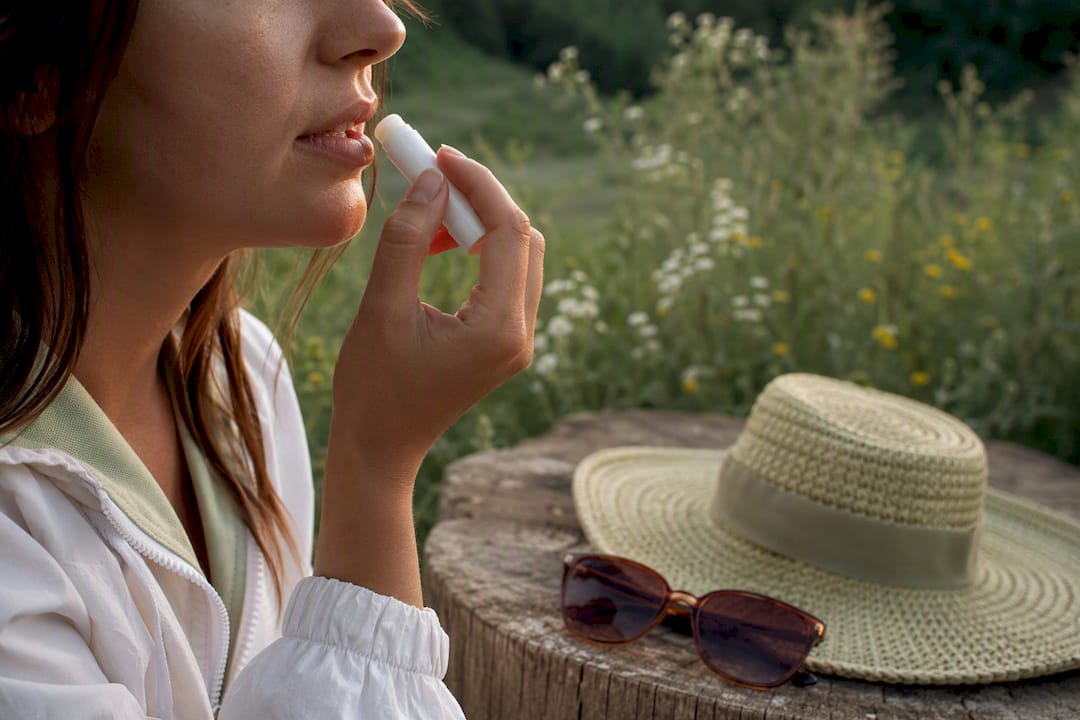
An SPF-rated lip balm, ideally 30 or higher, should live in the same pocket as your sunscreen stick. Reapply it on the same schedule, roughly every two hours, and definitely after eating, drinking, or wiping your mouth. If your lips are already cracked from wind or cold, look for a balm with beeswax or shea butter to seal in moisture while the SPF does its job.
Your eyes need a different kind of defense. Sunglasses aren’t just about glare, they’re a UV protection tool. Wraparound styles or ones with side coverage do more work than small fashion frames, especially on water, snow, or sand where light bounces up from below as well as down from above.
Pair sunglasses with a wide-brim hat for extra shade over your eyes and the delicate skin around them, which is thinner than almost anywhere else on your face and shows sun damage first. A five-second habit, really: lip balm on, sunglasses on, before you even reach for your pack.
What Most Outdoor Skincare Advice Gets Wrong
Most outdoor skincare content treats sunscreen like a single event: apply it once before you leave the house and move on. That’s the biggest gap between what conventional advice says and what actually works. Sunscreen is a maintenance task, not a one-time step, and the guides that stop at “apply SPF 30” are leaving readers sunburned by 2 p.m.
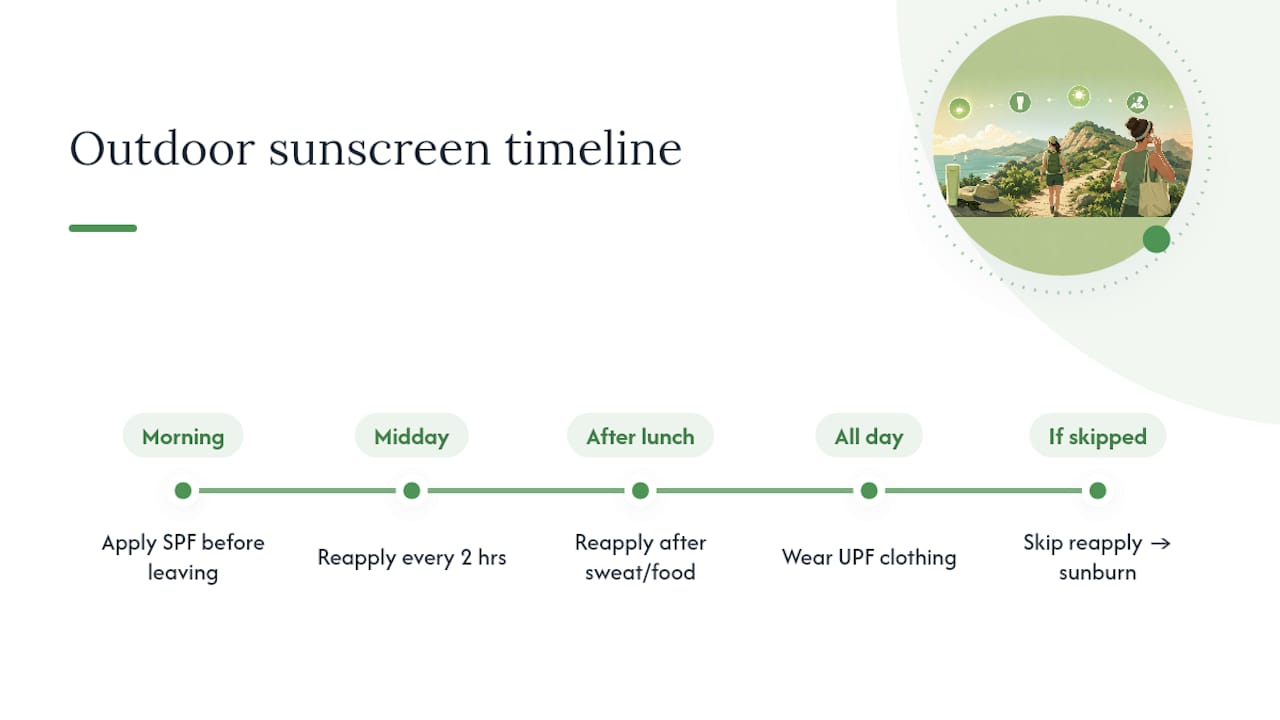
The reader’s real priority should be reapplication logistics, not product hunting. A great sunscreen you forget to reapply is worse than a decent one you actually put on every two hours. UPF clothing solves this problem structurally by removing the need to reapply at all on covered skin, which is why it deserves equal billing with sunscreen instead of a footnote.
Multi-use products deserve more credit too. The instinct to buy a specialized product for every possible problem, one for bites, one for windburn, one for chapped skin, adds weight and decision fatigue exactly when you have the least bandwidth to manage it. A pared-down routine built around a few reliable products wins over a crowded shelf every time you’re twelve miles from the trailhead.
— Jeffi
Building Your Kit Around Jeffi’s Natural Formulas
Once you know your kit roles, matching them to Jeffi products is straightforward. The multi-use balm handles bite relief and windburn soothing in one tube, the whipped body butters give your evening routine real barrier-repair power after a day of sun and sweat, and the natural repellents cover the prevention side before bugs become a problem at all.
None of it requires guesswork about ingredients, either. Every Jeffi formula is Non-GMO Project verified and built without harsh chemicals, so you’re not adding another irritant to skin that’s already working overtime against sun, wind, and sweat.
If you’re restocking your outdoor kit for the season, start with the whipped body butters for your evening barrier-repair step, and browse the full Jeffi lineup to build out the rest of your pack. Your skin will notice the difference by day three of any real outdoor stretch.
Sources
- Sun-protective clothing | Skin Cancer Foundation
- Elta MD UV Pure SPF 47 product page (example water-resistant mineral stick)
- Backcountry skincare routine | Outside Online
- Skin care tips for outdoor enthusiasts | Skin Cancer & Dermatology Institute
- Swim, Sweat & Sunscreen: A Defend-Repair-Protect Summer Skincare Routine