

Most mosquito repellents protect you for a range of hours depending on the active ingredient and concentration. DEET at moderate concentrations typically holds up for several hours, while lower concentrations and plant-based oils often provide protection for shorter periods. Shelf life is a separate question entirely: a properly stored repellent can stay usable for years, so lean on the label and your own itchy skin, not a guess, to know when to reapply.
TL;DR:
- Higher concentrations of DEET, around 20-30%, typically last between 4 to 5 hours under lab conditions, but increasing beyond 30% offers minimal extra protection.
- Real-world factors like water, sweat, clothing friction, and personal body chemistry can significantly reduce actual protection time, often requiring more frequent reapplication.
- Proper storage in cool, dry environments in original containers can extend repellent efficacy up to three years, but high temperatures degrade active ingredients faster.
- Signs of expired or degraded repellent include a rancid smell, color change, sediment, or a grainy texture, warranting replacement to ensure protection.
- Reapply insect repellent at least every few hours or immediately after swimming, sweating heavily, or being towel-dried, following label instructions for optimal effectiveness.
Table of Contents
- How long does mosquito repellent last by active ingredient?
- What makes mosquito repellent wear off faster?
- Does mosquito repellent expire, and how should you store it?
- Signs your mosquito repellent has gone bad
- How often should you reapply mosquito repellent?
- Where natural, DEET-free options fit into the picture
- Jeffi’s natural repellent balms for shorter outdoor stretches
- Where to check the facts yourself
- Sources
How long does mosquito repellent last by active ingredient?
Scientists measure repellent duration using something called Complete Protection Time, or CPT. It’s a lab test where volunteers expose treated skin to mosquitoes and researchers clock exactly how long it takes before the bites start. That number is far more useful than anything printed on a marketing label, because it comes from an actual bite count rather than a hopeful estimate.
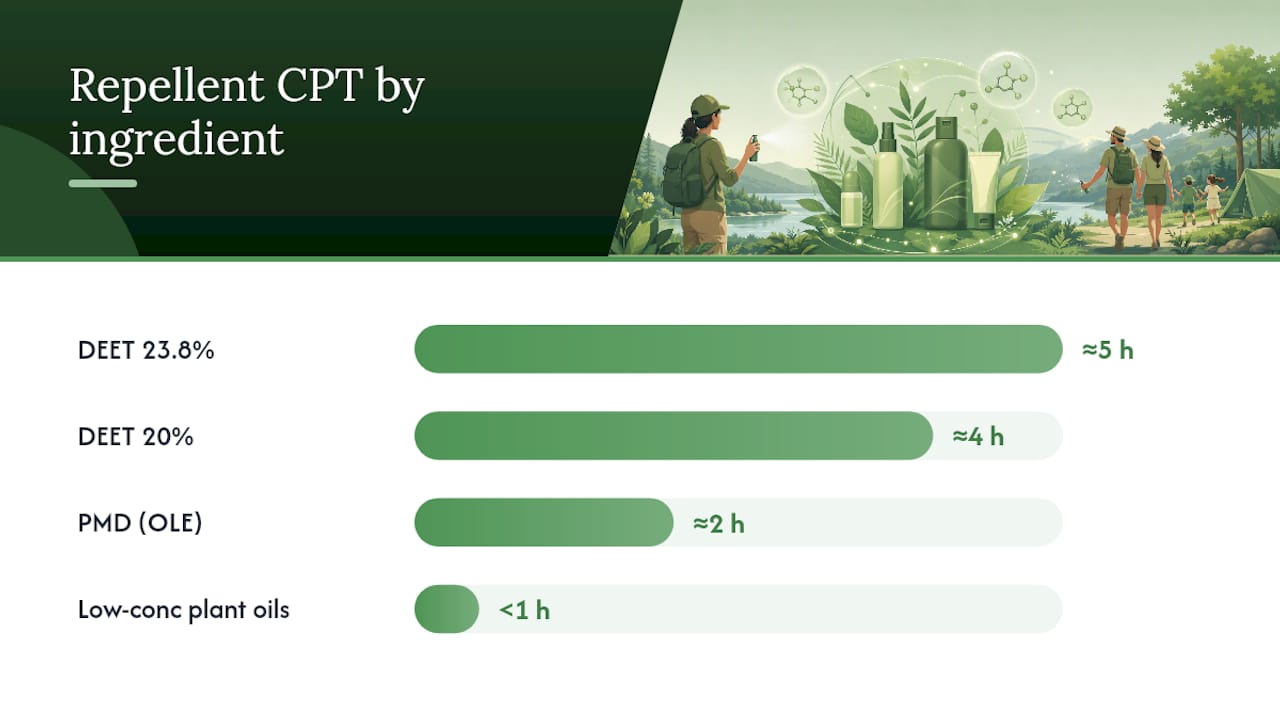
The University of Florida/IFAS has run these tests extensively, and the results explain a lot about why two bottles that sound similar can perform so differently:
- DEET at 23.8% delivers around 5 hours of protection.
- DEET at 20% holds up for roughly 4 hours.
- Picaridin at comparable concentrations lands in a similar range to DEET.
- Oil of lemon eucalyptus (PMD) protects for about 2 hours.
- Low-concentration or plant-oil formulas (think citronella or soybean oil blends) frequently drop below 1 hour.
The EPA confirms this same pattern: DEET products can repel mosquitoes anywhere from 2 to 12 hours, with the exact number tied directly to how much active ingredient is in the bottle. That’s a wide range for one ingredient, which is exactly why concentration matters more than brand.
Here’s the part people miss: more active ingredient doesn’t mean endless protection. Bumping DEET from 20% to 30% extends your window, but going from 30% to 100% barely moves the needle further. You hit a ceiling. Beyond a certain point, you’re carrying a stronger chemical load without a meaningful gain in hours. Mosquito species and local humidity also shift these numbers slightly, which is one more reason CPT should guide your choice rather than dictate an exact countdown.
What makes mosquito repellent wear off faster?
Lab numbers assume ideal conditions. Your actual afternoon at the lake rarely matches that. Water, sweat, and friction physically strip repellent off your skin well before the clock runs out, and your own body chemistry plays a bigger role than most people realize.
A few things shorten real-world protection every time:
- Swimming or wading rinses repellent away almost immediately, even from water-resistant formulas.
- Heavy sweating dilutes the product and pulls it off through your pores.
- Clothing rubbing against skin wipes off product at cuffs, waistbands, and collars.
- Toweling off after a swim removes whatever was left behind.
Biology matters too. Some people are simply more attractive to mosquitoes due to skin bacteria, carbon dioxide output, and body heat, and Consumer Reports notes that individual attraction varies enough that personal experience should guide reapplication as much as any label claim. If you’re the person mosquitoes always find first at a cookout, don’t wait for the lab-tested hour mark. Reapply the moment you feel a bite or notice one landing on you.
One more thing worth flagging: skip combination sunscreen and repellent products. Sunscreen needs reapplying every two hours, but repellent doesn’t. Using a 2-in-1 forces you to choose between under-protecting from the sun or over-applying repellent chemicals you don’t need yet.
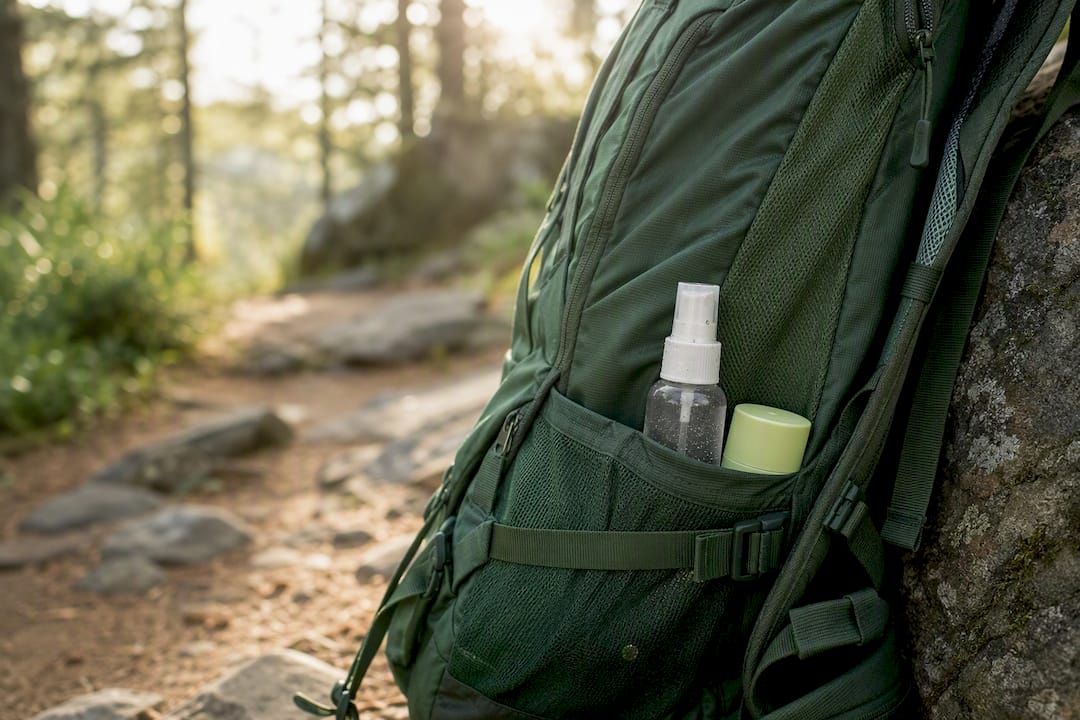
Pro Tip: Keep a small spray bottle or balm in your bag for reapplication after any water contact. Waiting until you’re already swatting mosquitoes means you’ve already been bitten a few times.
Does mosquito repellent expire, and how should you store it?
Many repellents don’t carry a printed expiration date, which throws people off. That doesn’t mean they last forever. Manufacturers commonly recommend discarding a product after about three years, and extreme heat or freezing temperatures shorten that window considerably.
A few habits keep your repellent effective for as long as possible:
- Store it somewhere cool and dry, away from direct sunlight.
- Keep it in its original container so the label and any lot information stay intact.
- Never leave it in a hot car trunk or glove compartment, where summer temperatures can exceed 140°F and degrade active ingredients within days.
- Check for a lot number or manufacture date stamped on the bottle, and contact the manufacturer directly if you need a firm shelf-life estimate.
Stable, moderate storage isn’t just about longevity. Sprays and balms exposed to repeated heat cycles start breaking down chemically, which affects both scent and performance long before the three-year mark.
Signs your mosquito repellent has gone bad
Your senses are the fastest test you have. Before you trust an old bottle, give it a quick once-over:
- A rancid or noticeably “off” smell compared to when you bought it.
- A change in color, especially darkening or cloudiness in liquid sprays.
- Sediment or visible separation at the bottom of a bottle that shakes back together poorly.
- Clumping or a grainy texture in balms and creams that used to feel smooth.
If a spray looks or smells different than it did new, treat that as a red flag. You can test a small patch on your skin per the label directions and watch for weaker protection, but honestly, repellent is cheap compared to a week of itchy welts or the disease risk mosquitoes carry. When in doubt, toss it and start fresh.
How often should you reapply mosquito repellent?
Follow the reapplication interval printed on your bottle. That’s not a suggestion, it’s the number backed by the same CPT testing that determined the product’s protection claims in the first place. The EPA is direct about this: label instructions, not a generic rule of thumb, are what determine safe and effective use.
A few ground rules to keep in mind:
- Reapply at the first sign of bites, or immediately after swimming, heavy sweating, or toweling off.
- Piling on extra product doesn’t buy extra hours. Even, light coverage at the recommended amount works better than a heavy layer applied once.
- If you’re wearing sunscreen, apply it first, then the repellent on top, waiting a few minutes between the two.
- Skip 2-in-1 sunscreen-repellent products for kids, since children need more frequent sunscreen reapplication than repellent.
- Permethrin is for clothing and gear only, never skin, and remains effective through multiple washes when applied according to the label.
Pro Tip: If you’re treating clothes with permethrin for a camping trip, do it a few days ahead so the treatment has time to fully dry and bond to the fabric.
Where natural, DEET-free options fit into the picture
That’s just chemistry. Where they shine is short outdoor windows, sensitive skin that reacts to synthetic repellents, and situations where parents want something gentler for kids playing in the backyard for an hour, not a six-hour backcountry hike.
Jeffi’s approach leans on natural, Non-GMO Project verified ingredients rather than synthetic actives, which matters most when the goal is comfort and gentle care alongside bite prevention. For anyone heading into deep woods for an all-day trek with heavy mosquito pressure, an EPA-registered repellent with a longer CPT is still the smarter call. Match the product to the outing, not the other way around.
— Jeffi
Jeffi’s natural repellent balms for shorter outdoor stretches
If you’re spending an evening on the porch, a quick walk at dusk, or an afternoon at a backyard barbecue, Jeffi’s natural, DEET-free repellent balms and roll-on give you gentle protection without synthetic chemicals on your skin.

They’re built for people with sensitive skin, parents looking for a softer option for kids, and anyone who wants their bug protection to sit alongside natural skin care rather than compete with it. Pair a repellent balm with Jeffi’s bug bite relief lotion for the bites that slip through, and always follow the label for application amount and reapplication timing since even natural formulas have their own protection window. Ready to stock up before your next outdoor plans? Browse Jeffi’s full repellent lineup and pick the format, balm, roll-on, or ointment, that fits how you spend your time outside.
Where to check the facts yourself
- EPA: DEET Guidance — active-ingredient concentration and protection data.
- University of Florida/IFAS CPT Table — lab-tested protection times by product.
- NPIC Insect Repellents Fact Sheet — reapplication and low-concentration guidance.
- Consumer Reports: How to Apply Bug Spray — practical reapplication cues.
Sources
- DEET | US EPA
- Mosquito repellents: types and recommendations | University of Florida/IFAS
- Insect repellents fact sheet | NPIC (Oregon State University)
- How to apply bug spray | Consumer Reports