

Yes, exfoliate 24 to 48 hours before your waxing appointment. That window clears away dead skin so the wax grips hair instead of skin, cuts down on ingrown hairs, and helps your results last longer. Skip exfoliating on wax day itself, and if your skin runs sensitive, lean toward the 48-hour side of that window rather than the 24-hour one.
TL;DR:
- Exfoliating 24 to 48 hours before waxing removes dead skin and excess oils, ensuring the wax adheres directly to hair and reduces breakage.
- Sensitive skin types should lean toward the 48-hour exfoliation window, while oilier or coarser skin can tolerate closer to 24 hours.
- Use gentle physical or chemical exfoliants, avoiding harsh scrubs or active ingredients on the day of waxing to prevent irritation.
- Avoid exfoliating, heavy oils, strong acids, sun exposure, and irritation-causing products at least one to two days before waxing.
- Post-wax, wait 48 hours before gentle exfoliation and moisturize with non-oily products to minimize ingrown hairs and skin stress.
Table of Contents
- Why Exfoliate Before Waxing? The Real Benefits
- When Should You Exfoliate Before Waxing?
- How to Exfoliate Before Waxing, Step by Step
- What to Avoid Before Waxing
- Caring for Your Skin After Waxing
- Gentle Products That Fit Your Pre- and Post-Wax Routine
- A Simple Routine I’d Recommend
- Ready for Smoother Skin Between Waxes?
- Sources
Why Exfoliate Before Waxing? The Real Benefits
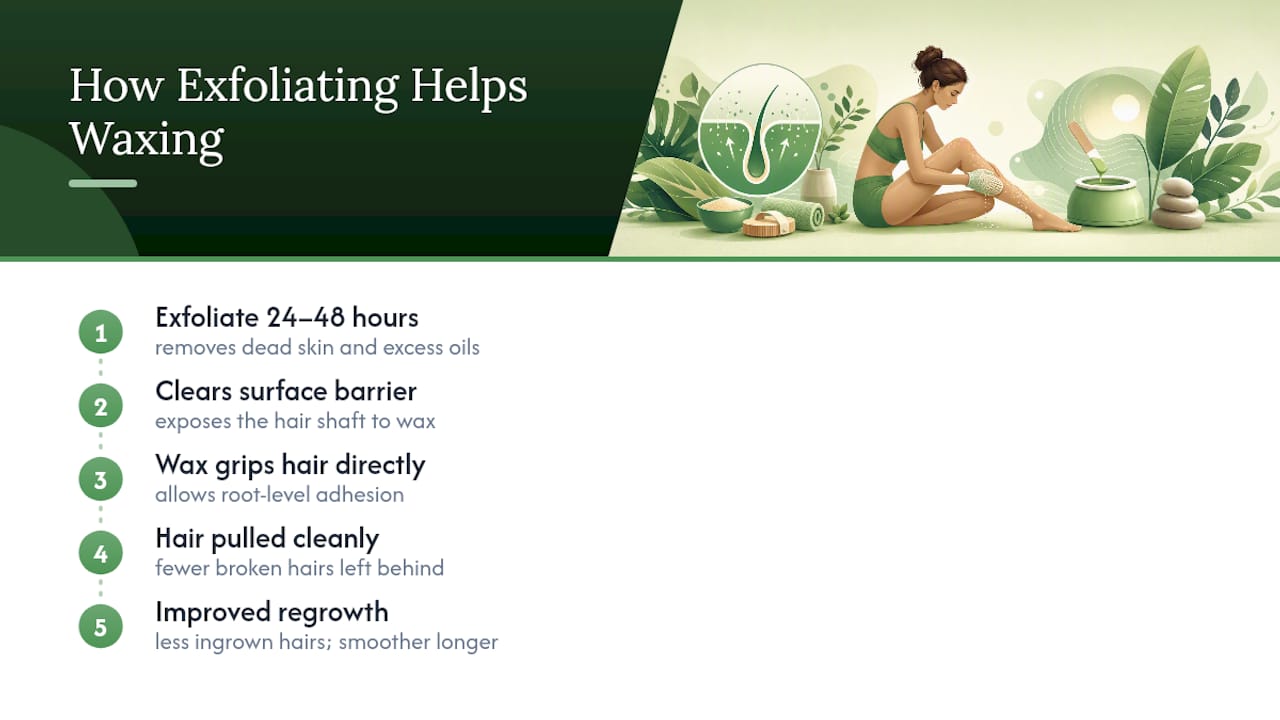
Skin sheds dead cells constantly, and that buildup, along with natural oils, sits between the wax and your hair follicles. Wax needs direct contact with the hair shaft to pull it out cleanly. When there’s a layer of flaky skin or excess oil in the way, the wax grips skin debris instead, which means weaker pulls, more broken hairs, and hair left behind that has to be re-waxed.
Salon guidance from European Wax Center backs up exfoliating 24 to 48 hours ahead of an appointment, specifically because it clears that dead skin without leaving fresh irritation on the surface when the esthetician gets to work. Clearer skin means the wax adheres directly to the hair, so it comes out at the root rather than snapping partway.
The payoff shows up after your appointment, too. Hair that gets pulled cleanly from the follicle is less likely to curl back under the skin as it regrows, which is the root cause of most ingrown hairs. Combine that with fewer broken hairs, and you get smoother skin that stays smooth longer between sessions.
When Should You Exfoliate Before Waxing?
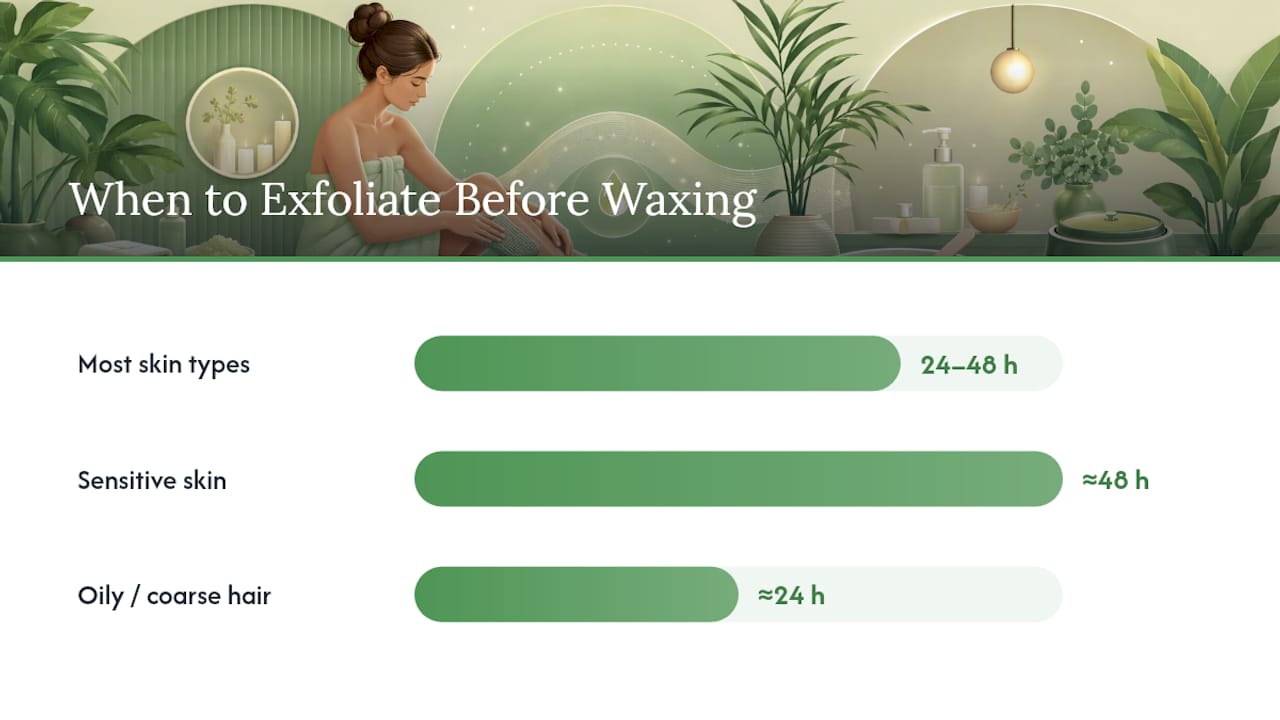
The 24 to 48 hour window is the standard recommendation for most skin and hair types, and it’s not an arbitrary range. Exfoliating too close to your appointment, especially the same day, leaves skin slightly inflamed right when the esthetician needs it calm. Waiting the full 24 to 48 hours gives that mild redness time to fade.
Sensitive skin should sit at the longer end of that range. If you flush easily or your skin reacts to new products, exfoliating closer to the 48-hour mark gives you a bigger buffer before the wax touches your skin. The same caution applies to the face, underarms, and bikini area, since skin there is thinner and more reactive than on legs or arms.
Oilier skin or coarser hair, often found on legs and arms, tends to tolerate the shorter 24-hour window just fine. Skip exfoliation entirely if you have a sunburn, broken or peeling skin, or active irritation from another product. In those cases, waxing itself should wait until skin has fully healed.
How to Exfoliate Before Waxing, Step by Step
Start with a warm shower or bath. Warm water softens skin and opens pores slightly, which makes any exfoliation method work better with less friction.
From there, pick your method based on your skin and the area you’re treating.
Physical exfoliation works well for most body areas. Use a sugar scrub, a soft exfoliating mitt, or a gentle body brush in small circular motions. Limit scrubbing to less than a minute per area; over-scrubbing sensitive skin can cause irritation. Fine, smooth particles like sugar or jojoba beads are gentler than jagged salt or crushed shells, which can create tiny tears you won’t notice until they sting later.
Chemical exfoliation suits people who want a lower-effort option or have skin too sensitive for scrubbing. Low-concentration AHAs or BHAs, or a mild enzyme exfoliant, dissolve the bonds holding dead cells together instead of buffing them off. Dermatology and beauty experts note that chemical exfoliants can be just as effective as physical scrubs, but they need more lead time. Use them at least 48 hours before waxing, not the night before, and patch-test any new product on a small area first.
Experienced users sometimes combine both, a light chemical exfoliant a couple of days out, followed by a gentle physical scrub the next day. That’s a routine to grow into, not one to start cold.
Face, bikini, and underarm skin call for a lighter hand and milder products than legs or arms can handle.
Run through this the day before your appointment:
- Confirm hair length is at least a quarter inch, roughly two to three weeks of growth.
- Check that you exfoliated within the past 24 to 48 hours, not today.
- Rinse off any exfoliant residue completely.
- Apply a light, oil-free moisturizer, not a heavy butter or lotion.
- Skip retinoids, acids, or new skincare products for at least 48 hours pre-wax.
Pro Tip: Keep a small calendar note on your phone marking the exact day you exfoliate before each wax. Guessing “was that two days ago or three?” is how most people end up exfoliating too close to their appointment.
What to Avoid Before Waxing
A few habits undo all the good exfoliation does, so steer clear of them in the days leading up to your appointment.
- Don’t exfoliate the same day as your wax. Freshly exfoliated skin is more reactive, and the combination of two treatments in one day often causes redness that lasts.
- Skip oils, heavy body butters, silicones, and thick creams for at least 24 hours before your appointment. They leave a film that keeps wax from gripping hair, similar to the residue exfoliation is meant to remove.
- Hold off on strong chemical peels or high-percentage acids for several days before your waxing appointment. These thin the skin’s outer layer and raise the odds of the wax lifting more than just hair.
- Avoid sunburned skin, hot saunas, and tight synthetic clothing right before waxing. All three irritate skin that needs to be calm for the appointment to go smoothly.
- If you use prescription retinoids or other strong actives, check with your dermatologist or esthetician about pausing them before a wax. Certain ingredients that are fine for daily skincare can make waxed skin far more likely to react.
Caring for Your Skin After Waxing
Give your skin about 48 hours to recover before you exfoliate again. Waxing already removes a layer of surface cells along with the hair, so scrubbing too soon just adds insult to freshly stressed skin.
In that first day or two, stick to lightweight, non-oily moisturizers, and stay out of direct sun or heat sources like saunas and hot showers. Once you’re past the 48-hour mark, settle into a maintenance rhythm: gentle exfoliation two to three times a week between appointments keeps dead skin from building up and reduces ingrown hairs far more reliably than an occasional aggressive scrub session.
If ingrown hairs do show up, resist the urge to dig or scrub hard at the spot. That usually spreads irritation rather than fixing it. For ingrowns that are inflamed, painful, or not resolving on their own, an esthetician or dermatologist can address them safely.
Gentle Products That Fit Your Pre- and Post-Wax Routine
Not every scrub or lotion belongs in a waxing routine, and that’s exactly where product choice matters. Some sugar scrubs use fine, smooth granules rather than the jagged salt or crushed-shell texture found in harsher exfoliants, which matters for skin that’s about to be waxed or has just come out of an appointment.
For the 24 to 48 hour window before your wax, a light pass with a Jeffi sugar scrub on legs, arms, or bikini-adjacent areas (never the area being waxed itself, right before your appointment) helps clear dead skin without over-scrubbing. Rinse fully and skip heavier products afterward.
After your appointment, once you’ve cleared the 48-hour recovery window, a Whipped body butter works well for daily moisture, though on wax day itself and the day after, a lighter, non-oily formula is the safer call.
A few practical notes for working these into your routine:
- Use sugar scrubs on non-waxed areas within your 24 to 48 hour pre-wax window, not the morning of.
- Rinse thoroughly. Sugar granules and residual oils should never sit on skin heading into a wax.
- Reserve whipped body butters for after the 48-hour post-wax window, when skin can handle richer moisture again.
- Patch-test any new scrub or butter on a small area first, especially if you have reactive or sensitive skin.
A Simple Routine I’d Recommend
If I had to boil this down to one paragraph: exfoliate gently 24 to 48 hours before your appointment, rinse completely, follow with a light moisturizer, and double-check your hair has grown to at least a quarter inch. That’s the whole routine. Patch-test anything new at least a few days out, and if your skin is unusually reactive or you’re dealing with a skin condition, check with an esthetician before changing your normal prep.
— Jeffi
Ready for Smoother Skin Between Waxes?
Getting the timing right matters, but so does what you’re actually putting on your skin in that 24 to 48 hour window. Certain sugar scrubs and whipped body butters use straightforward, non-GMO ingredients, built for gentle, skin-friendly routines like the one described here, avoiding harsh grit or heavy oils that could work against your next wax.

If you’re prepping for an appointment this week, start with a Jeffi sugar scrub on the areas you’re not waxing, and save the whipped body butter for after your 48-hour recovery window. Browse the full lineup of natural skin care products and pick the scrub or butter that fits your skin type before your next appointment rolls around.