

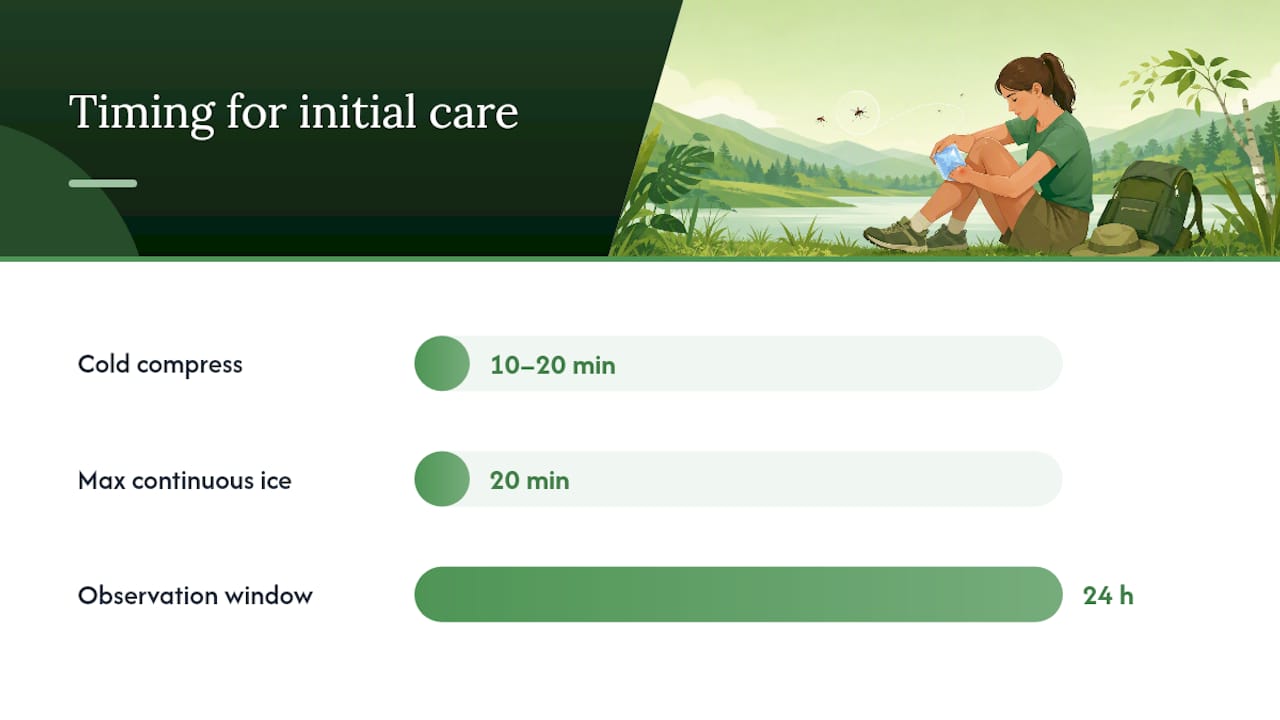
Wash the bite with soap and water, apply a cold compress for 10 to 20 minutes, and elevate the area if it’s on an arm or leg. The one exception that changes everything: if you notice trouble breathing, throat or face swelling, or a weak, rapid pulse, call 911 immediately. That’s not a “watch and wait” situation.
TL;DR:
- Applying a cold compress for no more than 20 minutes is essential, as longer icing can slow circulation and worsen swelling.
- Antihistamines and topical hydrocortisone are the most effective OTC treatments for reducing swelling and itching, not pain relievers.
- Seek emergency care immediately if symptoms include trouble breathing, throat or face swelling, fainting, or a rapid, weak pulse, and use an epinephrine injector if prescribed.
- Most swelling peaks within the first day and should start shrinking by day two or three; persistent or expanding swelling after 48 hours warrants medical attention.
- Avoid heat, scratching, and home remedies like toothpaste, which can aggravate the bite and increase infection risk.
Table of Contents
- Step-by-Step First Aid to Reduce Bug Bite Swelling
- Which OTC Medicines Actually Reduce Swelling and Itch?
- When Does a Swollen Bug Bite Need Emergency Care?
- How to Stop Scratching and Avoid Infection
- What About Skeeter Syndrome and Bites on Darker Skin?
- Jeffi’s Practical Checklist and Resources
- Where Jeffi’s Bug Bite Relief Fits Into Your First-Aid Routine
- Sources
- FAQ
Step-by-Step First Aid to Reduce Bug Bite Swelling
The order you take these steps in matters almost as much as the steps themselves. Rushing straight to a cream before you’ve washed the area, or skipping the cold compress because the itch feels more urgent than the swelling, sets you up for a longer recovery.
- Get to safety first. If you’re still near the insect (especially a bee or wasp), move away before treating anything.
- Remove the stinger without squeezing it. Skip the tweezers. Scraping it sideways with a straight edge like a credit card, lifts it out without pushing more venom into the skin.
- Wash the bite and surrounding skin with soap and water. This step gets skipped constantly, but it’s your best defense against the secondary bacterial infections that turn a minor bite into a bigger problem.
- Apply a cold compress for 10 to 20 minutes. Wrap ice in a cloth rather than placing it directly on skin, and repeat every few hours as needed. Mayo Clinic’s first-aid guidance backs this exact window for reducing both pain and swelling.
- Elevate the limb if the bite is on an arm or leg. Gravity helps drain the fluid that’s pooling under the skin, which is what causes the puffiness in the first place.
Skip heat entirely for the first day. Heat dilates blood vessels and can make swelling worse, not better, even though a warm compress feels soothing on sore muscles.
Pro Tip: Keep the cold compress on a strict timer. Icing longer than 20 minutes at a stretch can irritate skin and actually slow circulation to the area, working against you.
For the first 24 hours, expect the bump to peak in size within the first several hours, then gradually shrink. If it’s still growing on day two, that’s your cue to move to the next section.
Which OTC Medicines Actually Reduce Swelling and Itch?
Not every drugstore option pulls its weight here, and knowing which ones do saves you a wasted trip to the pharmacy aisle.
- Oral antihistamines like cetirizine or loratadine block the histamine response your body triggers, which is the chemical behind both the itch and a chunk of the swelling.
- Topical hydrocortisone (0.5 to 1%) calms inflammation right at the bite site when used short term, according to Mayo Clinic’s first-aid recommendations.
- Calamine lotion doesn’t reduce swelling, but it takes the edge off the itch, which indirectly helps by making you less likely to scratch.
- Ibuprofen or acetaminophen ease pain and discomfort but do little for the visible puffiness itself.
Here’s what most people get wrong: they reach for pain relievers first, assuming that’s the fix for swelling. It isn’t. MedlinePlus notes that antihistamines and topical hydrocortisone are the combination doing the actual anti-inflammatory work, while pain relievers are just there for comfort.
Before trying any new topical, whether it’s a drugstore cream or a natural balm, dab a small amount on unaffected skin first and wait a few minutes, and consider a soothing and repairing sunscreen to protect and calm irritated skin post-treatment. Skip anything with alcohol-based fragrance if the skin around the bite is already broken, and steer clear of home remedies with no track record, like toothpaste or nail polish, which can irritate skin further instead of calming it.
When Does a Swollen Bug Bite Need Emergency Care?
Most bites never reach this point, but knowing the line matters more than any home remedy.
- Call 911 immediately if you notice trouble breathing, swelling of the face or throat, fainting, a weak or rapid pulse, or hives spreading across the body. Mayo Clinic is direct on this: act on even one of these signs, don’t wait to see if others show up.
- Use an epinephrine auto-injector right away if the person has one prescribed, then still call 911. Follow-up with an allergy specialist afterward is worth doing even if the injector worked.
- See a doctor or urgent care for swelling that keeps expanding after 48 hours, swelling that creeps toward the eyes, mouth, or throat, a fever, or redness that spreads outward in streaks or produces pus.
For scale: normal swelling from a mosquito or bee bite typically peaks within the first day and starts shrinking by day two or three. If the bump is still expanding on day three, or it looks angrier than when it started, that’s no longer “normal healing.” That’s a reason to get it looked at.
How to Stop Scratching and Avoid Infection
Scratching feels like relief in the moment, but it’s the main reason a simple bite turns into something worse. Breaking the skin creates an entry point for bacteria, and that’s exactly how a mild itchy bump becomes an infected sore that needs antibiotics.
- Reapply cold compresses whenever the itch spikes. Cold numbs the nerve signal that makes you want to scratch.
- Cover the bite with a light bandage if you catch yourself scratching in your sleep.
- Keep nails trimmed short, especially for kids, who scratch reflexively without thinking about it.
- Use a gentle topical antiseptic if the skin looks slightly broken already, and check with a pharmacist if you’re unsure which product fits your skin.
- Distract the urge instead of fighting it. Cold water, a busy activity, or a barrier like a sock over a foot bite works better than willpower alone.
Pro Tip: For kids who can’t resist a bite, a soft bandage plus a favorite distraction (screen time counts) works far better than repeated warnings to “stop scratching.” A guide on stopping scratching gently walks through more of these tactics if the itch is especially stubborn.
If the site starts looking infected, warmth, tenderness, swelling that’s firm rather than soft, or any drainage, that’s a signal to check in with a doctor rather than keep treating it at home.
What About Skeeter Syndrome and Bites on Darker Skin?
Some people react to mosquito bites far more dramatically than others. The CDC describes this as an exaggerated local reaction, sometimes called skeeter syndrome, where a single bite triggers unusually large swelling, warmth, and occasionally a low fever.
- Skeeter syndrome tends to peak faster and larger than a typical bite, sometimes swelling several inches across within hours.
- It’s common in kids and often resolves with the same symptomatic care as a regular bite, not emergency treatment.
- Repeated or unusually severe episodes are worth discussing with an allergist, since testing can clarify whether it’s a true allergy.
- On darker skin tones, redness is harder to spot visually. Rely on palpation instead: warmth, firmness, and tenderness tell you more than color does.
- Functional signs, like the area feeling hot or the swelling limiting movement, matter more than what the skin looks like from a distance.
Jeffi’s Practical Checklist and Resources
If you remember nothing else, remember the order: wash, cold, antihistamine or topical, then watch for red flags. That sequence handles the overwhelming majority of bites without a single trip to urgent care.
For readers who want to go deeper on specific situations, we’ve broken down how saltwater affects irritated skin and what to do about no-see-um bites specifically. One last reminder: always patch-test a new topical, and keep anything you apply away from eyes and mouth.
— Jeffi
Where Jeffi’s Bug Bite Relief Fits Into Your First-Aid Routine
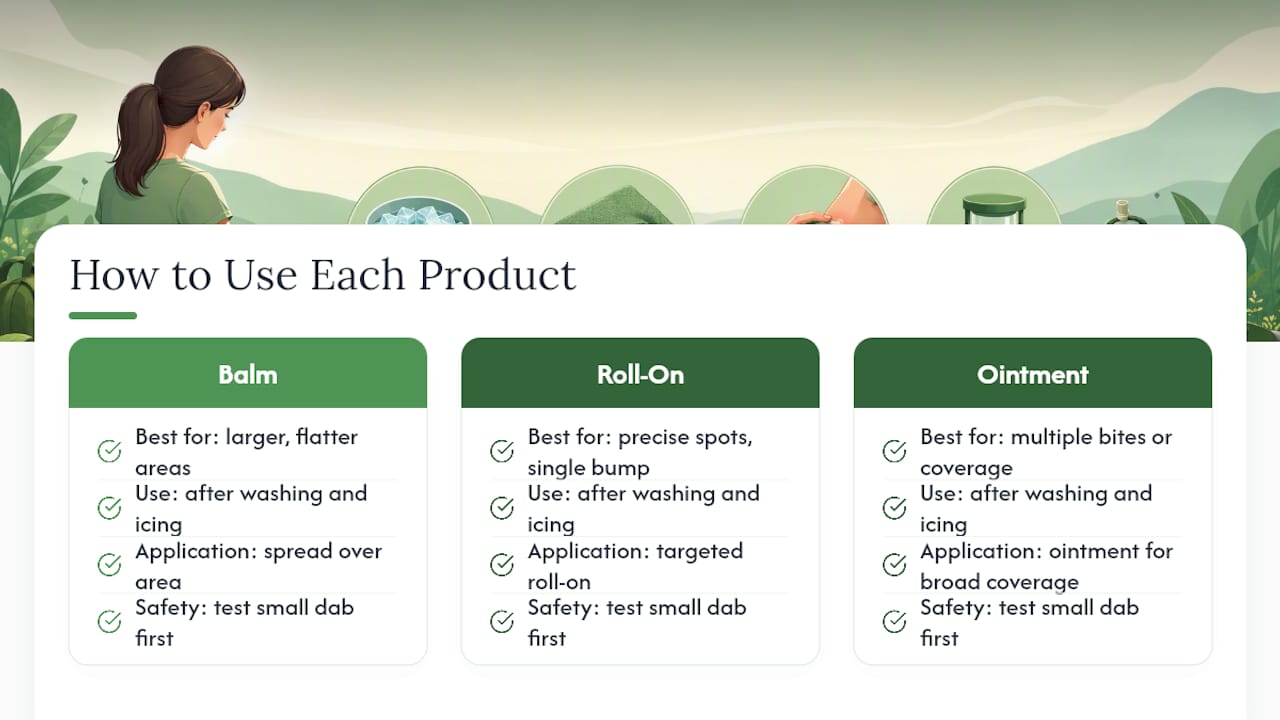
The advantage is simple: DEET-free, all-natural formulas built for the exact moment after washing and icing a bite, when your skin needs calming ingredients instead of harsh chemicals. Once you’ve completed the cold compress step, a natural balm, roll-on, or ointment gives you a targeted way to keep comfort going through the rest of the day.

The Bug Bite Relief Balm works well for larger, flatter areas, while the Bug Bite Relief Roll-On suits precise spots like a single mosquito bump on an ankle or wrist. If you’re managing multiple bites or want ointment coverage, the Bug Bite Relief Ointment rounds out the line.
As with any new topical, test a small dab on intact skin first and keep it away from eyes and mouth. These products are Non-GMO Project verified and made with families in mind, tested and refined based on real customer feedback over time. Browse the full Bug Bite Relief collection or check the ingredients and benefits page to see exactly what’s inside before you buy.
Sources
This guide draws on Mayo Clinic’s first-aid protocol, MedlinePlus for anaphylaxis and stinger removal, and the CDC for mosquito bite physiology. Each source is peer-reviewed and clinically maintained.
This article is general information, not a substitute for advice from a qualified doctor. Consult a qualified healthcare professional about your own circumstances before acting on anything here.
- Insect bites and stings: First aid - Mayo Clinic
- Insect bites and stings - MedlinePlus
- About mosquito bites - CDC
FAQ
How Long Should a Bug Bite Stay Swollen?
Normal swelling from a mosquito or bee bite usually peaks within the first day and starts fading by day two or three. If swelling is still expanding after 48 hours or hasn’t improved within a week, see a doctor to rule out infection or an exaggerated reaction like skeeter syndrome.
Does Benadryl Help With Bug Bite Swelling?
Yes, oral antihistamines like Benadryl (diphenhydramine), along with cetirizine and loratadine, reduce the histamine response driving both itch and swelling. They work best when started early, alongside a cold compress rather than as a replacement for one.
Should I Go to the ER for a Swollen Bug Bite?
Only if you notice signs of anaphylaxis: trouble breathing, throat or face swelling, fainting, or a weak, rapid pulse. Mayo Clinic advises calling 911 immediately if even one of these symptoms appears, rather than waiting to see if it worsens.
What Bug Bites Cause the Most Swelling?
Bee and wasp stings, along with mosquito bites in people prone to skeeter syndrome, tend to cause the largest, most dramatic swelling. Spider bites and tick bites can also swell significantly and sometimes need closer monitoring for spreading redness or fever, which points toward infection rather than a normal reaction.
Can I Use Jeffi’s Products on a Swollen Bug Bite?
Yes, Jeffi’s Bug Bite Relief balm, roll-on, and ointment are designed for use after washing the bite and applying a cold compress. Patch-test on a small area of intact skin first, and keep the product away from eyes and mouth.