

Most people do well with a body scrub one to two times per week, though the right body scrub frequency depends entirely on your skin type and the product you’re using. Dry or sensitive skin should stay closer to once every 7 to 14 days, while oilier or thicker skin can sometimes handle three sessions weekly. The bigger the grain and the stronger the active ingredient, the less often you need it.
TL;DR:
- Most skin types tolerate body scrubs once or twice weekly, with dry or sensitive skin needing closer to every 10 to 14 days.
- Oily or thicker areas like elbows and knees can handle up to three scrub sessions weekly if using gentle or chemical formulas.
- Combining abrasive physical scrubs with chemical exfoliants in the same week increases skin damage risk, especially with aggressive methods.
- Signs of over-exfoliation include persistent redness, tightness, and new breakouts, prompting a week of gentle care and barrier repair.
- Skin condition and environment, such as eczema or seasonal dryness, require tailored schedules that often involve lower frequency or specialist advice.
Table of Contents
- What Is the Right Body Scrub Frequency for Your Skin Type?
- Does the Scrub Method Change How Often You Should Use It?
- What Are the Signs of Over-Exfoliating Your Skin?
- When Is the Best Time to Body Scrub?
- What’s the Safest Technique for Body Scrubbing?
- How Does Jeffi Fit Into a Safe Scrubbing Routine?
- How Should Teenagers and Older Adults Adjust Scrub Frequency?
- Should You Scrub More or Less Depending on the Season?
- How Should You Adjust Frequency With Eczema or Psoriasis?
- Author’s Perspective: Moderation Beats a Rigid Schedule
- Where to Start With Jeffi’s Scrubs and Butters
- Sources
- FAQ
What Is the Right Body Scrub Frequency for Your Skin Type?
Your skin type is the real deciding factor here, not the calendar. A schedule that works beautifully for your oily shoulders might leave your dry shins looking flaky and irritated. Think of it as tuning an instrument for each part of your body rather than applying one blanket rule.
Here’s a practical starting point for each skin type:
- Normal skin: Two times per week works well. Watch for tightness and dial back if you notice it.
- Oily or thicker skin: Up to three times weekly is often fine, especially on rougher zones like elbows and knees, but only with a gentle physical scrub or mild chemical formula.
- Combination skin: Treat oily zones (chest, back) twice weekly and drier zones (legs, arms) once weekly.
- Dry skin: Stick to once weekly or even once every 10 to 14 days. Consumer-health guidance generally points dry and sensitive skin toward the lower end of the frequency range.
- Sensitive skin: Once every 10 to 14 days, using a fragrance-free, low-abrasion formula.
Body zones matter almost as much as skin type. Feet and elbows build up thick, callused skin and can usually handle scrubbing twice weekly without complaint. The bikini area, underarms, and inner thighs have thinner, more reactive skin, so once weekly (or less) is the safer call. Your back and chest sit somewhere in the middle, tolerating a moderate scrub two to three times a week if breakouts are a concern.
Here’s how that plays out in real life: if you have dry legs but rough, callused feet, treat your legs once a week with a cream-based scrub and hit your feet twice a week with something slightly grittier. There’s no rule that says your whole body needs to run on the same clock.
Does the Scrub Method Change How Often You Should Use It?
Physical scrubs (sugar, salt, or bead-based) work by mechanically buffing away dead skin cells, and their frequency depends entirely on grain size and pressure. Chemical exfoliants like AHAs, BHAs, and enzyme-based formulas dissolve the bonds between dead cells instead of sanding them off, which means they can sometimes be used more often, but they also carry a real risk of over-exfoliating if you layer them carelessly.
The AAD’s guidance on safe at-home exfoliation makes a simple point that’s easy to forget: the more aggressive the method, the less often it should touch your skin. A coarse salt scrub earns a spot on your routine once or twice weekly at most, while a gentle sugar scrub with fine crystals can sometimes go a bit more often on tolerant skin.
Professional body scrubs and spa peels fall into their own category entirely. Because they deliver a more concentrated treatment, scheduling guidance from spa professionals typically suggests spacing them every two to four weeks, letting your skin fully recover between sessions.
A few stacking rules worth remembering:
- Never combine an abrasive scrub and a chemical exfoliant in the same week.
- When you introduce a new active ingredient, cut your physical scrub frequency in half until you know how your skin reacts.
- If you’re already using an AHA or BHA product elsewhere in your routine, reduce your physical scrubbing frequency accordingly to avoid overloading your barrier.
What Are the Signs of Over-Exfoliating Your Skin?
Your skin gives you warning signs long before real damage sets in, but they’re easy to dismiss as “just dryness.”
- Persistent redness that lingers 24 hours or longer after scrubbing.
- Tightness or stinging in the shower or right after you towel off.
- A shiny or waxy appearance, which signals your outer barrier has been stripped too thin.
- New or worsening breakouts, since a compromised barrier lets bacteria and irritants in more easily.
Dermatology practice guidance treats these as reliable red flags, not coincidences.
If you spot two or more of these signs, stop exfoliating entirely for one full week. Switch to a fragrance-free gentle cleanser, apply a barrier-repair moisturizer twice daily, and skip other active ingredients during that window. Once your skin looks and feels normal for a few consecutive days, patch-test a small area before returning to your full routine, and start back at once every two weeks rather than jumping to your old schedule.
Pro Tip: If redness turns into blistering, an unusual rash, or signs of infection like warmth and swelling, stop trying to self-treat and see a dermatologist. Those symptoms go beyond normal over-exfoliation.
When Is the Best Time to Body Scrub?
Timing changes both how effective your scrub feels and how much irritation you risk. The order matters more than most people realize.
- Shower order: Let warm water run for a minute or two to soften skin, scrub while skin is still damp, rinse thoroughly, then moisturize immediately while skin is slightly wet to lock in hydration.
- Self-tanner prep: Scrub 24 to 48 hours before applying self-tanner so it fades evenly instead of blotching around rough patches. Never scrub right after tanning. It strips the color unevenly.
- Shaving: Skip an aggressive scrub immediately before a close shave, since freshly exfoliated skin is more prone to razor irritation. Gentle exfoliation a day or two beforehand can actually reduce ingrown hairs when timed well.
What’s the Safest Technique for Body Scrubbing?
Technique determines whether a scrub smooths your skin or damages it, and pressure is the variable most people get wrong.
- Use slow, circular motions with light pressure, spending about 30 to 60 seconds per area.
- Stick to your hands or a soft mitt. Skip jagged or overly coarse tools on thinner-skinned zones like the neck, chest, or inner arms.
- Never scrub sunburned, broken, or already irritated skin, and avoid a scalding-hot shower right after exfoliating since heat compounds the stripping effect.
Practical technique guidance backs up this damp-skin, gentle-motion approach as the standard for effective results without overdoing it. If you’re curious about the physiology behind why this works, a science-backed breakdown of exfoliation walks through how dead skin buildup affects texture and absorption.
Pro Tip: Rinse your scrub tool or mitt after every use and let it fully dry between sessions. A damp mitt sitting in a shower caddy is a breeding ground for bacteria that can undo all the good your exfoliation just did.
How Does Jeffi Fit Into a Safe Scrubbing Routine?
Jeffi’s sugar scrubs are designed to fit a one-to-two-times-weekly usage cadence that many skin types tolerate well. The sugar crystals are fine enough to buff away dead skin without the harsh scraping you get from coarse salt formulas, which matters if you’re scrubbing your whole body rather than just callused feet.
Pair your scrub day with a whipped body butter to replenish the lipids your skin just lost. Freshly exfoliated skin absorbs moisture more efficiently, so applying butter while skin is still damp gets you the most benefit. If your skin runs sensitive, reach for a fragrance-free option. Fragranced products on freshly buffed skin can sting more than they should. As always, patch-test any new scrub or butter on a small area first, especially if you’re layering it into an existing routine with other actives.
How Should Teenagers and Older Adults Adjust Scrub Frequency?
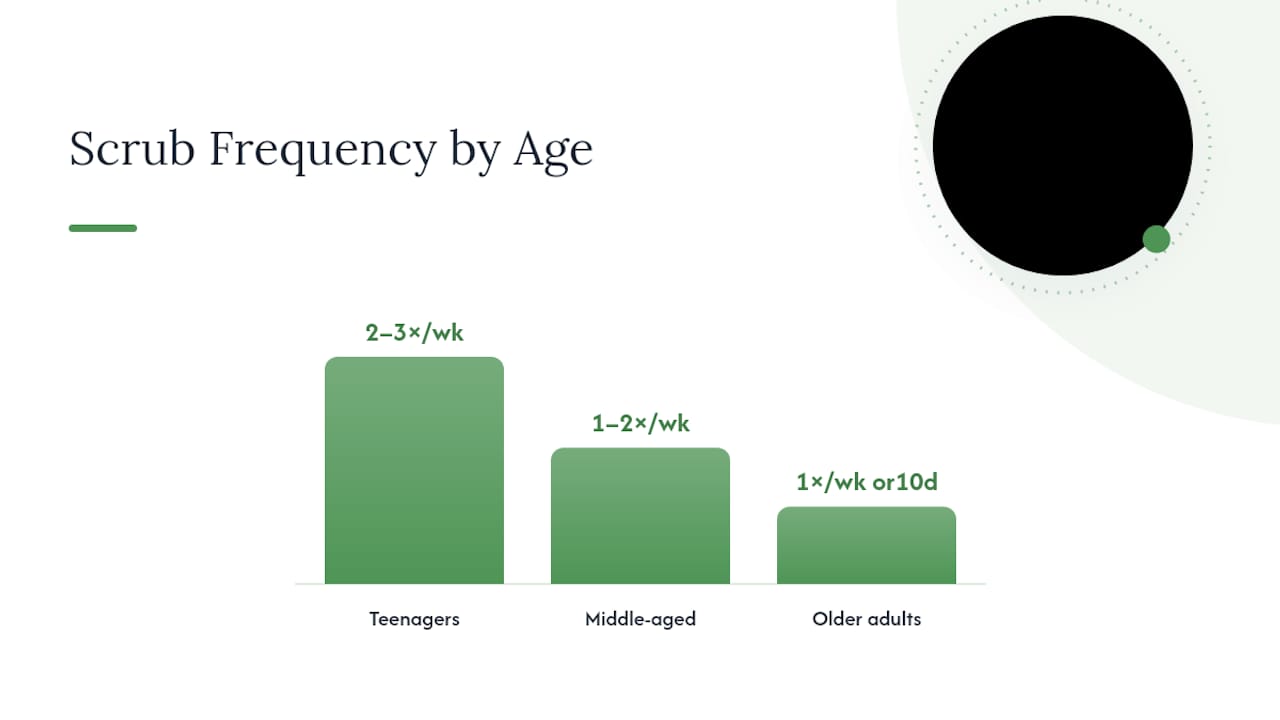
Age changes how your skin handles exfoliation, mostly because of how quickly (or slowly) it renews itself. Teenagers tend to produce more oil and shed skin cells faster, which is why acne-prone teen skin can often tolerate scrubbing two to three times weekly on the chest and back without much complaint. That said, teen skin is still developing its barrier function, so starting conservatively and watching for irritation matters just as much as it does for adults.
Older adults face the opposite challenge. Skin naturally thins and produces less oil with age, and cell turnover slows down considerably. That means a schedule that felt gentle in your 30s can feel abrasive in your 60s or 70s. Cutting back to once weekly, or even once every 10 days, with a cream-based rather than grainy scrub, tends to work better for mature skin. Older skin also takes longer to recover from any barrier disruption, so the margin for error shrinks.
Middle-aged skin sits in between, and most people in this range can stick with the standard one-to-two-times-weekly guideline unless a specific condition (dryness, rosacea, eczema) says otherwise. The bigger point across every age group: don’t assume the frequency that worked five years ago still fits. Skin changes, and your routine should change with it.
Should You Scrub More or Less Depending on the Season?
Winter air strips moisture fast, and indoor heating makes it worse, so many people find their skin gets drier and more reactive between roughly November and March. That’s usually a signal to scale back rather than push harder. If you’re scrubbing twice weekly in summer, dropping to once weekly in winter often keeps skin smoother without the flaking that comes from over-exfoliating already-parched skin.
Summer flips the equation. Sweat, sunscreen buildup, and more skin exposure (shorts, swimsuits, sandals) can clog pores and dull skin faster, which is part of why oilier zones like the back and chest sometimes tolerate an extra weekly session during warmer months. Humidity also helps skin hold moisture better, so it can handle slightly more frequent exfoliation without the same tightness you’d feel in dry winter air.
Transitional seasons (spring and fall) are a good time to reassess. If you’ve been scrubbing through a dry winter, your skin may be more resilient by spring and ready to handle a slightly more frequent routine again. The safest approach is to treat your schedule as a moving target tied to how your skin actually looks and feels each month, not a fixed number you set once and never revisit.
How Should You Adjust Frequency With Eczema or Psoriasis?
Skin conditions like eczema and psoriasis change the exfoliation equation substantially, and the standard one-to-two-times-weekly rule doesn’t apply the same way. Both conditions already involve a compromised or overactive skin barrier, which means mechanical scrubbing can trigger flare-ups rather than smooth anything out.
For eczema-prone skin, exfoliation during an active flare is generally best avoided altogether. Once skin has calmed and healed, a very gentle, fragrance-free scrub once every two weeks (at most) is a reasonable ceiling, always followed immediately by a barrier-repair moisturizer.
Psoriasis is trickier because the visible scaling can tempt people into scrubbing harder to remove it, but aggressive exfoliation frequently worsens the plaques instead of clearing them. A soft, low-pressure approach limited to once every two to three weeks, focused only on areas your dermatologist has cleared for exfoliation, tends to be the safer path. In both cases, working directly with a dermatologist to set a personalized frequency beats guessing, since flare patterns and triggers vary widely from person to person.
Author’s Perspective: Moderation Beats a Rigid Schedule
The best body scrub routine isn’t a fixed number. It’s a feedback loop. Track your skin for two to four weeks: note redness, tightness, and whether texture actually improves. If nothing negative shows up after several consistent weeks, you can nudge frequency up slightly. If you see any warning signs, dial back immediately rather than pushing through them. And if you’re dealing with a chronic condition like eczema or persistent irritation that doesn’t resolve, a dermatologist’s input beats any general guideline, including this one.
— Jeffi
Where to Start With Jeffi’s Scrubs and Butters
If you’re ready to build a one-to-two-times-weekly routine, sugar scrubs formulated for that cadence are available. These scrubs have fine texture suitable for regular use and are designed to be gentle on the skin’s natural barrier. Pair a scrub day with whipped body butters to replace moisture lost during exfoliation, applying butter to damp skin to lock in more hydration than applying to dry skin later.

A quick usage note before you dive in: patch-test any new scrub on a small area of skin first, and if you run sensitive, reach for a fragrance-free option rather than one of our scented picks, especially in the first few uses. Skin that’s freshly exfoliated is more reactive to fragrance than skin that hasn’t been touched.
Browse Jeffi’s full lineup of natural sugar scrubs and whipped body butters to find the combination that fits your skin type, or head straight to the whipped body butter collection if aftercare hydration is your main priority right now.
Sources
This guide draws on dermatology and clinical guidance, including the AAD’s advice on safe at-home exfoliation, Westlake Dermatology’s breakdown of over-exfoliation signs and recovery, consumer health frequency guidance from Greatist, and clinical literature on skin barrier repair timelines. Each source informed a different piece of the puzzle, from safe frequency caps to what recovery actually looks like.
- AAD — Safely exfoliate at home
- Westlake Dermatology — Over‑exfoliation
- Greatist — How often should you exfoliate your body?
FAQ
How often should I do a body scrub?
Most people do well with one to two times per week, though dry or sensitive skin should stay closer to once every 10 to 14 days, and oilier zones can sometimes handle up to three sessions weekly.
Is exfoliating two times a week too much?
For most normal to oily skin types, twice weekly is well within the safe range, but dry or sensitive skin may find that frequency too aggressive and should scale back to once weekly.
Is it okay to use a body scrub every day?
No. Daily physical exfoliation is widely discouraged because it strips the skin barrier faster than it can repair itself, leading to redness, tightness, and increased breakouts.
Do dermatologists recommend body scrubs?
Yes, dermatologists generally support body scrubs as part of a routine, but they recommend matching frequency to the scrub’s aggressiveness and capping physical exfoliation at around twice weekly for most people.