

Most body butters stay usable for roughly 3 to 24 months, and the biggest factor is whether water made it into the formula. Oil-only commercial butters can last 12 to 24 months; water-containing creams need 6 to 12 months; homemade batches without preservatives are often good for just 3 to 6 months. Skip the math and toss it immediately if you smell anything sour or metallic, or see mold. Storage, ingredients, and how you scoop it out all shift that timeline in either direction.
TL;DR:
- Oil-only body butters can last between 12 and 24 months if stored properly and free of water contamination, whereas water-containing creams require only 6 to 12 months.
- Homemade and preservative-free butters generally remain good for 3 to 6 months, with unrefined butters needing shorter periods than refined versions.
- Oxidation from unsaturated oils causes smells of sour or old oil but rarely poses health risks, while microbial growth from water can cause skin issues and needs preservatives.
- Signs of spoilage include sour odors, mold, color changes, or texture breakdown such as separation or sliminess, which require immediate disposal.
- Proper storage in cool, dark, airtight conditions, and using a spatula to scoop out product, can extend shelf life, especially for formulas with water, which benefit from refrigeration in hot climates.
Table of Contents
- Body Butter Shelf Life by Formula Type
- Why Ingredients Determine How Fast Body Butter Spoils
- How to Tell if Body Butter Has Gone Bad
- Storage Habits That Add Months to Body Butter’s Life
- Choosing a Body Butter That Matches How Often You Use It
- Where Jeffi Fits Into the Shelf-Life Conversation
- Our Take: Don’t Let Fear of Waste Override Basic Safety
- Sources
Body Butter Shelf Life by Formula Type
Not all body butters age the same way, and the difference comes down to one ingredient: water. Once you understand that split, guessing games about expiration disappear.
- Commercial oil-only (anhydrous) butters: These skip water entirely, relying on shea, cocoa, and carrier oils. Without water, bacteria have almost nothing to feed on, which is why oil-based formulas commonly last 12 to 24 months when kept sealed and stored properly.
- Emulsified or water-containing creams: Adding water (often labeled “aqua”) makes a lighter, whippier texture, but it also creates a breeding ground for mold and bacteria. That’s why emulsified products with a preservative system typically run 6 to 12 months once opened, not years.
- Homemade and preservative-free mixes: Skip the lab-grade preservatives, and you’re on borrowed time. Homemade body butter commonly expires within 3 to 6 months, even when it looks and smells fine at first.
- Refined vs. unrefined shea or cocoa butter: Refining strips out some of the raw plant compounds that spoil fastest, so refined shea butter can stay shelf-stable for 24 months or more unopened, while unrefined versions often need to be used within 6 to 12 months of opening despite their richer scent and nutrient profile.
If your jar doesn’t list water or aqua near the top of the ingredients, you’re probably holding the longer-lasting kind.
Why Ingredients Determine How Fast Body Butter Spoils
Body butter fails in one of two ways: it goes rancid, or it grows something you don’t want touching your skin. Knowing which risk applies to your jar tells you what to watch for.
Oxidation is a chemical process, not a biological one. Oils with more unsaturated fats, like grapeseed or sunflower oil, oxidize faster than more stable options like coconut or refined shea butter. That’s the “old crayon” or slightly sour smell you might notice in an older jar. It won’t make you sick, but it means the beneficial compounds have broken down.
Microbial growth is the more serious risk, and it almost always traces back to water. Water-containing formulas need broad-spectrum preservatives to stay safe because bacteria, yeast, and mold all need moisture to multiply. An oil-only butter has no water for them to use, which is a major reason anhydrous formulas outlast creams.
Here’s where it gets confusing for a lot of people: vitamin E and other antioxidants slow oxidation, but they are not preservatives. Adding vitamin E to a water-based lotion won’t stop mold from forming. It only protects the oils from turning rancid. If a product contains water, look for an actual preservative, not just vitamin E on the label.
- Oxidation ruins texture and smell over time but rarely poses a safety risk.
- Microbial contamination can cause skin irritation or infection and is the reason water-based products need shorter use windows.
- Refined butters trade some nutrient density for a longer, more predictable shelf life.
How to Tell if Body Butter Has Gone Bad
Your nose is the most reliable tool you have. Trust it before you trust the calendar.
- Smell it first. A rancid, sour, or metallic “old oil” odor is the clearest sign body butter has turned, and it means the oils have oxidized past the point of being pleasant or effective.
- Look for mold or fuzzy spots. Any visible growth, even a tiny speck, means the jar goes in the trash immediately. No amount of scooping around it makes the rest safe.
- Check the color. A shift from creamy white or ivory to yellow or gray, especially paired with any odor change, is a discard signal even without visible mold.
- Assess the texture carefully. Some graininess is cosmetic. Shea and cocoa butter can develop a slightly gritty feel from temperature swings, and that’s fixable by remelting and rewhipping. But if the texture turns watery, separates into oily puddles, or feels slimy, that’s a sign it’s breaking down for real.
- Do a monthly once-over. Pop the lid, take a sniff, glance at the surface. Thirty seconds a month catches problems long before they become obvious.
Pro Tip: Keep a small piece of masking tape on the jar lid with the date you opened it. It takes ten seconds and saves you from guessing months later.
Storage Habits That Add Months to Body Butter’s Life
Where you keep your jar matters almost as much as what’s in it.
The ideal setup is simple: cool, dark, and stable, as explained in this fragrance closeout sale guide that highlights how storage conditions affect product shelf life. A bedroom drawer or a closet shelf beats a windowsill or a steamy bathroom counter every time. Bathroom storage exposes body butter to humidity and temperature swings that speed up both oxidation and microbial growth, even if the lid stays shut the whole time. Opaque, airtight containers also help, since light degrades oils just like heat does.
- Store jars away from direct sunlight and away from radiators, vents, or sunny windowsills.
- Use a small spatula instead of your fingers. Scooping with a clean tool rather than fingertips reduces contamination and can meaningfully extend how long a jar stays usable.
- Keep the lid fully closed between uses. Air exposure accelerates oxidation faster than most people expect.
- Consider the fridge for water-containing formulas in hot climates. Cooler temperatures slow both oxidation and microbial growth, though the texture will firm up until it warms back to room temperature.
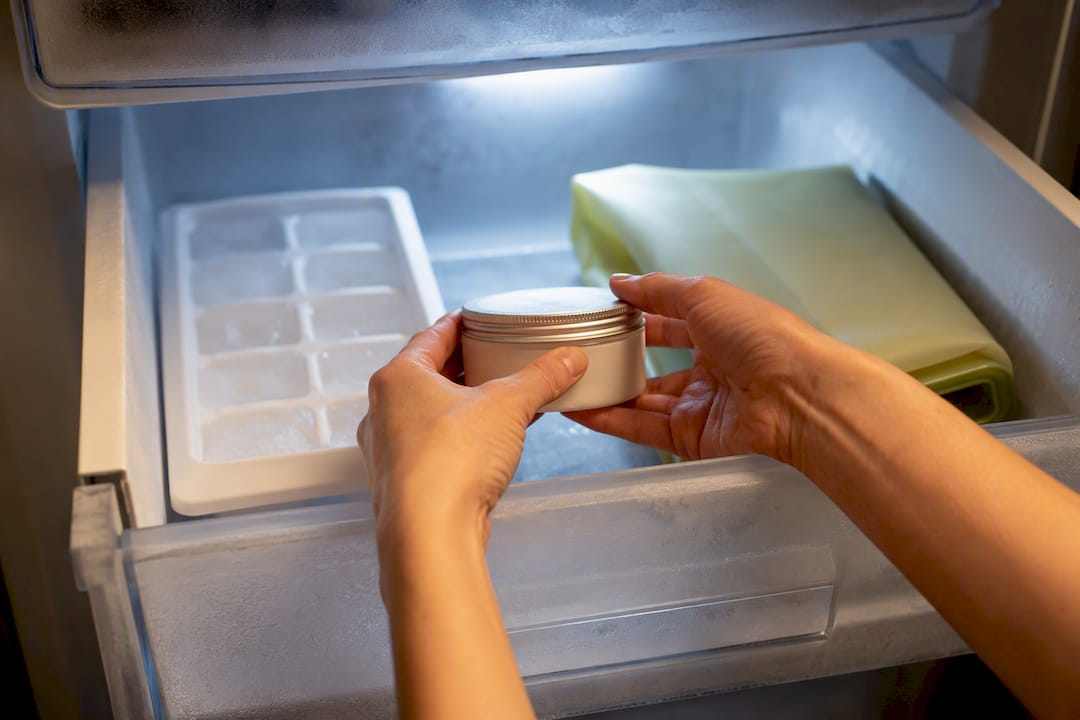
Freezing is also an option worth knowing about. Freezing an unopened jar can significantly extend its usable life, but thaw it slowly in the refrigerator rather than at room temperature to keep condensation from introducing water into the mix. That’s especially important for anhydrous formulas, where even a little moisture can invite the microbial growth they were designed to avoid.
Pro Tip: If you buy body butter in bulk, freeze the backup jar and keep only your current one at room temperature. You’ll extend the spare’s life by months without changing how it feels once it’s thawed and back in rotation.
Choosing a Body Butter That Matches How Often You Use It
The best way to avoid waste is to buy for your actual habits, not for the biggest jar on the shelf.
- Check the label for a PAO symbol (a small open jar icon with a number like “12M”). That number tells you how many months the product stays safe after opening, which matters more than the manufacture date once you’ve broken the seal.
- Look for manufacture or expiration dates and a clear ingredients list. If preservatives are listed, that’s a sign the formula was built to handle water safely.
- If you only use body butter occasionally, a smaller jar or pump-tube format beats a large tub you’ll be finishing a year from now.
- Making your own at home is rewarding, but skip adding water unless you’re using a real cosmetic preservative, add an antioxidant like vitamin E to slow oxidation, and make smaller batches so you’re using it up before it turns.
- Unrefined, natural ingredients often smell richer and deliver more of the plant’s original nutrients, but that trade-off comes with a shorter clock. Decide upfront whether that trade is worth it for how you’ll actually use the product.
Where Jeffi Fits Into the Shelf-Life Conversation
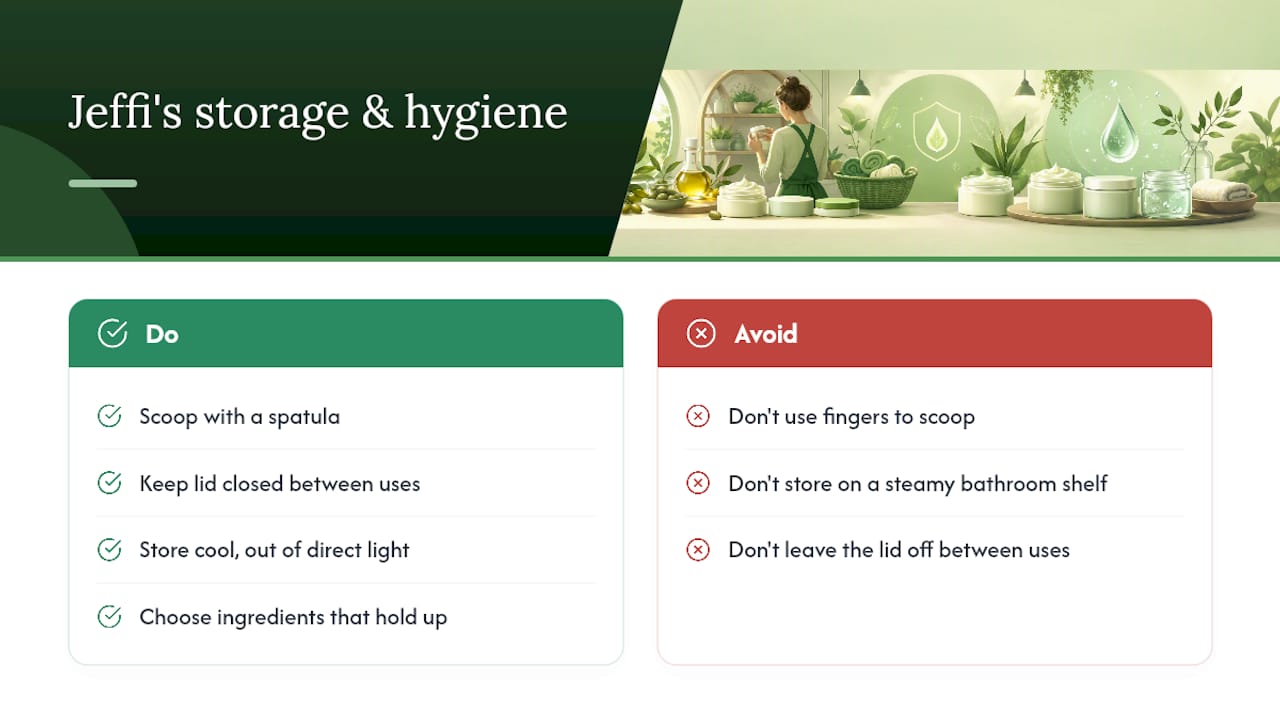
Jeffi’s whipped body butters are formulated as Non-GMO Project Verified, all-natural products, and that starts with sourcing ingredients that hold up well over time. Jeffi recommends the same hygiene habits covered above: scoop with a spatula instead of fingers, keep the lid closed between uses, and store jars somewhere cool and out of direct light rather than on a steamy bathroom shelf. Simple habits, real results.
Our Take: Don’t Let Fear of Waste Override Basic Safety
Repurposing an old, unscented body butter as a leather conditioner or wood polish is a smart way to avoid tossing it outright, and that’s a fine use for a jar that’s past its skin-safe window but not moldy. What’s never fine is talking yourself into using something on your skin once it smells off or shows growth. Buy smaller sizes if you tend to let jars sit, label them when opened, and when in doubt, toss it in regular trash rather than trying to stretch it further.
— Jeffi